
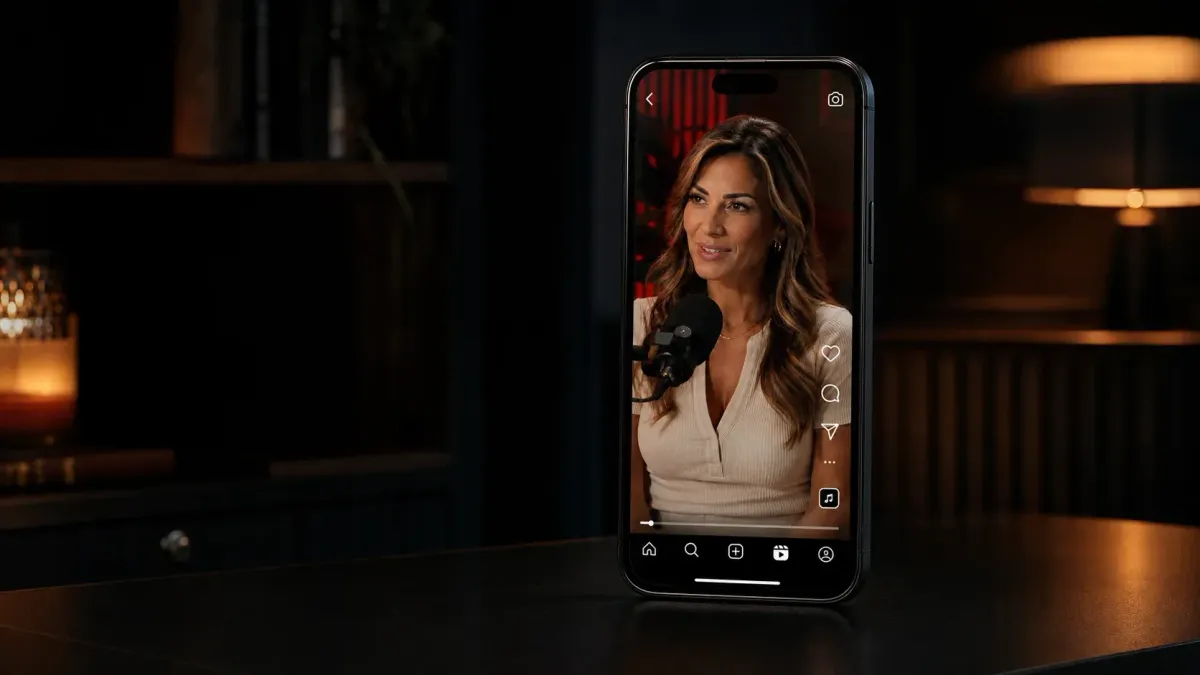
Turning a one-hour podcast episode into short, shareable video clips sounds simple until you are actually sitting there, scrubbing through audio, guessing which 60 seconds will hook someone scrolling past on Instagram or TikTok. Most podcasters know their best moments exist somewhere in that recording, but finding them, cutting them cleanly, and adding captions that keep viewers watching is where time disappears fast. This article covers exactly that, walking you through how to make podcast reels in 30 minutes without losing your mind or your afternoon.
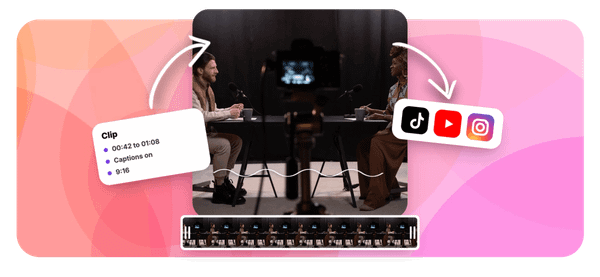
The best AI podcast clip generator tools have changed what is possible here, and Crayo's clip creator tool sits at the center of that shift. Instead of spending hours in a timeline editor, Crayo analyzes your audio, pulls the strongest segments, and formats them into polished short-form video clips ready for social media. If you want your podcast audiogram, vertical video reel, or captioned clip to actually reach new listeners rather than just sit in a folder on your desktop, Crayo gives you a practical, fast way to make that happen.
Table of Contents
- Why Podcast Reels Often Lose Viewers Early
- The Hidden Cost of Judging Podcast Reels by Rules and Likes
- How to Make Podcast Reels in 30 Minutes
- The 30-Minute Workflow to Turn One Episode Into a Tested Reel
- Make Podcast Reels Faster With Crayo
Summary
- Podcast Reels lose viewers within the first 3 seconds, according to The Podcast Fast Track, which means clips that open with filler phrases or vague introductions have already failed before the actual content begins. The failure is structural, not stylistic. Clips built around a length target rather than a specific, complete idea sort out the wrong viewers from the start.
- Completion rate and sends are more useful signals than likes, but most creators never see them. Podlad's research found that more than 50% of podcast downloads may never actually be listened to, and the same distortion applies to short-form video when creators optimize for visible applause rather than watch time or forwarding behavior.
- Platform context changes what a clip needs to do. TikTok surfaces content aggressively to cold audiences with no prior connection to the account, while Instagram weights engagement history and rewards consistency over time. Treating both platforms as interchangeable produces clips with no clear job, built for neither the cold scroll TikTok favors nor the warm community depth Instagram rewards.
- A single episode contains far more usable content than most creators extract. Stan Nwaeze demonstrated this on Instagram, showing how one podcast episode can produce 10 to 15 Reels using AI, a post that drew nearly 400 engagements because the premise felt immediately actionable. A workflow producing one clip per episode runs at a fraction of its potential output.
- The 30-minute time target only holds when creative decisions are front-loaded. Choosing the clip moment in the first five minutes of the session converts everything after it from deliberation into execution. Deliberation disguised as editing is what collapses the workflow, not the editing itself.
- Testing two versions of the same clip with different opening sentences, then comparing average watch time and sends per reach rather than total likes, builds a documented pattern across episodes. That written record carries into the next episode's opening decision, replacing guesswork with accumulated evidence specific to the creator's audience.
Crayo's clip creator tool addresses this by automating the steps between a chosen moment and a finished, captioned vertical clip, compressing the production phase so the time budget stays on decisions that actually affect results.
Why Podcast Reels Often Lose Viewers Early
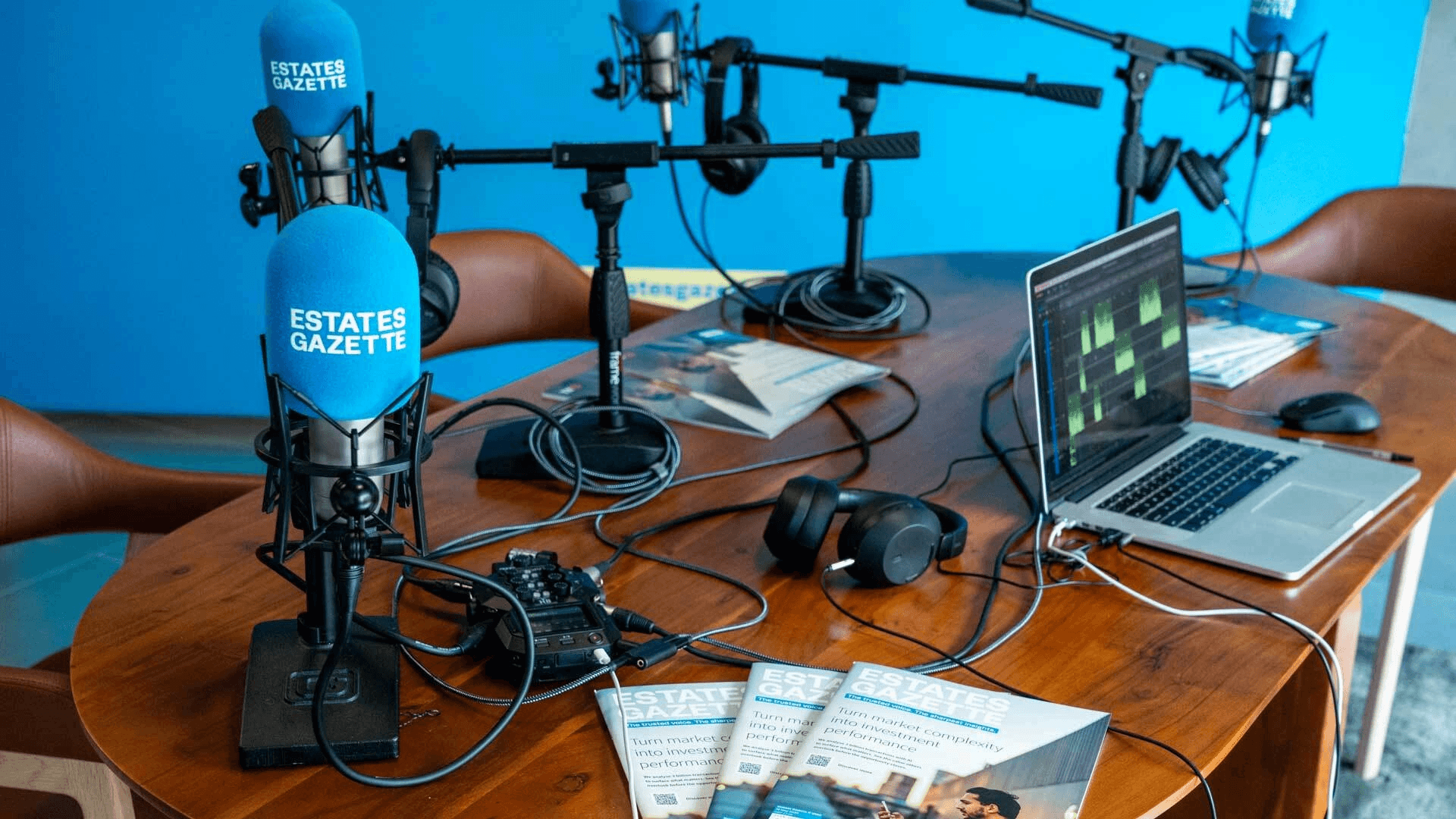
Podcast Reels lose viewers early for a reason that has nothing to do with episode quality. The clip gets built around a length target instead of around the moment the idea actually finishes, and a viewer who hasn't committed to anything will leave the second the audio stalls.
Optimizing Hook Mechanics and Completion Rates
The failure point is almost always the opening. According to The Podcast Fast Track, Reels have exactly 3 seconds before viewers scroll past, potentially lost forever. That means a clip that opens with "so, yeah, one thing I wanted to say" has already spent its most valuable window on throat-clearing. The full episode could absorb that pause because the listener had already committed an hour. A Reel viewer has committed nothing, and they will prove it. The same issue surfaces whether the podcaster trims to 15 seconds or stretches to 60: length is treated as the primary variable when the real variable is completion rate. A 55-second clip that holds 90 percent of viewers outperforms a 25-second clip that loses 40 percent. The number on the timeline is not the signal. Watch time is.
Beyond Likes: Optimizing Short-Form Audio Retention
Most podcasters handle this by publishing directly to the main grid and checking likes the next day. That approach isn't wrong; it's just incomplete in a way that compounds over time. Likes don't tell you whether viewers stayed through the point or left before it arrived, and Instagram's ranking signals weight completion, not applause. Tools like Crayo address this gap at the source, using AI to identify the strongest segments in your audio and format them into short-form video clips with captions and styling already applied, so the clip starts from the most retainable moment rather than from wherever you happened to hit pause.
From Guesswork to Process: Building High-Retention Clips
The pattern recognition here matters. The difference between 200 views and 200,000 views comes down to specific hook techniques implemented before recording. That's not a small gap to close with a length rule. It's a structural difference in how the clip is built from the first frame forward, which means the editing decision and the content decision are the same decision.
Without a repeatable testing system, every clip is a one-off guess, and nothing carries over to the next episode. The bottleneck isn't a shortage of good podcast moments. It's the absence of a process that reveals which elements of a clip actually drive retention, and that quiet gap costs more than most podcasters realize.
Related Reading
- Best AI Podcast Clip Generator
- What Is An Audiogram Podcast
- How Long Does It Take To Trim A Zoom Recording
- Content Repurposing Examples
- Webinar To Short Clips AI
- Clipping a YouTube Video
- Podcast Clips For Social Media
- Video Clipping For Social Media
- How Do I Repurpose My Interview To Social Media
- Sermon Clips AI
The Hidden Cost of Judging Podcast Reels by Rules and Likes
Likes are the metric that feels like progress. They sit right there on the screen, countable and immediate, and the brain treats them like a scoreboard. But Instagram's own ranking system weights sends and watch time just as heavily, and those numbers almost never appear in a creator's default dashboard view. The result is a feedback loop built on the most visible signal, not the most useful one.
The failure point is usually invisible until you look at reach. A clip can collect strong like counts while staying almost entirely within your existing follower base, meaning it confirms what your current audience already thinks rather than pulling in anyone new. Podlad's research on podcast performance found that more than 50% of podcast downloads may never actually be listened to, which tells you something important:
- Vanity metrics have always overstated real engagement in audio.
- The same distortion carries straight into short-form video when creators measure the wrong thing.
What Sends Actually Reveal About Your Content
Sends are the metric that podcast clips are structurally built to earn.
- A sharp opinion
- A counterintuitive fact
- A line that makes someone think of a specific friend
These moments live inside good podcast conversations, and they are exactly what drives someone to forward a Reel without being asked. A clip optimized only for likes tends to be polished and agreeable. A clip optimized for sends tends to be specific, surprising, or emotionally precise. Those are not the same clip.
Accelerating Workflow to Enable Actionable A/B Testing
The familiar approach is to export the clip, add captions manually, and post it with a caption designed to invite comments. That process takes long enough that most creators test only one version per episode, which means no comparison data and no way to isolate what actually drove the result. Crayo compresses that workflow into three steps, letting creators generate multiple styled clip versions quickly enough to run actual A/B tests on openings and cuts, so the feedback from sends and watch time becomes genuinely actionable rather than decorative.
Why Platform Context Changes Everything
The same clip posted to Instagram and TikTok is not the same experiment. TikTok's algorithm aggressively rewards cold discovery, surfacing content to users with no prior connection to the account. Instagram weights account engagement history more heavily, which means consistency and community depth compound over time in ways they don't on TikTok. Only 20% of podcast listeners finish an entire episode, so the audience arriving at your Reel is already pre-selected for shorter attention, and the platform you choose determines how much prior trust they bring.
Platform-Specific Optimization: Crafting Clips With Purpose
Treating both platforms as interchangeable doesn't just waste distribution. It produces clips with no clear job to do, built for neither the warm audience Instagram rewards nor the cold scroll TikTok favors. The clip that works hardest is the one written for a specific context, a specific viewer behavior, and a specific signal you intend to move. What happens when you finally close the gap between the clip you made and the clip the algorithm actually needed is the part most creators never get to see.
How to Make Podcast Reels in 30 Minutes
The gap most creators fall into isn't ignorance of what makes a good podcast Reel. It's the absence of a repeatable process that moves from raw episode audio to a tested, published short-form clip without the decision fatigue that kills momentum. Every extra choice point
- Which moment to clip?
- How long to run it?
- What caption to write?
It adds friction. Friction is where consistency dies.
Start With the Transcript, Not the Timeline
The fastest path to a strong clip begins with words on a page, not a scrubbing timeline. When you read a transcript, the moments that would make strong Instagram Reels announce themselves differently than they do in audio.
- A sharp opinion sits alone in a paragraph.
- A counterintuitive claim stops the eye.
- A line that would make someone think of a specific friend in their life tends to feel slightly detached from the surrounding text, like it doesn't need the sentences around it to land.
Spend the first five minutes of your workflow reading the transcript and marking those moments with a single criterion: could a stranger understand this with zero context from the episode? If yes, it's a candidate. If it requires setup, move on. This filter alone eliminates the most common clipping mistake, which is selecting moments that feel significant inside the episode but read as incomplete to someone arriving cold.
The 60-Second Scan That Finds Your Best Clip
The failure point is usually over-selection. Creators mark too many moments, then spend twenty minutes choosing between them, which is exactly the kind of decision fatigue that collapses a workflow. Instead, mark a maximum of three candidates in your first pass, then apply one tiebreaker: which one would you send to a specific person you know right now? That question is not abstract. It forces you to picture a real recipient, which tells you whether the clip has a clear job. A clip with a clear job gets sent. A clip that's generally interesting gets liked and forgotten. The candidate that produces the clearest mental image of a recipient wins, and you move forward with one clip, not three.
Cut Inside Before You Cut the Length
When you have your moment, resist the instinct to trim from the ends. The more valuable edit happens inside the clip. Podcast speech is built for listening, not for short-form video. Speakers warm up. They use filler phrases as thinking pauses. They restate the point they just made in slightly different words because in a long-form conversation, repetition aids comprehension.
None of that serves a Reel. Remove the false starts, the "so basically," the long inhale before the sentence that actually matters. What remains is often ten to fifteen seconds shorter than the raw clip, and it feels faster without losing the speaker's natural voice. Tightening the inside of a clip raises completion rate without amputating the ending, which is the opposite of what most creators do when they decide a clip is too long.
Streamlining the Workflow: AI-Driven Video Editing
Most creators handle this editing work manually, scrubbing frame by frame through a timeline. That approach works, but it costs time that compounds across every episode. Crayo addresses this directly: its AI identifies high-retention moments and generates captions automatically, compressing the editing phase from a multi-tool process into a three-step workflow that takes minutes rather than the better part of an hour.
Write the Opening Sentence Last
The opening sentence of your clip is the most important editorial decision in the entire workflow, so writing it first is a mistake. Write it last, after you know exactly what the clip delivers. Then work backward: what is the single sharpest version of the claim this clip makes? That sentence becomes your hook. It should stand alone as a statement someone would stop scrolling for. "Most founders hire too early" stops a scroll. "Today we're talking about hiring mistakes" does not. The difference is not cleverness; it's specificity and conviction. A claim with a point of view gives the viewer something to agree or disagree with, and either reaction keeps them watching.
Caption as a Distribution Tool, Not an Afterthought
According to Podcast Monkey's complete guide to short-form content, producing podcast Reels from a single episode takes around 30 minutes when the workflow is structured correctly. That time budget only holds if you treat the caption as part of the clip's job, not as a box to fill after the real work is done.
A caption has two functions.
- First, it tells the algorithm what the clip is about through keywords a person would actually search, not hashtag strings.
- Second, it tells the viewer who the clip is for. "Why new studios underprice their work" is a searchable description.
- Adding "send this to the friend who still charges too little" gives the viewer a specific action.
Both functions fit in two sentences. Write them in the same session as the clip, not as an afterthought before you hit publish.
Test Before You Commit to the Grid
The last step before publishing to your profile is the one most creators skip because it feels like extra work. It isn't. Posting two versions of the same clip as Trial Reels, each with a different opening sentence, costs nothing and teaches you something no amount of research can replicate: how a stranger responds to your hook in real time.
Run both for 24 to 48 hours. Compare average watch time and sends per reach, not total likes. The version with higher watch time and more sends goes to your grid. The opening sentence that lost becomes a data point you carry into the next episode. Over ten episodes, this practice builds a hook pattern specific to your audience and your guest's voice, which is more valuable than any general best-practice guide.
One Episode, Multiple Angles
The same 45-minute episode contains more than one strong clip. After you publish your first Reel from an episode, the transcript still holds other moments worth extracting.
- A single strong opinion
- A short anecdote
- A counterintuitive data point
Each of these is a separate clip with a separate job for a separate viewer.
Unlocking Scale: Multi-Clip Output From a Single Episode
This is where the math of podcast clipping starts to work in your favor. Stan Nwaeze demonstrated the scale of this on Instagram, showing how 1 podcast episode can be turned into 10 to 15 Reels in minutes using AI, a post that drew nearly 400 engagements because the claim felt both surprising and immediately actionable to creators who had been treating each episode as a source for a single clip. The episode doesn't change. What changes is how many angles you're willing to find inside it.
Maximizing ROI: Shifting From Single Clips to Content Systems
A workflow that produces one clip per episode is a content strategy running at a fraction of its potential. The transcript you already have contains a week's worth of short-form video content. The 30-minute time budget applies to each clip, not to the entire episode's output. What changes when you run this workflow consistently across ten episodes is how you think about the whole system.
The 30-Minute Workflow to Turn One Episode Into a Tested Reel
Running the same five stages in the same order every time is what separates a content strategy from a content habit. The workflow covered above gives you the sequence. This section explains why each stage breaks down the way it does, and what that tells you about where most podcast Reels quietly fail before they ever reach an audience.
Where the Process Actually Collapses
The failure point is almost never the editing. Creators who spend four or more hours per episode on repurposing are rarely slow because they edit poorly. They are slow because they make the same creative decisions three or four times across the session, each time with less energy than the last.
- They pick a moment
- Start cutting
- Lose confidence in the choice
- Restart with a different segment
- And eventually publish something that feels like a compromise rather than a conviction
The workflow fixes this by front-loading the only decision that actually requires creative judgment: choosing the moment. Once you lock that choice in minutes zero through five, every stage after it becomes execution, not deliberation. Execution is fast. Deliberation disguised as editing is what eats the afternoon.
Why the Opening Line Does More Work Than the Whole Middle
The first sentence of a podcast Reel is not a hook in the conventional sense. It is a sorting mechanism. It tells the right viewer to stay and gives everyone else permission to leave. A clip that opens with "So, in today's episode we were talking about..." is not just slow. It is actively selecting against the people most likely to share it, because those people are already gone by the time the actual point arrives. Writing the opening line before you touch the timeline changes the entire production session. You are no longer cutting toward something. You are cutting from something you already understand. That shift, from searching to shaping, is where the 30-minute target becomes realistic rather than aspirational.
The Cut List as a Compression Tool
Most creators edit by feel, watching the clip and removing what sounds awkward. The cut list in minutes five through twelve replaces that instinct with a written record of exactly which filler, pause, and lead-in to remove before the timeline opens. It takes about three minutes to write and saves fifteen minutes of back-and-forth in editing. The deeper value is consistency. A cut list means the clip you produce on a Thursday afternoon with low energy is structurally identical to the one you produced on a Monday morning when the episode felt exciting. Mood stops being a production variable, and that matters more across ten episodes than it does for any single one.
The Sound-Off Check Most Creators Skip
Producing the vertical draft and burning in captions by hand are the two slowest stages in the workflow, and they are also the two stages most likely to be skipped or rushed when time pressure builds. That is exactly the wrong trade-off, because captions are not a formatting preference. They are a comprehension requirement for the large share of viewers who watch Reels muted, often in public, without ever choosing to turn the sound on.
Most podcast clip tools treat captioning as an afterthought, generating auto-captions with inconsistent accuracy and no control over style or placement. Crayo approaches this differently, generating styled captions automatically as part of the clip creation process, so the sound-off check becomes a confirmation step rather than a production task. That compression matters when the goal is a finished Reel in 30 minutes, not a finished Reel in 30 minutes plus however long it takes to fix the captions.
Why Two Versions Beat One Every Time
Publishing a single version of a podcast Reel and checking likes the next day is not a content strategy. It is a lottery with extra steps. The Trial Reel approach in minutes 26 through 30 changes the unit of measurement from approval to learning. Two versions with different openings, compared on average watch time and sends per reach, answer a specific question: which opening style holds this audience?
That written note at the end of the session is the most underused asset in short-form content. It is not a journal entry. It is the starting point for the next episode's minute zero through five, because you are no longer guessing what kind of opening works for your specific audience. You already know. Each episode builds on a documented pattern rather than a fresh guess, and the compounding effect across a season of content is significant.
What Scale Reveals That Single Episodes Hide
When you run this workflow across ten episodes, a pattern emerges that no single Reel can show you.
- Certain topic categories consistently generate more sends per reach.
- Certain opening structures hold watch time longer than others.
- Certain clip lengths finish their point in a way that prompts sharing, while others trail off and lose the viewer just before the payoff.
Consistency as Strategy: The Power of Process Fidelity
You can't see any of that from one clip. It only becomes visible when the process is identical each time, because identical processes produce comparable data.
- A workflow that changes based on mood or available time produces results you cannot compare.
- A workflow that runs the same five stages in the same order produces results you can actually use.
The gap between a podcast that generates one Reel per episode and one that builds a documented library of tested short-form content isn't talent or time. It is process fidelity, and that is a choice available to anyone willing to run the same sequence twice.
Related Reading
- Church Reels Editing
- Podcast Shorts
- How To Start Clipping On Instagram
- Best Video Clipping Tool For YouTube
- Repurposing Content For Social Media
- How To Add Audio To A Video
- How To Repurpose Webinar Content For Marketing
Make Podcast Reels Faster With Crayo
Open Crayo, upload your episode, and generate vertical, captioned clips from the moments you identified in the workflow above. The handwork between a chosen moment and a finished draft is where most creators lose time, and losing time there is what forces shortcuts: the first cut becomes the final cut, and testing never happens. Crayo removes that bottleneck, so your attention stays on the decisions that actually move results:
- Which opening line wins
- Which moment earns the send
- Which pattern repeats across episodes.
Systematizing Pre-Launch Checks and Trial Testing
Run the checklist before anything goes live:
- Finished idea
- Point-first opening
- Filler removed
- Readable with sound off
Post two versions as Trial Reels, compare watch time and sends per reach, and keep a note of the winner. That note is your pattern, and by the third episode, you are not guessing anymore.
Related Reading
• How To Trim Google Meet Recording
• Best AI Video Repurposing Tools 2026
• Best AI Video Tools Like Vizard For Webinar Clips
• Best Audiogram Maker
• Content Repurposing Tool
• Best Way To Make Podcast Clips
• Best AI Video Clipping Tools 2026
• How To Trim A Zoom Recording
• How To Automate My Video Clipping