
Podcast shorts are changing how creators grow audiences and earn money online. If you have a long-form podcast sitting on your hard drive, you are leaving real income on the table every single day. This article shows you exactly how to turn those episodes into short clips that get views, build followers, and generate cash in about 30 minutes using the best AI podcast clip generator tools available right now.
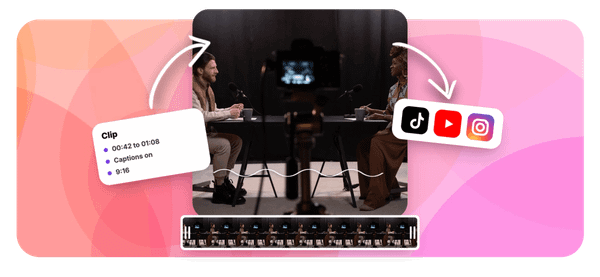
That last point matters more than it sounds. Crayo's clip creator tool takes your full podcast audio or video and automatically pulls out the strongest moments, adds captions, and formats them for platforms like TikTok, YouTube Shorts, and Instagram Reels. Instead of spending hours editing podcast highlight clips by hand, you get shareable short-form podcast content fast, so you can focus on what actually moves the needle: growing your show and making money from it.
Summary
- Podcast Shorts consistently earn 30 to 50 times less per view than long-form content in direct ad revenue, yet creators keep measuring them against long-form RPM benchmarks. One documented case study shows a creator earning $200 per month directly from Shorts while the long-form episodes those clips funneled viewers toward generated $3,000 per month.
- Music choice quietly cuts monetization in ways most creators never see itemized. Adding copyrighted or trending audio to a Short can reduce its ad revenue by more than 50%, dropping a clip from $30 per million views to roughly $15. The engagement benefit of popular audio is real, but so is the revenue penalty, and both effects persist for the clip's entire lifespan, with no way to recover lost earnings after the fact.
- YouTube's built-in feature that links a Short directly to its full-length episode is one of the most effective discovery mechanisms available to podcasters right now, yet most are not using it deliberately. Without that link, even a Short with 500,000 views functions as a dead end rather than the top of a funnel. Setting it up takes roughly 30 seconds per clip, and skipping it breaks the conversion mechanism the entire strategy depends on.
- Posting volume is a testable variable, not a fixed habit, and creators who treat it that way consistently learn something about their audience that those with fixed schedules never discover. Some audiences respond better to two focused clips per episode than five diluted ones, while others show clear engagement spikes at higher volume.
- YouTube Shorts generates over 70 billion views per day globally, according to Ssemble's 2026 monetization guide, but the metric that reflects whether a Shorts strategy is working isn't view count. Podcasts with 1,000 or more downloads per episode are considered viable for sponsorship monetization, which means every Short's real job is to build an audience that crosses that threshold, not earn direct ad revenue on its own.
- Niche and expertise-driven content earns meaningfully more at the same view count because it attracts higher advertiser CPMs into the revenue pool. YouTube confirms that Shorts creators receive 45% of revenue allocated from the Creator Pool, meaning the content category and advertiser demand within a niche directly affect individual earnings. A clip demonstrating a specific professional skill will outperform a general conversation clip in ad revenue even when both reach identical view counts.
Crayo's clip creator tool addresses the per-clip configuration bottleneck by handling auto-captioning, subtitle styling, and audio selection in a single generation workflow, so volume testing and consistent episode linking stay realistic to run every week rather than collapsing under accumulated editing time.
Why Podcasters Struggle to Make Real Money From Shorts

Podcast Shorts are genuinely useful. They just aren't useful in the way most podcasters expect them to be, and that gap between expectation and reality is where real money gets left on the table.
The documented numbers are direct: Shorts RPM runs 30 to 50% lower than long-form content. Even at 10 million views, realistic direct earnings from Shorts sit around $100 to $500 per month. One documented case study shows a creator earning $200 per month directly from Shorts, while the long-form episodes those same Shorts funneled traffic toward generated $3,000 per month. That's a 15x gap, and it exists not because Shorts fail, but because podcasters measure them by the wrong standard.
Rethinking Shorts as Funnel Drivers
The pattern that keeps surfacing is this:
- A podcaster takes one long episode
- Cuts it into several clips
- Posts them across platforms
- Watches the view counts climb
- Then wonders why the revenue doesn't follow
That approach treats Shorts as a destination. Documented guidance is blunt: slicing one video into parts and calling it a strategy is not a strategy. A real Shorts strategy means testing what drives clicks back to full episodes, not just maximizing clip output.
Avoiding Music-Driven Revenue Loss
There's also a specific, quantified cost most podcasters never account for. Adding copyrighted or trending music to a Short cuts its ad revenue by more than 50%, based on 2026 analysis. A clip earning $30 per million views without music drops to $15 with it. Creators who consistently use popular audio for engagement are unknowingly halving their potential earnings on every single upload, without realizing the music choice is the bottleneck, not the content itself.
Most podcast clip tools speed up production, but they don't flag this tradeoff. Crayo's clip creator tool is built to get clips out fast with full control over audio and styling, so you don't sacrifice revenue potential as you scale output.
Leveraging YouTube’s Native Full-Episode Linking
YouTube also offers a built-in feature that links a Short directly to its full-length episode, letting a viewer tap through from a 45-second clip straight into the full conversation. Documented guidance identifies this as one of the most effective discovery mechanisms available to podcasters right now. Most aren't using it deliberately, which means they're running Shorts as an isolated content type rather than as the top of a funnel that leads somewhere significantly more valuable.
Aligning Expectations with Short-Form Performance
The real problem isn't that Shorts underperform. It's that the expectation attached to them, that view count should produce proportional ad revenue the way long-form views do, sets podcasters up to undervalue a tool that actually works when it's used correctly.
But what happens inside that revenue gap is more specific, and more fixable, than most people realize.
Related Reading
- Best AI Podcast Clip Generator
- What Is An Audiogram Podcast
- How Long Does It Take To Trim A Zoom Recording
- Content Repurposing Examples
- Webinar To Short Clips AI
- Clipping a YouTube Video
- Podcast Clips For Social Media
- Video Clipping For Social Media
- How Do I Repurpose My Interview To Social Media
- Sermon Clips AI
The Hidden Cost of Expecting Shorts to Directly Replace Ad Revenue

Podcast Shorts will earn you real ad revenue. Just not the kind that pays the bills on its own, and documented 2026 data makes that gap precise enough to act on. According to the Virvid AI Blog, Shorts RPM runs 50 to 100 times lower than long-form video RPM, which means the same creative energy that earns a podcaster thousands per month on a full episode earns them hundreds on a Short with identical view counts.
The failure point is usually measurement. Podcasters check direct Shorts ad revenue, compare it instinctively to what their long-form content earns, and read the gap as evidence that Shorts aren't pulling their weight. That conclusion feels logical. It's also wrong, because it treats a distribution tool like a destination. A billboard doesn't sell the product. It sends people to the store. Shorts work the same way, and judging them by what the billboard earns misses the entire mechanism.
Where the Revenue Actually Goes Missing
The music choice problem compounds this quietly. Adding trending audio to a Short feels like a low-risk engagement play, but YouTube's 2025 Shorts Revenue Sharing Updates confirm that Shorts CPMs already run 3 to 10 times lower than long-form CPMs, and music licensing fees compress that further.
A clip that earns $30 per million views without copyrighted audio earns roughly half that with it. The discovery benefit of trending audio is real. The monetization cost is just as real, and most podcasters never see it itemized.
Testing Clip Variations to Optimize Strategy
The familiar workaround is to batch-produce clips from every episode and call that a Shorts strategy. Most teams handle this by slicing one episode into four or five segments, scheduling them across the week, and measuring success by total view count. The hidden cost isn't that this approach fails entirely. It's that it never gets tested against anything else, so podcasters never learn whether posting one strong clip daily outperforms three average ones, or whether a standalone insight clip drives more long-form clicks than a conversation highlight.
Tools like Crayo address exactly this bottleneck, letting creators generate, style, and publish multiple clip variations fast enough to actually run those tests rather than defaulting to the same production habit every week.
What the Funnel Actually Looks Like in Numbers
A documented case study puts the contrast in concrete terms: $200 per month earned directly from Shorts, against $3,000 per month from the long-form content those Shorts funneled traffic toward. That's not an argument against Shorts. It's an argument for measuring them correctly.
A creator who tracks long-form watch time and subscriber growth attributable to their clips sees a completely different picture than someone checking the Shorts revenue tab alone. YouTube's built-in Shorts-to-long-form linking feature exists because this funnel is real and measurable, yet most podcasters either skip the setup or don't know it exists.
Shifting Metrics to Unlock Growth Potential
The compounding effect of these three gaps, misread metrics, music licensing costs, and untested posting strategy, isn't that Shorts become worthless. It's that a genuinely effective growth tool gets quietly deprioritized based on a number that was never designed to represent its value. Fixing it costs no extra production time. It's a measurement shift and a setup change, not more work.
And the moment you start tracking what Shorts actually drive rather than what they directly earn, the next question becomes obvious: how do you build that funnel in the time most podcasters spend editing a single clip?
How to Make Money With Podcast Shorts in 30 Minutes

Building the right strategy is one thing. Executing it consistently, without burning hours you don't have, is where most podcasters quietly give up.
The seven-step framework above works. But its value depends entirely on whether you can actually run it week after week without it consuming your production schedule. That's the real constraint, and it's worth being honest about it.
Link Every Short to Its Full Episode, Without Exception
The failure point is usually not strategy. It's the gap between knowing what to do and doing it every single time. YouTube's built-in Shorts-to-long-form linking feature takes roughly thirty seconds to set up per clip. Skipping it, even once, breaks the funnel you're trying to build. Treat it like a seatbelt: non-negotiable, every time, no exceptions.
The same discipline applies to audio choices. Royalty-free or original audio on monetized Shorts isn't a creative preference. It's a financial decision. A clip using copyrighted music might feel more polished, but the revenue math penalizes it immediately. The better-sounding clip that earns half as much isn't actually better.
Test Posting Volume Before Committing to a Fixed Schedule
The pattern that surfaces across channels that grow through Shorts is consistent: creators who run real volume experiments, posting one clip daily for a defined period, then three, then more, learn something specific about their audience that creators with fixed habits never discover. They find the threshold where the algorithm starts recognizing them. That threshold is different for every show, and the only way to find yours is to test deliberately rather than assume.
Most podcasters choose clips by feel: they pick the moment that made them laugh or the quote they liked best. That instinct isn't useless, but it's also not a system. The clips that perform best in Shorts tend to be the ones that create an open loop, a question the viewer needs to follow into the full episode to resolve. Educational content and expertise-driven moments do this naturally, which helps explain why they consistently outperform general entertainment clips at similar view counts.
Measure What Shorts Actually Move, Not What They Directly Earn
According to the Ssemble Blog's YouTube Shorts Monetization Guide, YouTube Shorts generates over 70 billion views per day globally. That reach is real. But the metric that tells you whether your Shorts strategy is working isn't view count. It's the watch time and subscriber growth on your long-form episodes that you can trace back to Shorts traffic. Check that number weekly. It's the only signal that reflects what Shorts are actually doing.
The analytics dashboard makes this easier than it sounds. Filter your long-form episode performance by traffic source and look specifically for Shorts-driven sessions. If those viewers are watching more of the full episode than your average viewer, your clips are doing exactly what they should: selecting for the right audience, not just any audience.
Where Most Podcasters Lose Time They Can't Recover
Most creators spend the bulk of their clip production time in editing software: trimming, captioning, resizing, adjusting aspect ratios, and exporting. That process, done manually for three to five clips per episode, can consume two to three hours. For a weekly podcast, that's a significant portion of total production time spent on distribution rather than content.
Crayo addresses this specific bottleneck directly. The workflow compresses upload, styling, and generation, with auto-captioning and subtitle styling handled automatically. For podcasters running the volume experiments described above, producing multiple clips per episode in minutes rather than hours is what makes consistent Shorts posting sustainable rather than aspirational.
Niche Content Earns More at the Same View Count
The truth is that two Shorts with identical view counts can earn meaningfully different revenue depending entirely on what the content is about. Educational, how-to, and expertise-demonstrating clips attract higher advertiser CPMs. A ten-minute podcast clip explaining a specific professional skill will outperform a ten-minute general conversation clip in ad revenue, even at the same view count. Where your content allows it, lean into that pattern deliberately.
YouTube Help's Shorts monetization policies confirm that Shorts creators receive 45% of the revenue allocated to them from the Creator Pool, which means the total pool size and the content mix within it directly affect what any individual creator earns. Higher-value niches pull more advertiser spend into that pool. Your content category is a lever, not a fixed variable.
Treat Long-Form as the Product, Shorts as the Sales Channel
The critical difference between podcasters who build sustainable revenue from Shorts and those who plateau is this: the ones who grow treat their full episodes as the product they're selling, and Shorts as the channel they're using to sell it. That framing changes every decision downstream. It changes which moments you clip, how you write your Short descriptions, and how you measure success each week.
When you stop asking "how much did my Shorts earn?" and start asking "how many people did my Shorts send to my full episodes?", the strategy stops feeling like a side task and starts functioning like a distribution system. That shift in measurement is the actual unlock. Everything else in this framework is just execution.
The 30-Minute Workflow to Turn Shorts Into Real Podcast Revenue
The workflow itself is only half the equation. Knowing what to do in 30 minutes matters, but understanding why each step exists at a structural level separates creators who see compounding results from those stuck in a flat loop of views without revenue.
The four-step process outlined here treats each publishing window as a system checkpoint, not a content task. Audio safety, episode linking, volume testing, and attribution tracking each solve a specific failure mode. Miss one, and the funnel leaks at that exact point, quietly, without any obvious signal telling you where.
Why the Audio Check Comes First, Not Last
The failure point is usually sequencing. Most creators confirm audio choice after a clip is already edited, which means discovering a copyright problem late costs time and forces a rebuild under deadline pressure. Checking audio at minute zero removes that risk entirely and keeps the other 30 minutes focused on distribution, not damage control.
Royalty-free or original audio also protects every clip's revenue ceiling before it goes live. A Short with problematic audio doesn't just earn less; it earns less permanently for its entire lifespan on the platform, with no way to recover that lost revenue retroactively.
The Link That Does the Actual Work
When you set up YouTube's built-in link from a Short to its corresponding full episode, you're not adding a nice-to-have feature. You're installing the mechanism that converts short-form reach into long-form watch time, which is where the meaningful revenue actually lives. Without that link, a Short with 500,000 views is just a dead end.
The pattern that surfaces repeatedly among podcasters who grow long-form audiences through Shorts is simple: every clip points somewhere. The Short is a door. The full episode is the room. A door that leads nowhere isn't a funnel; it's just a wall.
Volume as a Variable, Not a Habit
The instinct to publish a fixed number of Shorts per episode feels organized, but it's really creative autopilot. Treating posting volume as an ongoing experiment means you're constantly gathering data about your specific audience's threshold, rather than assuming one format works forever.
Most creators who run volume tests discover their optimal clip count isn't what they expected. Some audiences respond better to two focused clips than five diluted ones. Others show clear engagement spikes at higher volume. Neither answer is universal, which is exactly why the experiment has to keep running.
Automating Clip Generation to Reduce Editing Friction
The familiar approach is to edit clips manually in a traditional video editor, adjusting captions and styling frame by frame before publishing. That process works, but it compounds across every episode and every volume test, turning what should be a 30-minute system into a multi-hour production task.
Crayo addresses this directly, auto-generating captions, applying subtitle styles, and producing multiple clips in seconds, so the volume experiment stays genuinely low-friction rather than theoretically simple but practically exhausting.
Tracking the Metric That Actually Tells You Something
According to Resonate Recordings, podcasts with 1,000 or more downloads per episode are considered viable for sponsorship monetization, which means the real goal of any Shorts strategy is building the long-form audience that crosses that threshold. Tracking Shorts' own ad revenue tells you nothing about whether that's happening. Tracking long-form watch time and subscriber movement in the days following each batch tells you everything.
This is the tracking habit that most podcasters skip because it requires patience. The signal doesn't appear in hours; it appears across days. But once you log it consistently, the pattern becomes readable, and you can see which clip formats and episode topics convert casual Short viewers into full-episode listeners.
What the Before-and-After Actually Reveals
The before state: isn't a failure of effort. Podcasters who slice episodes into Shorts with trending music and measure success by view count are working hard. The problem is that the effort targets the wrong thing, and the measurement confirms the wrong outcome.
The after state: reorients every decision around a single question: did this batch of Shorts increase the long-form audience? That question changes which clips get selected, how audio gets chosen, whether the episode link gets set up, and what the post-publish tracking looks at. The workflow doesn't add complexity; it removes decisions that never pointed toward real revenue in the first place.
Connecting Shorts Output to Long-Form Growth
YouTube Shorts receives over 70 billion views per day, which means the distribution opportunity is genuinely massive. The creators capturing that opportunity for long-form growth aren't the ones publishing the most Shorts. They're the ones whose Shorts are structurally connected to a destination worth visiting.
The surprising thing isn't how much the workflow changes. It's how little time the right version actually takes once the decisions are already made. But speed of execution only matters if the output is built to convert, and that's where most creators hit an obstacle they didn't see coming.
Related Reading
- Church Reels Editing
- Repurpose Keynote Into Social Media Clips
- How To Start Clipping On Instagram
- How To Trim A Zoom Recording Saved On My Computer
- Best Video Clipping Tool For YouTube
- Repurposing Content For Social Media
- How To Add Audio To A Video
- Podcast Reels
- How To Repurpose Webinar Content For Marketing
Produce Monetization-Ready Shorts Faster With Crayo
The obstacle isn't knowing what to do. At this point, the strategy is clear:
- Royalty-free audio
- Episode links built in from the start
- Volume testing
- Attribution tracking
The obstacle is the per-clip configuration time that quietly accumulates across every episode until the whole process feels heavier than it should.
Streamlining Monetization-Safe Podcast Workflows
Open Crayo, upload your episode, and generate podcast Shorts with royalty-free audio and direct episode links handled inside the same workflow. No separate audio verification step, no manual linking after the fact. The monetization-safe defaults are built into the generation process, so the strategy you've mapped out in this post stays realistic to run every week, not just when you have extra time.
The podcasters actually capturing revenue from short-form content aren't publishing the most clips. They're the ones whose clips are structurally sound every time, because the process makes it hard to skip the steps that matter.
Related Reading
• Best Audiogram Maker
• Content Repurposing Tool
• Best AI Video Tools Like Vizard For Webinar Clips
• How To Trim Google Meet Recording
• Best AI Video Clipping Tools 2026
• Best Way To Make Podcast Clips
• How To Automate My Video Clipping
• How To Trim A Zoom Recording
• Best Ai Video Repurposing Tools 2026