

Ever scrolled through TikTok and found yourself watching absurd, chaotic, oddly satisfying content for an hour without knowing why? That is TikTok brain rot at work, and it has become one of the most powerful forces shaping short-form video today. This article breaks down 7 brainrot examples that will give you real, usable ideas to create your own videos in 30 minutes or less.
If you want to turn those ideas into actual content fast, Crayo's clip creator tool makes that process straightforward. Instead of spending hours editing, you can take brainrot-style concepts like absurd memes, random character skits, or looping nonsense clips and turn them into polished videos quickly, so you spend less time producing and more time posting.
Table of Contents
- Why Creators Struggle to Learn From Brainrot Examples
- The Hidden Cost of Treating Every Brainrot Example the Same
- 7 Brainrot Examples to Inspire Your Videos in 30 Minutes
- The 30-Minute Workflow to Apply a Brainrot Mechanic to Your Content
- Apply Brainrot Mechanics to Your Content Faster With Crayo
Summary
- Brainrot is not a single format. It is a collection of distinct mechanics, each solving a different problem. Skibidi Toilet runs on serialized character escalation and proprietary IP. Italian Brainrot spreads through an open, remixable formula anyone can enter. Sludge content is a structural retention tool. Treating these as variations of the same thing leads creators to borrow the wrong technique entirely, which is a workflow problem, not just a framing error.
- The cultural footprint of brainrot grew faster than most creators tracked. Oxford named "brain rot" its Word of the Year for 2024, reflecting a 230% increase in usage of the term between 2023 and 2024. That surge brought more creators into the category, but increased awareness of a trend and understanding of its underlying mechanics are two different things. Most of the study happening in that wave was surface-level.
- Attention constraints are tightening the margin for error. Research published in a 2025 Brain Sciences review found that heavy social media users experience up to a 40% reduction in attention span, and the average human attention span has dropped to approximately 8 seconds in the digital age. Content built on a mismatched mechanic does not just underperform creatively. It competes in an environment where the tolerance for weak retention is shrinking.
- Open participation formats have a defined lifecycle that most creators miss. Meme formats like Italian Brainrot typically reach saturation within 90 to 120 days of peak virality. Studying a format because it is famous often means studying its saturation point, not its growth window. The more actionable signal is tracking emerging formats at the 30 to 60 day mark, before the content space crowds around the mechanic.
- Most creators use the wrong order of operations. Picking a famous example first and then reverse-engineering a justification for why it fits your content produces surface imitation rather than technique transfer. Goal-first sequencing changes the output: identify what you are trying to accomplish, match that to the mechanic that solves the specific problem, then adapt the underlying technique rather than the visual details.
- Production friction is where the right workflow breaks down in practice. Creators who correctly identify the mechanic and understand the adaptation still spend hours manually syncing voiceovers, positioning subtitles, and sourcing secondary footage before they can test whether the technique actually fits their format. That bottleneck pushes creators back toward copying recognizable surface details because it is faster than running a real experiment.
Crayo's clip creator tool addresses this directly by handling AI voiceovers, subtitle placement, and gameplay footage optimization in a single workflow, so production doesn't become the point where the mechanic-testing loop stalls.
Why Creators Struggle to Learn From Brainrot Examples
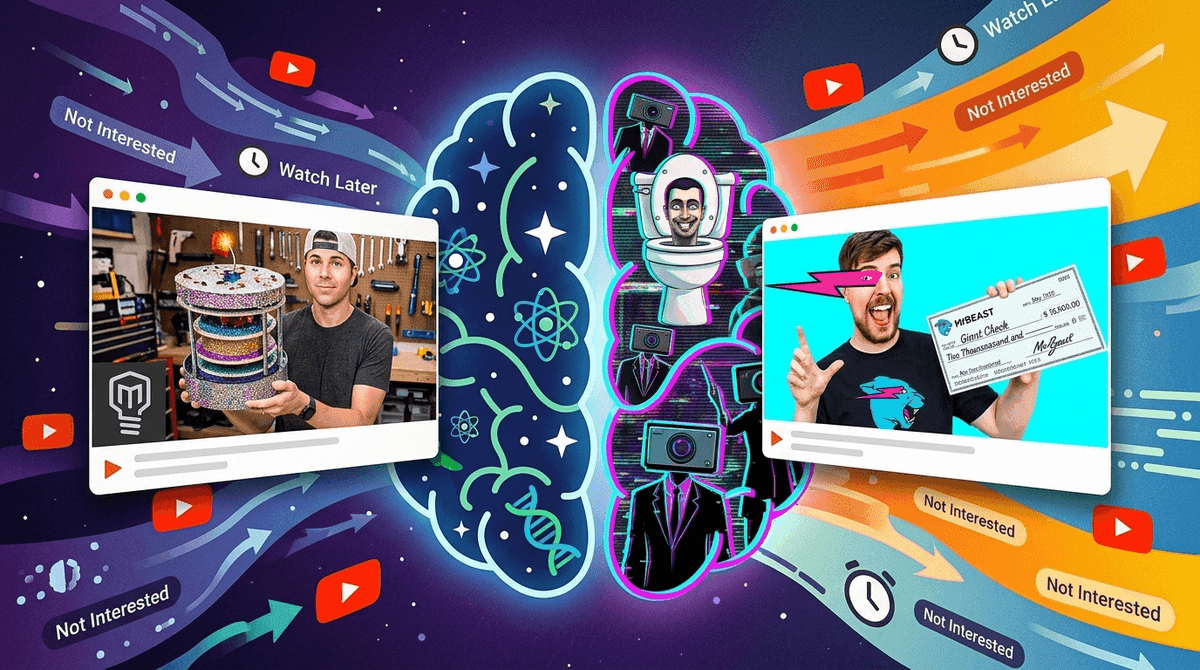
Brainrot is not one thing. It never was. The term gets applied to:
- Skibidi Toilet
- Sludge content
- Italian Brainrot
- The 67 meme
As if they share the same underlying mechanic, but studying one to understand them all is like reading one chapter of a book and assuming you know the plot of every book in the genre.
Texture vs. Mechanics in Brainrot Creation
The failure point is usually this: creators absorb the surface texture of a brainrot example, the chaos, the absurdity, the speed, and mistake that texture for the actual technique. According to Demystifying the New Dilemma of Brain Rot in the Digital Era, a 2025 PMC review, Oxford named brain rot Word of the Year for 2024, reflecting a 230% increase in usage between 2023 and 2024. That explosion in cultural awareness means more creators are studying the category than ever, but awareness of a trend and understanding of its mechanics are two completely different things.
What Actually Separates the Sub-Genres
- Skibidi Toilet is a proprietary, narrative-driven animated universe built by one creator, DaFuq!? Boom!, with escalating character conflicts that reward repeat viewers.Boom!, with escalating character conflicts that reward returning viewers.
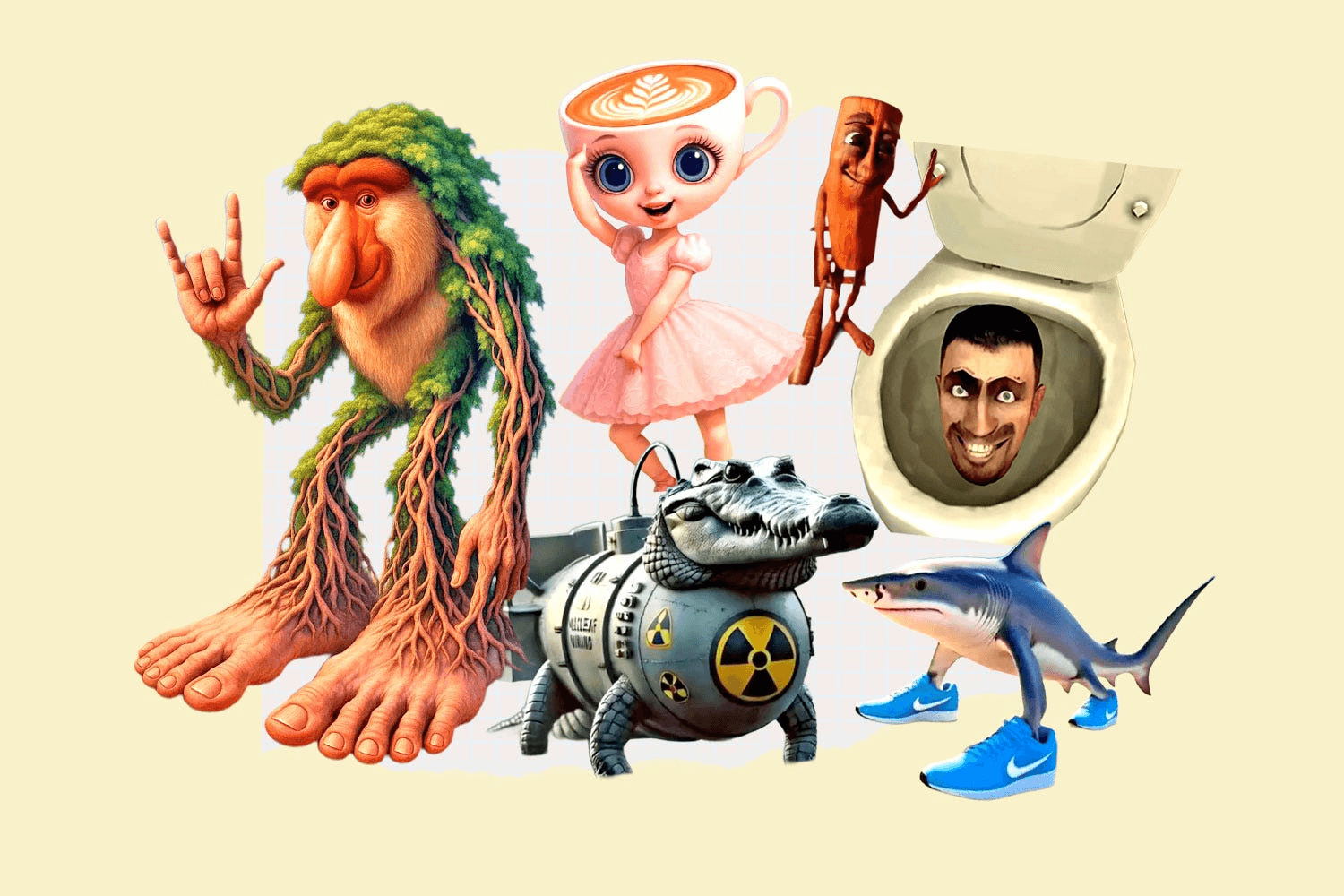
- Italian Brainrot is the opposite: an open, decentralized meme format where anyone can generate a new AI-character combination using the same basic formula.
- Sludge content is neither. It is a retention technique, a split-screen pairing of unrelated stimuli designed to hold attention during content that might otherwise lose the viewer.
Three formats, three completely different problems being solved, three different skills required to replicate them.
Choose the Right Content Mechanic
Most creators handle this by picking the brainrot example they personally find most entertaining, studying it until they feel confident, then applying its lessons broadly. The hidden cost is that they end up borrowing the wrong mechanic entirely. A creator who studies Skibidi Toilet and concludes chaos and absurdity are the formula will build something that misses the point, because Skibidi Toilet's actual engine is original world-building and character escalation, not randomness.
The same pattern surfaces in gaming content and reaction formats: the surface looks similar, but the underlying mechanic driving retention is completely different. Creators who want to move faster through this learning curve often find that tools like Crayo's clip creator let them test format mechanics quickly, without spending hours in production before they even know if the technique fits their content.
Why Newer Brainrot Formats Change the Calculation
The same research notes that average human attention span has dropped to approximately 8 seconds in the digital age, which partly explains why brainrot formats keep mutating. Formats that held attention in 2023 face a more demanding audience in 2025, and trends like "Steal a Brainrot" emerged specifically because the earlier formats had already been absorbed and normalized.
Creators who only study the original, most-famous examples are essentially studying what worked before the audience adapted, not what is working now. The category is still actively generating new mechanics, and the gap between what's saturated and what's currently gaining traction shifts faster than most creators track.
Why Format Misreading Costs Growth
The real bottleneck is not a shortage of brainrot examples to learn from. It is treating the category as a single format when it is actually a collection of distinct techniques, each with its own origin, business model, and transferable lesson. Miss that distinction, and every example you study teaches you the wrong thing. But what that misreading actually costs you, in time, in reach, and in missed momentum, is where the stakes become surprisingly concrete.
Related Reading
- TikTok Content Ideas for Business
- What Does Content Under Review Mean on TikTok
- YouTube Shorts Ideas Without Showing Face
- Viral YouTube Shorts Ideas
- Why Is My Content Under Review on TikTok
- Creative Instagram Reels Ideas
- YouTube Shorts Content Ideas
- YouTube Shorts Ideas For Beginners
- How Long Can A Reel Be On Instagram
- Instagram Reels Ideas For Business
- What Does Promotional Content Mean on TikTok
- Instagram Reels Ideas For Beginners
- How Much Do Content Creators Make on TikTok
The Hidden Cost of Treating Every Brainrot Example the Same
Treating every brainrot example as a single category is not a minor framing error. It is a workflow problem with a measurable output cost, because the mechanic you study determines the technique you build, and a mismatched technique produces content that works for the wrong reasons or not at all.
Why the Wrong Lesson Compounds Over Time
The failure point is usually invisible at first. A creator spends two weeks building a proprietary character universe inspired by the most famous brainrot examples, only to discover the format they chose was never designed to be owned. Open, remixable meme formats like the Italian Brainrot wave spread precisely because no single creator controlled them. The value lived in mass participation, not in a defended IP. Applying a closed-universe strategy to an open-format opportunity does not just waste effort; it positions you against the actual mechanic that made the format work.
Don’t Overcomplicate Retention Mechanics
The same misread happens in reverse with structural techniques. Sludge content, the split-screen retention method that SYBO Games credited directly for Subway Surfers' resurgence, gets lumped in with character-driven absurdist content because both feel chaotic on the surface. Creators then add unnecessary characters or narrative layers to a technique that only needs a low-stakes secondary visual to do its job. The result is more complex content that performs worse, because the added complexity works against the mechanic's core function: reducing scroll-away during low-engagement stretches.
Study the Right Brainrot Examples
Most creators handle this by studying whichever brainrot examples surface most in their feed, then reverse-engineering what feels memorable. That approach is understandable, but it conflates familiarity with relevance. A clip creator tool built specifically for short-form video removes the formatting friction that slows this research loop down, letting creators spend time identifying the right mechanic rather than rebuilding the same template from scratch every time a new format surfaces.
Which Examples are Actually Worth Studying Right Now
Oxford named "brain rot" the Word of the Year for 2024, with usage surging 230% compared to the previous year. That kind of cultural velocity means the category is not static. Newer formats like Steal a Brainrot and the 67 meme emerged after the original wave had already peaked, confirming that the most discussed examples are not always the most actionable. Studying a saturated format because it is famous is the content equivalent of optimizing for last quarter's algorithm.
The measurable cost of misapplied effort is not just wasted time. Excessive consumption of low-quality digital content is associated with up to a 40% reduction in attention span among heavy social media users. Audiences are not getting more patient. Every piece of content built on a mismatched mechanic competes in an environment where the margin for holding attention is shrinking, not growing. Getting the mechanic right is not a creative preference; it is a retention strategy. And knowing which specific examples are still actively growing is only half the equation.
7 Brainrot Examples to Inspire Your Videos in 30 Minutes

Seven distinct mechanics. Seven different problems solved. The gap between knowing that and using it is where most creators stall.
1. Skibidi Toilet: Building an Owned Universe
DaFuq!?Boom! did not stumble into a character franchise. Starting in 2023, the creator built a closed narrative loop where each episode escalated the conflict between toilet-headed and camera-headed characters, giving audiences a reason to return that had nothing to do with trend-chasing. The mechanic is serialized tension inside proprietary IP, and it produced licensed games and merchandise as downstream proof. If your content goal is to build a recognizable brand identity over time, this is the architecture to study, not the absurdist surface.
The critical lesson here is ownership.
- Open formats invite participation but dilute individual credit.
- Closed universes require more upfront creative investment, but every view compounds toward a single identifiable brand rather than a shared cultural moment that no one controls.
2. Italian Brainrot: The Power of a Combinatory Formula
Over 100 documented characters emerged from a single formula:
- Animal plus object or food
- Rendered in AI-generated visuals
- Named with pseudo-Italian phonetics
Tralalero Tralala and Bombardiro Crocodilo are not creative accidents. They are outputs of a replicable system that anyone could run, which is exactly why the format spread so fast and why no single creator owns its success. The window for new Italian Brainrot entries has narrowed considerably. According to creator economy research tracking meme lifecycle data from 2024, open participation formats typically reach saturation within 90 to 120 days of peak virality. Studying this example now is less about joining the trend and more about recognizing the combinatory formula as a template for the next open format that surfaces.
3. Sludge Content: A Retention Technique, Not a Style
Most creators fail with sludge content by treating it as an aesthetic choice rather than a structural tool. Split-screen video, pairing unrelated secondary footage with primary content, works because it satisfies two attention patterns simultaneously without requiring either to carry the full cognitive load. SYBO Games confirmed this when Subway Surfers gameplay footage, used as passive secondary content in thousands of unrelated videos, directly contributed to the game's measurable resurgence years after its original peak.
This mechanic requires no characters, no original IP, and no narrative arc. It is a retention layer you apply to existing content during stretches where engagement would otherwise drop. That specificity matters: sludge content is a targeted fix, not a content strategy.
Streamline Short-Form Video Production
Most creators handle the production side of this by manually sourcing gameplay clips, cutting them to length, and syncing them with primary footage across separate editing timelines. The friction compounds fast when you are producing at volume. Crayo is built for exactly this bottleneck, combining AI voiceovers, subtitle generation, and optimized gameplay footage into a single workflow so creators spend time identifying the right mechanic rather than assembling the technical layers around it.
4. Steal a Brainrot: Gamified Engagement Is a Different Category
The collection-and-trading mechanic inside Steal a Brainrot operates on acquisition psychology, not passive viewing. Players want to hold rare items, complete sets, and execute trades, which means the engagement loop is active and competitive rather than receptive. This is a fundamentally different category from any video format on this list. If your content already lives inside a game environment or you are building toward interactive community features, this example teaches you something no video-based brainrot format can: scarcity and tradability create retention that passive content cannot replicate. Study the rarity structure, not the brainrot aesthetic layered on top of it.
5. The "67" Meme: Reading What Is Still Growing
Emerging in 2025 after the original brainrot wave had already peaked, the "67" meme demonstrates something the earlier examples cannot show you: the category is still producing new mechanics, not recycling old ones. That is the actual insight. Creators who treat brainrot as a fixed list of examples will always be studying yesterday's saturation point. The practical move is tracking emerging formats at the 30 to 60 day mark, before they reach the visibility that signals peak saturation. At that stage, the mechanic is identifiable, but the content space is not yet crowded. That timing window is where early-mover advantage actually lives.
6. Brainrot Slang: A Language Layer, Not a Format
- Ohio
- Rizz
- Fanum tax
- Skibidi
They do not belong to any single video format. They circulate through captions, dialogue, comment sections, and thumbnails independently of the mechanic they accompany. This linguistic layer is how brainrot vocabulary embeds itself across the category, so it functions as a signal of cultural fluency rather than a content strategy on its own. The practical application is narrow but precise: use current slang to calibrate caption and dialogue authenticity within whichever mechanic you are already executing. Misusing or over-indexing on slang without a matching structural mechanic reads as performative to the audiences who coined those terms in the first place.
7. Livestream and Gameplay Hybrid: Layering Retention onto Personality
When a creator runs live commentary alongside simultaneous Subway Surfers footage, the result is neither sludge content nor a pure livestream. It is a hybrid that layers a structural retention technique onto a personality-driven format, and the two reinforce each other. The gameplay gives distracted viewers something to track passively while the commentary gives engaged viewers a reason to stay emotionally invested. If you already produce reaction or commentary content, this hybrid is the most direct upgrade because it doesn't require replacing your format. It requires adding a secondary visual layer that extends average watch time without changing your core creative voice.
The 30-Minute Workflow to Apply a Brainrot Mechanic to Your Content
Picking the right mechanic to borrow matters far more than picking the most famous example to copy. The workflow below gives you a repeatable decision sequence that takes thirty minutes and produces a clear, actionable output: one matched mechanic, adapted to your specific content goal, with a built-in saturation check before you invest any production time.
Minute 0-10: Name Your Actual Goal Before Anything Else
Decide what you are genuinely trying to accomplish. Not "go viral" as a general ambition, but a specific outcome:
- Building a recurring character viewers recognize
- Joining a trend that already has momentum
- Holding attention through a section of your video where viewers typically drop off
- Creating a loop that pulls comments and shares
This single decision filters out most of the noise. If your goal is retention through a weak mid-video section, the entire Skibidi Toilet character universe becomes irrelevant to your situation. You are not building narrative IP. You are solving a pacing problem. Knowing that saves you from spending ten hours studying the wrong example.
Minutes 10-15: Match Your Goal to the Mechanic, Not the Aesthetic
Use the categories established earlier in this post as your filter.
- Open remixable format
- Closed character universe
- Structural retention layer
- Gamified collection mechanic
- Hybrid personality plus technique
Each one maps to a different goal. Each one fails when applied to the wrong one. The failure point is usually aesthetic imitation. A creator sees Italian Brainrot content performing well, copies the absurd animal-character visual, and wonders why participation doesn't follow. The visual was never the mechanic. The mechanic was the open, remixable format that invited thousands of independent creators to add their own versions. Copying the look without enabling the participation loop produces a closed imitation of an open system, and closed imitations of open systems do not spread.
Minutes 15-25: Adapt the Underlying Technique, Not the Surface Details
The mechanic is the transferable part.
- The characters
- The sounds
- The specific meme references are not
If your goal is retention through a weak section, the sludge content mechanic tells you to add a low-stakes secondary visual channel running underneath your main content. That technique works as well in cooking videos, finance commentary, sports analysis, and gaming clips. None of those need brainrot characters to apply it.
Transfer the Technique, Not the Style
Most creators adapt by asking, "How do I make my content look like this example?" The better question is "what problem did this example solve, and how do I solve that same problem in my own format?" One question leads to surface copying. The other leads to genuine technique transfer. This is also where production friction kills momentum. Creators identify the right mechanic, understand the adaptation, and then spend the next three hours in a timeline trying to position subtitles correctly or sync voiceover timing. Crayo addresses that bottleneck directly, handling AI voiceovers, subtitle placement, and gameplay footage optimization so production doesn't become the point where the workflow stalls.
Minutes 25-30: Check Saturation Before Committing Effort
Confirm whether the mechanic you are borrowing is still in an active growth phase or already heavily crowded. This is not about avoiding trends entirely. It is about calibrating your expectations accurately before investing. Directly copying Italian Brainrot character designs at this point carries different odds than borrowing the open remixable format structure and applying it to a completely different niche with fresh creative territory. The mechanic can still work. The specific execution that made the original famous is often what's already saturated.
Why Goal-First Sequencing Changes the Output
The problem was never a shortage of brainrot examples to study.
- Skibidi Toilet
- Italian Brainrot
- Sludge content
- Steal a Brainrot
- The livestream hybrid format
These are all documented, analyzed, and widely discussed. The problem was the order of operations: most creators pick an example first based on what is famous, then reverse-engineer a justification for why it fits their content. Goal-first sequencing reverses that. You identify what you are trying to accomplish, then find the mechanic that solves that specific problem, then adapt the technique rather than the surface. The result isn't a brainrot video that looks like someone else's content. It is your content, with a borrowed structural insight embedded inside it.
From Imitation to Intentional Execution
The before-and-after here is concrete.
- Before: you imitate the most visible example, copy its aesthetic, and discover three weeks later that the mechanic was never suited to your format.
- After: you spend thirty minutes matching deliberately, adapt the underlying technique, check saturation, and produce content that actually applies the lesson the example was teaching.
But knowing the workflow is only part of what separates creators who execute from those who stay stuck in the planning loop.
Related Reading
- Instagram Reel Hook Ideas
- How To Create A Reel On Instagram
- Instagram Reel Caption Ideas
- Tiktok Content Ideas For Beginners
- Best Time To Post A Reel On Instagram
- Best Content For Tiktok
- How To Schedule A Reel On Instagram
- Best Content Strategy Tiktok
- How To Make Looping Content For Tiktok
- Ai Tools for TikTok Content Creation
Apply Brainrot Mechanics to Your Content Faster With Crayo
The execution gap is rarely about understanding. Most creators who reach this point know which mechanic fits their goal. What slows them down is the manual production time required to test that match, which pushes creators back toward copying the most recognizable surface details instead of running a real experiment. Open the clip creator tool, describe your matched mechanic and content goal, and generate a version built around that specific technique. No manual editing stack, no formatting detours, just a produced test you can actually publish and measure against your original goal.
That feedback loop is what separates creators who improve from those who stay in the planning phase. Crayo removes the production bottleneck so the workflow you built across this post becomes something you actually run, not something you intend to run. Match the mechanic, generate the version, publish it, and let the performance data tell you what the planning phase never could.