

You've probably wondered if turning your creative ideas into real income on TikTok is actually possible, or if those success stories are just lucky exceptions. The truth is, thousands of creators are building genuine revenue streams right now, and understanding the monetization landscape connects directly to developing strong TikTok content ideas for business that actually convert views into dollars. This article breaks down seven proven methods TikTok creators use to generate income, plus a practical roadmap to help you earn your first $1,000 within 30 days.
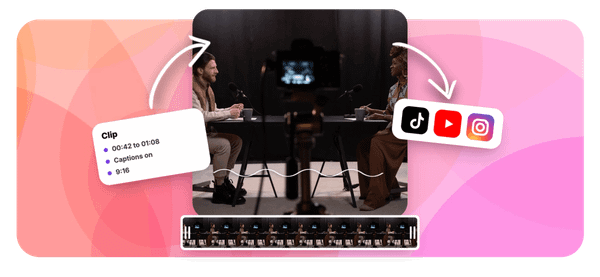
Creating consistent, quality content is the foundation of any monetization strategy, but editing and producing videos daily can quickly become overwhelming. That's where a clip creator tool comes in, streamlining your production process so you can focus on the revenue-generating activities and creative strategies that actually move you toward that $1K milestone.
Summary
- Reaching $1,000 in 30 days on TikTok requires stacking multiple revenue streams rather than waiting for a single source to scale. Creators who diversify income through services, affiliate products, digital downloads, and brand partnerships reduce risk and create more predictable revenue.
- Audience size matters far less than audience relevance for monetization. A creator with 5,000 engaged followers in a specific niche often earns more per post than someone with 50,000 followers scattered across unrelated interests. According to Creator Spotlight's 2025 monetization report, covering 427 creators, smaller, more targeted audiences consistently outperformed larger, misaligned followings in actual income generated.
- Platform payouts account for only a tiny fraction of creators' income. TikTok's Creator Fund pays inconsistent amounts, often pennies per thousand views, which proves insufficient for building sustainable revenue. Most profitable creators report that their income comes from external sources, such as services, products, and partnerships, that exist completely outside TikTok's payment structure, not from the platform itself.
- Content optimized purely for views trains the algorithm to attract entertainment seekers instead of buyers. When creators focus on viral formats without clear offers or conversion paths, they build audiences that watch but never purchase. Creators who included clear next steps in their content earned three times more than those who relied on viewers to figure out how to buy, according to the Creator Spotlight report.
- The production bottleneck prevents most creators from testing enough content variations to find what converts. Creating videos manually means spending hours on filming and editing instead of refining offers and closing deals.
Crayo's clip creator tool addresses this by automating scripting, voiceover generation, caption placement, and editing, so creators can produce finished TikTok videos in seconds rather than hours.
Table of Contents
- Why Small Content Creators Struggle to Make Money on TikTok
- The Hidden Cost of Relying on Views Instead of a Monetization Strategy
- 7 Ways TikTok Creators Make Money and Earn $1K in 30 Days
- The 30-Day TikTok Monetization Workflow to Reach Your First $1K
- Create TikTok Content That Converts in Under 30 Minutes with Crayo AI
Why Small Content Creators Struggle to Make Money on TikTok

Small content creators struggle to make money on TikTok because they chase views without building a monetization system. They follow trends, copy viral formats, and measure success by likes and engagement. But attention alone generates no income. Without a clear offer, conversion path, or revenue strategy behind the content, every video becomes entertainment instead of a business asset.
The View Trap
Most creators believe the path is simple: go viral, gain followers, then money follows. So they spend hours planning, filming, and editing content designed purely for reach. According to Verizon's Small Business study, 70% of small businesses create content, yet most never connect it to actual revenue. The platform rewards performance, but performance metrics don't pay your bills.
When Nothing Converts
Many creators post consistently but have nothing to sell. No product, no service, no clear next step for viewers who actually want to buy. So even when a video hits 100K views, the result is the same: zero dollars earned. The audience watches, scrolls, and disappears. Content that attracts random viewers focused on entertainment rarely builds trust with people ready to spend money. The type of audience matters infinitely more than the size.
The Production Bottleneck
Creating content takes real time. You plan the hook, film multiple takes, edit for pacing, add captions, and post on schedule. That cycle repeats daily if you want algorithmic momentum. Tools like Crayo address this bottleneck by automating technical editing, allowing you to generate finished videos in seconds rather than hours. When production speed increases, you can test more formats, post more consistently, and focus energy on the monetization strategy that actually generates income instead of burning out on repetitive editing tasks.
Platform Payouts Don't Scale
Some creators rely entirely on TikTok's creator fund, waiting for the platform to pay them directly.
The problem surfaces quickly:
- Payouts are inconsistent
- Often pennies per thousand views
- Insufficient to build a sustainable income
Most successful creators report that platform earnings represent a tiny fraction of total revenue. Real income comes from external sources, such as digital products, services, affiliate partnerships, or brand deals that exist completely outside TikTok's payment structure. But here's what nobody mentions until they've already wasted months: the real cost isn't just time or effort.
Related Reading
- TikTok Content Ideas for Business
- What Does Content Under Review Mean on TikTok
- YouTube Shorts Ideas Without Showing Face
- Viral YouTube Shorts Ideas
- Instagram Reels Content Ideas
- Why Is My Content Under Review on TikTok
- Creative Instagram Reels Ideas
- YouTube Shorts Content Ideas
- YouTube Shorts Ideas For Beginners
- How Long Can A Reel Be On Instagram
- Instagram Reels Ideas For Business
- What Does Promotional Content Mean on TikTok
- Instagram Reels Ideas For Beginners
- Instagram Reels Content Ideas
The Hidden Cost of Relying on Views Instead of a Monetization Strategy
The real cost isn't the time spent editing or the energy burned chasing viral formats. It's the opportunity cost of building an audience that watches but never buys. When you optimize content for views rather than revenue, you train the algorithm to show your videos to people seeking entertainment rather than solutions. That audience grows, but it's the wrong audience. They scroll, they like, they move on. You end up with thousands of followers and no path to income.
The Mismatch Between Attention and Intent
Most creators assume a large audience automatically creates monetization opportunities. But audience size means nothing if those viewers have no interest in what you might eventually sell. A creator posting funny dog videos might hit 500K followers, yet struggle to sell a $10 product because the audience came for laughs, not purchases. The content attracted curiosity seekers rather than buyers. According to Creator Spotlight's 2025 monetization report, 427 readers responded to questions about creator income, and the pattern was clear: creators with smaller, more targeted audiences often earned more than those with massive but misaligned followings. The difference wasn't reached. It was relevant.
When Production Becomes a Treadmill
Creating content without a monetization framework turns production into an endless loop.
- You film, edit, post, engage, and repeat.
- The metrics move upward.
- Views climb from 5K to 50K.
- Followers increase steadily.
- Engagement rates hold strong.
- But income stays at zero because nothing in that cycle connects to revenue.
The effort feels productive because the numbers validate it, but productivity without profit is just expensive motion. You're running faster on a treadmill that doesn't go anywhere.
The Cognitive Load of Unfocused Content
When creators produce content without a clear monetization goal, decision-making becomes exhausting. Every video requires fresh judgment calls:
- What topic should I cover?
- Which trend should I follow?
- What format will perform best?
Without a revenue framework guiding those choices, you're making dozens of creative decisions based purely on guesswork about what might go viral. That cognitive load compounds over weeks. You're not just creating content. You're constantly recalibrating strategy based on incomplete information, burning mental energy on questions that a clear monetization path would answer automatically.
Building for the Wrong Conversion
Views without a conversion strategy don't just waste time; they also waste money. They actively build the wrong foundation. The algorithm learns to serve your content to people who engage but don't convert. Your analytics show strong performance, so you double down on that content style, which attracts more of the same audience. Six months later, you have 100K followers who love your videos but would never consider buying from you. You've built an audience optimized for entertainment metrics rather than purchase behavior. Reversing that pattern requires either starting over or spending months reshaping audience expectations, both of which cost more than building correctly from the start.
7 Ways TikTok Creators Make Money and Earn $1K in 30 Days
1. Sell a Service You Already Know
The fastest path to $1K starts with skills you can deliver today.
- Content creation
- Video editing
- Social media management
- Makeup services
- Coaching
These don't require inventory, shipping, or product development. You use TikTok to demonstrate competence, then convert interested viewers into paying clients. Two clients at $500 each get you there. Four at $250 does the same.
High-Intent Content Conversion
This works because you're not building for scale yet. You're building for speed. A small audience of the right people matters more than 100K followers who watch but never buy. When someone sees you edit a video breakdown or explain a strategy, they're evaluating whether you can solve their problem. That's a sales conversation disguised as content.
2. Promote Products Through Affiliate Links
Affiliate marketing pays you a commission every time someone buys through your link.
- Beauty products
- Tools you actually use
- Digital platforms
- Amazon items
You don't create the product. You don't handle fulfillment. You connect content to existing demand. Fifty sales of a $20 product with 10% commission generate $100. That's one product in one video. Stack multiple products across different videos, and the math shifts quickly. The key is to match what you promote to what your audience already wants to buy, not to convince them they need something new.
3. Create and Sell Digital Products
Digital products let you build once and sell repeatedly.
- Ebooks
- Templates
- Guides
- Checklists
- Mini-courses
- No inventory costs
- No shipping delays
- No restocking
A $10 product needs 100 sales to hit $1K. A $20 product needs 50. The margin remains high because production costs after the first sale are effectively zero.
Problem-Aware Content Strategy
The challenge isn't creating the product. It's creating content that makes people understand why they need it. A checklist for meal planning only sells if your videos show the chaos of disorganized grocery trips and the relief of having a system in place. The product solves a problem your content makes visible.
4. Produce User-Generated Content for Brands
Brands pay creators to produce content they can use in their own marketing.
- Product videos
- Testimonials
- Short ads
- Demo clips
This income stream doesn't require a large following. Brands care about content quality and your ability to make their product look natural, not your follower count.
Scalable Content Throughput
Five videos at $200 each equals $1K. Ten videos at $100 does the same. The work is straightforward:
- Film yourself using the product
- Edit it to match the brand's style
- Deliver the file
Platforms like Crayo compress the production cycle by automating editing tasks such as captions, voiceovers, and background removal, letting you deliver finished content in minutes rather than hours. When you can produce three UGC videos in the time it used to take to finish one, you can take on more clients without burning out on repetitive editing work.
5. Negotiate Brand Deals With Focused Audiences
Brand partnerships pay creators to promote products directly to their audience. Even small creators earn $100 to $500 per post when their audience matches the brand's target. Three deals in a month get you to $1K or beyond. Brands evaluate engagement rate, niche relevance, and content quality more than raw follower numbers. A creator with 5K engaged followers in a specific category often earns more per post than someone with 50K followers scattered across unrelated interests. The tighter your audience focus, the more valuable your reach becomes to brands targeting that exact group.
6. Sell Physical Products Directly
Some creators build income by selling their own physical products.
- Beauty items
- Clothing
- Accessories
- Custom merchandise
TikTok becomes the storefront where you demonstrate the product, show results, and create demand. A $25 product needs 40 sales to reach $ 1 K in revenue.
Physical Product Economics
The advantage of physical products is the ability to control margins. You set the price. You own the customer relationship. The disadvantage is logistics:
- Inventory management
- Shipping coordination
- Quality control
This path works best when you already have product expertise or a clear vision for what your audience wants to buy.
7. Drive Traffic to Platforms That Monetize Better
TikTok builds attention. Other platforms capture and convert it. Many creators use TikTok as a traffic engine, sending viewers to Instagram, YouTube, email lists, or websites where monetization options are stronger. YouTube pays better ad revenue. Email lists convert to product sales. Websites host courses or memberships. This strategy treats TikTok as the top of the funnel, not the entire business. You create content that attracts interest, then direct that interest to a place you control. The income comes from ads, services, products, or subscriptions hosted outside TikTok's ecosystem. The platform gives you reach. You give yourself revenue infrastructure.
Why Multiple Streams Accelerate Income
These seven methods work because they don't depend on a single metric or platform behavior. You're not waiting for the creator fund to pay more. You're not hoping a video goes viral. You're connecting content to offers that generate income immediately. A service client pays you this week. An affiliate sale deposit is due tomorrow. A brand deal contract arrives next Monday. Stacking income streams also reduces risk.
- If affiliate commissions drop one month, service income can compensate.
- If brand deals slow down, digital product sales continue.
The revenue becomes more predictable because it comes from multiple sources, each operating on different timelines and conversion patterns.
Content-to-Conversion Architecture
Most creators focus entirely on content production and ignore the business architecture that turns views into money. They edit for hours, post consistently, and wonder why income stays flat. The bottleneck isn't content quality. It's the absence of clear conversion paths between what people watch and what they can buy. But building those paths in 30 days requires a level of production speed most creators can't sustain manually.
Related Reading
- Instagram Reel Hook Ideas
- How To Create A Reel On Instagram
- Instagram Reel Caption Ideas
- Tiktok Content Ideas For Beginners
- Best Time To Post A Reel On Instagram
- Best Content For Tiktok
- How To Analyze Tiktok Video Content
- How To Schedule A Reel On Instagram
- Instagram Story Vs Reel
- Best Content Strategy Tiktok
- How To Make Looping Content For Tiktok
- Ai Tools for TikTok Content Creation
The 30-Day TikTok Monetization Workflow to Reach Your First $1K
Reaching $1K in 30 days requires a structured workflow where each week builds toward a specific outcome:
- Define your offer
- Attract buyers
- Convert attention
- Scale what works
Most creators treat TikTok like a content experiment, posting randomly and hoping something sticks. This approach turns the process into a system in which every action directly drives revenue, not just engagement metrics.
Week 1: Define Your Offer and Build a Conversion Path
The first seven days determine whether your content will generate income or just accumulate views. You're not optimizing for virality yet. You're building the infrastructure that turns interested viewers into paying customers. This starts with a single decision:
- What are you selling?
- Who needs it?
Single-Vertical Monetization Focus
Pick one monetization method from the seven covered earlier.
- Service
- Affiliate product
- Digital download
- UGC creation
Don't combine multiple approaches in week one. Focus creates clarity, and clarity converts better than complexity. When someone lands on your profile, they should understand within three seconds what you offer and who it's for.
Targeted Offer Definition
Define your offer using three questions.
- What problem does it solve?
- Who experiences that problem daily?
- What specific result can they expect after buying?
A vague offer like "I help people with social media" generates no urgency. A clear offer like "I create 10 TikTok videos per week for local restaurants" tells someone exactly whether they need you.
Low-Friction Conversion Engineering
Set up a conversion path that requires zero friction. Link in bio pointing to a landing page, WhatsApp number, Instagram DM, or booking calendar. The path should take someone from interested to contacted in under 60 seconds. Every additional step you add cuts your conversion rate. Most creators lose potential buyers because the path from "I'm interested" to "here's how to pay me" involves too many clicks, too much confusion, or too much waiting. By the end of week one, you're no longer just a content creator. You're operating a business that uses TikTok as a customer acquisition channel.
Week 2: Create Content That Attracts Buyers, Not Just Viewers
Week two shifts focus on audience building, but not the way most creators approach it. You're not trying to entertain everyone. You're creating content that makes the right people raise their hand and say, "I need this." The difference shows up in your DMs. Random viewers send compliments. Potential buyers ask questions about pricing, process, and availability. Post two to three videos daily. Each one should address a specific problem your target audience experiences, demonstrate a solution they can apply immediately, or show proof that your method works. The format matters less than the focus. A simple talking head video that solves a real problem outperforms a perfectly edited trend video that entertains but doesn't connect to your offer.
Intent-Based Content Structures
Use content structures that filter for intent. "If you're a target customer, watch this" immediately tells non-buyers to scroll past. "Three mistakes the target audience makes with the problem" attracts people actively dealing with that issue. POV formats that show the before-and-after of your solution help viewers visualize the result they want. These formats feel simple because they are, but simplicity paired with specificity converts better than clever hooks that attract the wrong audience. Add soft conversion language to every video.
- Link in bio for the full guide.
- Send me a message if you need help with this.
- Check my profile for more.
Low-Friction Conversion Signals
You're not hard-selling. You're creating permission for interested people to take the next step. According to Creator Spotlight's 2025 monetization report, creators who included clear next steps in their content earned 3x more than those who relied on viewers to figure out how to buy. The call to action doesn't need to be loud. It needs to be present. By the end of week two, you'll notice profile visits increasing, DMs arriving with questions, and early signals that people see you as someone who solves problems, not just creates content.
Week 3: Convert Conversations Into Paying Customers
Week three is where most creators stall. They've built attention. They're getting messages. But they don't know how to move someone from "I'm interested" to "here's my payment." This week focuses entirely on closing small deals that prove your system works and generate your first revenue. Start every conversation by asking a question, not pitching your offer.
- What exactly are you struggling with?
- What have you tried so far?
It gives you information that shapes how you present your solution. Most people don't buy because the offer doesn't match their specific situation. When you understand their problem first, you can explain your solution in terms they already care about.
High-Specificity Micro-Offers
Explain what you do using their language, not yours. If they say, "I can't get consistent views," don't respond with "I provide comprehensive content strategy." Say "I help you figure out which videos to make so you're not guessing every time you post." Show examples of past work, client results, or proof that your method delivers what they need. Social proof matters, but specificity matters more. "I helped a client grow from 200 to 5K followers" is less convincing than "I helped a local bakery get 12 catering orders in three weeks using TikTok."
Scalable Micro-Conversion Strategy
Close small deals first. Offer a $50 starter package, a $100 trial service, or a $200 quick win project. Small commitments reduce buyer hesitation and let you prove value before asking for larger investments. Five clients at $100 each gets you halfway to $1K. Ten clients at $50 does the same. These deals compound quickly when you're having multiple conversations simultaneously. This is the week where money actually happens. Not views, not engagement, not follower growth. Real income is deposited into your account because someone paid you to solve their problem.
Week 4: Scale What's Working and Stack Income Streams
Week four focuses on amplification. You've proven the system works. You've closed deals. Now you identify what's driving results and do more of it. This isn't about working harder. It's about working with greater precision based on evidence rather than assumptions. Review your content performance, but ignore vanity metrics. Don't look at which videos got the most views. Look at which videos generated profile visits, DMs, and actual sales conversations. A video with 10K views that brought three paying clients matters infinitely more than a video with 100K views that brought zero. Remake your best-performing videos with improved hooks, clearer messaging, and stronger calls to action. The same core idea presented slightly better often doubles results.
Strategic Volume Scaling
Increase output strategically. If posting twice daily worked, test three posts. If one content format converted well, create variations of it. But don't add volume randomly. Add more of what you've proven works. Most creators fail at scaling because they abandon what's working to chase new trends. Consistency with proven formats beats experimentation with unproven ones when you're focused on revenue, not just reach. The traditional approach to content production creates a bottleneck here. You know what works, but creating more of it manually means more hours filming, more time editing, more energy spent on repetitive tasks.
Automated Output Stacking
Tools like Crayo compress the production cycle by automating technical editing, letting you generate finished videos in seconds instead of hours. When you can produce three videos in the time it used to take to finish one, you can test more variations, post more consistently, and focus mental energy on refining your offer and closing more deals instead of burning out on caption placement and audio syncing. Stack a second monetization method once the first one stabilizes. If you started with services, add an affiliate product you genuinely use. If you launched with a digital product, offer a one-on-one coaching option for buyers who want deeper support. Stacking income streams doesn't mean doing everything at once. It means adding a complementary revenue source that serves the same audience without requiring an entirely new content strategy.
Why This Workflow Eliminates Guesswork
This structure works because it removes the variables that make most creators fail.
- You're not wondering what to post because your offer dictates the topics of your content.
- You're not confused about whether something's working because you're measuring conversations and sales, not just views.
- You're not overwhelmed by production because you've automated the repetitive editing tasks that drain time without adding value.
The workflow also builds momentum through small wins. Week one gives you clarity. Week two brings attention. Week three delivers your first income. Week four proves the system scales. Each phase validates the next, creating confidence that replaces the doubt most creators carry for months.
Revenue-First Content Systems
Most creators never reach $1K because they treat TikTok as a creative outlet rather than a business channel. They measure success by how many people watch, not by how many people buy. They spend hours perfecting videos that attract the wrong audience, then wonder why income stays at zero. The content looks good. The engagement feels real. But nothing converts because the entire system optimizes for attention instead of revenue. This workflow flips that equation. You start with the offer, build content around it, convert attention immediately, and scale based on evidence. It's not about posting more. It's about posting with intention, converting with clarity, and scaling with proof.
Create TikTok Content That Converts in Under 30 Minutes with Crayo AI
The production bottleneck disappears when you stop treating every video like a custom project. Crayo generates finished TikTok videos in seconds by automating the tasks that consume hours:
- Scripting
- Voiceover recording
- Caption placement
- Editing
You focus on the strategy that drives revenue. The platform handles the repetitive work that keeps most creators stuck in production mode instead of income mode.
Framework-Driven Content Generation
Open Crayo, input your niche and content angle, and the system generates scroll-stopping ideas based on what actually converts in your category. No more staring at a blank screen, wondering what to post. The ideas come pre-validated and structured to attract buyers rather than random viewers. You're not guessing anymore. You're working from a framework built by creators who scaled channels to over 1 million subscribers and understand exactly what separates content that entertains from content that sells.
Automated Script-to-Voice Production
Turn those ideas into scripts instantly. The platform structures your message with hooks that stop the scroll, body content that builds interest, and calls to action that move people toward your offer. You're not writing from scratch. You're customizing proven formats that already work. A script that might take 20 minutes to write manually appears in seconds, ready to refine or use immediately. Convert scripts into natural voiceovers without recording a single take. The AI generates a voice that sounds human, not robotic. No microphone setup, no background noise, no re-recording because you stumbled on a word. The voiceover syncs automatically with your visuals. What used to require multiple recording sessions now happens in one click.
Frictionless Content Deployment
Export your finished video and post within minutes. Captions are already placed. Pacing is already optimized. Background elements are already removed if needed. The video looks professional because the technical editing work happened automatically while you focused on the message and the offer behind it. You're producing content at a pace that lets you test multiple angles, post consistently, and scale based on what converts rather than on what you have time to create.
Frictionless Content Efficiency
Most creators spend 30 minutes just planning one video. With Crayo, that same 30 minutes produces a finished piece of content ready to generate profile visits, DMs, and sales conversations. The time you save compounds across every video you make. Three posts per day become manageable instead of exhausting. Testing five different hooks in a week becomes the standard rather than impossible. This isn't about doing more work. It's about removing the friction between having an idea and getting it in front of people who will pay you for what you know. Content that makes money isn't about effort. It's about using a process that works, built by people who've already solved the problem you're facing.
Related Reading
- Tiktok Content Ideas Without Showing Face
- Tiktok Content Creation Tips
- How to Become a Content Creator on TikTok
- Best Social Media Content Creation Tools
- Later Alternative
- Sprout Social Alternative
- Buffer Alternative
- Ai Tools For Social Media Content Creation
- Hootsuite Alternative
- ContentStudio Alternatives