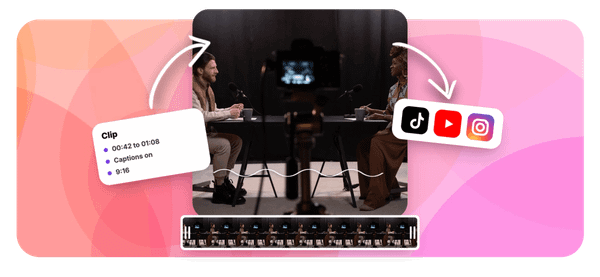


Camera-shy? You're not alone. Thousands of creators struggle with the idea of putting their face on screen, yet they watch others build massive audiences through short-form video content. Whether you're exploring TikTok content ideas for business or looking to break into YouTube Shorts, the good news is simple: you don't need to show your face to succeed. This article reveals 5 faceless YouTube Shorts ideas that can help you grow your channel fast in just 15 days, using proven formats like screen recordings, text overlays, stock footage, voiceovers, and animation styles that capture attention without requiring you to step in front of a camera.
Creating these faceless videos used to mean hours of editing, multiple software programs, and a steep learning curve. That's where a clip creator tool like Crayo changes everything. Instead of wrestling with complex video editors, you can generate short-form content in minutes, automating the tedious parts while you focus on your message and strategy.
Summary
- Faceless YouTube Shorts don't struggle because they lack a visible creator. They fail because creators skip the hook, bury their core message, or replicate trending formats without understanding the underlying structure that actually holds attention. YouTube rewards retention in the first three seconds, not production quality or on-camera presence.
- Copying the surface elements of successful faceless content (subtitle styles, stock footage, background music) without understanding the message structure underneath leads to weak retention and plateaued views below 500. What separates viral faceless Shorts from ignored ones isn't the aesthetic template. It's whether the video starts with a specific problem the audience recognizes and delivers value fast enough to justify their time.
- Promotional content that opens with product mentions or sales language triggers immediate avoidance behavior because viewers categorize it as advertising rather than content within the first three seconds. CoSchedule reports that 64% of businesses lack a documented marketing strategy, which means most creators default to selling early rather than securing curiosity first.
- Gartner reports that brands waste 25 to 40% of their marketing budget on uncoordinated campaigns, and the same logic applies to content creation. Views without a structured conversion path measure attention, not intent. The creator who generates 10,000 views with no clear next step earns less than the one who gets 2,000 views and guides half of them toward a decision.
- Inconsistent messaging across videos delays trust-building rather than accelerating it, because the audience can't recognize patterns or understand what problem you solve. Trust accumulates through repetition and clarity. When creators post messages, offers, and tones without strategic coherence, the brain resets with each video, making decision-making harder rather than easier.
- The 10-minute promotional content workflow works because it eliminates decision fatigue by choosing one format before production starts, defining a clear message instead of explaining multiple benefits, and providing a single call to action instead of creating choice paralysis. TikTok users scroll through hundreds of videos during their average 95 minutes of daily platform use, which means clarity isn't optional.
Crayo's clip creator tool addresses this by automating captions, voiceovers, and formatting, so creators can batch-process five videos in the time it would take to manually edit one, turning scattered effort into a repeatable system that supports consistent posting without technical friction.
Why Creators Struggle to Grow on YouTube Shorts Without Showing Their Face

Faceless YouTube Shorts struggle to grow because creators post without understanding what actually holds attention. The format isn't the problem. The missing structure is. When you skip the hook, bury your point, or copy trends without adapting them to your audience, viewers scroll within two seconds, no matter how polished your editing looks.
The Myth That Faceless Means Less Engaging
You hesitate to post because you think viewers need to see a face to care. That belief keeps strong ideas sitting in drafts, while channels with weaker concepts but visible creators seem to win. The anxiety is real. After watching other creators build audiences on camera, it's easy to assume your faceless content starts at a disadvantage before anyone even watches it.
But YouTube Shorts doesn't reward faces. It rewards attention. The first three seconds determine whether someone keeps watching or swipes away. Your hook, pacing, and idea matter infinitely more than whether viewers see your eyes. Faceless creators who understand this principle build channels with millions of views by opening with curiosity instead of context. They ask questions viewers can't ignore. They show unexpected visuals. They create tension before explaining anything.
Copying Formats Without Understanding Why They Work
Many creators see a faceless channel growing and replicate the surface elements. Same captions. Same stock footage. Same background music. They post consistently for weeks, expecting similar results, but their retention stays weak and their views plateau below 500. The format looked easy to copy, but the idea behind it was invisible.
What actually works isn't the subtitle style or the B-roll choice. It's the message structure underneath. Successful faceless Shorts start with a specific problem their audience recognizes, then deliver value fast enough to justify the viewer's time. When you copy the aesthetic without the underlying logic, your content feels hollow. Viewers sense the difference between a video built around an insight and one assembled from a template. One keeps them watching. The other gets skipped.
The Time Cost of Random Experimentation
Without a repeatable system, faceless content creation becomes exhausting instead of efficient.
- You spend Sunday afternoon searching for ideas.
- Monday, editing a motivational clip.
- Tuesday, trying a different niche entirely.
- By Wednesday, you're second-guessing whether any of it matters.
The workflow that should save time compared to on-camera content ends up as scattered effort with no clear pattern.
Batching Efficiency and Systematic Growth
Creators who batch their faceless videos in focused two-hour sessions report feeling less mentally drained than those posting daily without structure. They pick a sustainable niche, create a running list of 50+ content ideas, and produce a week's worth of Shorts in a single sitting. That system compounds. Your audience learns what to expect. The algorithm recognizes consistency. Growth stops feeling random.
Tools like a clip creator tool help turn that batching workflow into reality by automating captions, voiceovers, and formatting, so your two hours focus on message and strategy instead of technical assembly.
Related Reading
- TikTok Content Ideas for Business
- What Does Content Under Review Mean on TikTok
- Viral YouTube Shorts Ideas
- Instagram Reels Content Ideas
- Why Is My Content Under Review on TikTok
- Creative Instagram Reels Ideas
- YouTube Shorts Content Ideas
- YouTube Shorts Ideas For Beginners
- How Long Can A Reel Be On Instagram
- Instagram Reels Ideas For Business
- What Does Promotional Content Mean on TikTok
- Instagram Reels Ideas For Beginners
- How Much Do Content Creators Make on TikTok
- Instagram Reels Content Ideas
The Hidden Cost of Posting Promotional Content Without a Strategy

Posting promotional content without a strategy doesn't just reduce sales; it also undermines brand credibility. It reshapes how viewers perceive your entire channel, lowers retention before value lands, and weakens your ability to convert attention into action. The real issue isn't promotion. It's promotion without timing, structure, or a clear path from curiosity to decision.
When Selling Early Kills Attention Before Value Arrives
You open with your product because clarity feels like respect for the viewer's time. But on TikTok, viewers decide within the first three seconds whether to keep watching or scroll. When content starts with a product mention, sales language, or promotional framing, the brain categorizes it as advertising rather than content. That triggers avoidance.
64% of businesses don't have a documented marketing strategy, which means most creators default to what feels intuitive (selling early) rather than what actually retains attention (securing curiosity first).
Attention Filtering and Retention Dynamics
The mechanism behind this is attention filtering. Users subconsciously scan for content that feels entertaining, useful, or relatable. Anything that signals this is an ad too early reduces curiosity, lowers retention, and increases scroll behavior before your message ever lands.
Selling early doesn't increase clarity. It reduces attention before the value is delivered. The first three seconds should create tension or curiosity, not resolution. When you skip that step, you lose the viewer before they understand why they should care.
Views Without Intent Don't Pay Bills
Visibility feels like progress. More reach seems like the first step toward revenue. But views measure attention, not intent. When promotional content attracts a broad audience without a clear buyer focus or guidance, it generates passive viewers, not active buyers. Gartner reports that brands waste 25-40% of their marketing budget on uncoordinated campaigns, and the same logic applies to content. Without a structured path from awareness to interest to decision, attention doesn't turn into action.
Conversion requires movement through stages, and when your content skips that structure, you end up with numbers that don't translate into revenue. More views without a conversion path increase reach, not revenue. The creator who gets 10,000 views with no clear next step earns less than the one who gets 2,000 views and guides half of them toward a decision.
When Too Much Information Creates Friction Instead of Clarity
You explain more about your product because more information feels like more clarity. But when promotional content includes too many points, explains too much, or lacks structure, viewers experience friction. They lose focus, stop processing, and drop off before taking action.
Cognitive Load Theory explains this: when too much information is presented at once, the brain struggles to process it efficiently. On short-form content, overload reduces retention, reduced retention weakens distribution, and weaker distribution reduces conversion opportunities. Creators often feel this when they pack a 60-second Short with five benefits, three features, and two calls to action. The viewer leaves confused instead of convinced.
Inconsistent Messaging Delays Trust Instead of Building It
Posting more without clarity doesn't increase sales. It delays them. When creators post different messages, different offers, and different tones without a strategy, the audience doesn't understand what you offer, doesn't know what problem you solve, and doesn't build trust over time.
Trust builds through pattern recognition.
- When messaging is consistent, the audience understands your value faster, and decision-making becomes easier.
- When messaging is inconsistent, the brain resets each time, and trust doesn't accumulate.
Messaging Consistency and Brand Reliability
Consumer behavior research shows that consistent messaging increases perceived reliability, which directly impacts purchasing decisions. The creator who posts about productivity tools one day, motivational quotes the next, and product reviews the third confuses their audience about who they are and what they stand for.
Platforms like a clip creator tool help creators batch faceless content with consistent formatting, captions, and voiceovers, turning scattered effort into a repeatable system. When your workflow supports consistency, your messaging can too.
5 TikTok Promotional Content Types That Convert in 10 Minutes
1. Problem-Solution Content
Start with a problem your audience already recognizes, then position your product as the direct answer. This format works because people pay attention when they feel understood. The moment you name their frustration, you earn permission to present a solution.
The structure is straightforward. Open with the problem in the first three seconds. Use language that mirrors how your audience describes the issue, not how you think about it internally. Then show how your product solves it without overexplaining features.
Outcome Specificity and Workflow Automation
One specific outcome beats three vague benefits. When creators skip the problem and jump straight to the product, viewers scroll because relevance hasn't been established yet.
Tools like a clip creator tool help batch this format by automating voiceovers and captions, so you can focus on scripting the problem and solution clearly instead of spending time on technical assembly. When your workflow removes friction, you create faster without sacrificing clarity.
2. Before-and-After Transformations
Show the change your product creates, not explain it. According to StoryChief's content marketing research, short-form videos defined 2025 because they deliver results visually rather than verbally. Viewers trust what they can see more than what they're told. A side-by-side comparison of low results versus improved outcomes builds credibility faster than a paragraph of text ever could.
This format requires minimal explanation. Record or show the "before" state. Then reveal the "after" state. The contrast does the persuading. Creators who overexplain the transformation dilute its impact. The visual should speak first. Your caption or voiceover should reinforce, not replace, what's already obvious.
3. Tutorial or How-To Content
Teach one useful thing while naturally including your product in the process. When you deliver value first, the recommendation feels earned instead of forced. People who learn something actionable are more likely to trust your next suggestion because you've already proven you understand their needs.
Single-Step Focus and Logical Transitions
Keep tutorials focused on a single step. Trying to teach three things in 60 seconds creates cognitive overload and reduces retention. The viewer should finish the video knowing exactly what to do next. If your tutorial requires them to rewatch it twice to understand, it's too complex. Simplify the idea or split it into multiple videos.
The call to action should feel like a logical next step, not an interruption. If your tutorial shows how to create engaging captions, suggesting a tool that automates captions makes sense. If the connection feels random, viewers notice and disengage.
4. Relatable or POV Content
Create content that your audience can immediately see themselves in. Relatable formats work because they trigger recognition. The viewer thinks, "That's exactly what happens to me," and keeps watching to see how the situation resolves. This emotional connection increases engagement and makes your eventual product mention feel like helpful advice instead of a sales pitch.
Emotional Specificity and Conversion Bridges
POV content works best when it's specific. POV: You spend hours creating content with no results, which resonates because it names a precise frustration many creators experience. Vague relatability (POV: You're a content creator) doesn't create the same pull because it lacks emotional specificity. The more accurately you describe the feeling, the stronger the connection.
Many creators post relatable content but never guide viewers toward action. They build engagement but not conversion. The format only works for promotional purposes when you transition from shared frustration to a clear solution. Without that bridge, you've entertained but not influenced.
5. Soft Sell With Clear Call to Action
Give value first, then guide the viewer to take the next step. This format feels natural because it mirrors how people actually make decisions. They need context before they're ready to act. When you skip the value and open with the ask, resistance increases because trust hasn't been established yet.
The call to action should be simple and singular. "Check the link in my bio" works better than "Visit my website, follow me on Instagram, and subscribe to my newsletter." Multiple asks create decision fatigue. One clear direction increases follow-through. Creators often assume that more options help viewers, but research on decision-making shows the opposite. Too many choices reduce action.
Strategic CTA Placement and Production Sustainability
Timing matters more than most creators realize. Placing the CTA too early kills retention because viewers haven't received enough value to justify the ask. Placing it too late means some viewers have already scrolled. The ideal moment is right after you've delivered the insight or shown the result, when interest peaks but before the video ends.
But knowing which formats convert means nothing if you can't produce them consistently without burning hours you don't have.
Related Reading
- Instagram Reel Hook Ideas
- How To Create A Reel On Instagram
- Instagram Reel Caption Ideas
- Tiktok Content Ideas For Beginners
- Best Time To Post A Reel On Instagram
- Best Content For Tiktok
- How To Analyze Tiktok Video Content
- How To Schedule A Reel On Instagram
- Instagram Story Vs Reel
- Best Content Strategy Tiktok
- How To Make Looping Content For Tiktok
- Ai Tools for TikTok Content Creation
The 10-Minute Workflow to Create TikTok Promotional Content That Converts
Speed with structure is what separates creators who post daily from those who burn out after three weeks. The workflow that turns promotional content from a multi-hour project into a repeatable 10-minute process isn't about cutting corners. It's about eliminating decisions that don't improve the final result. When you know exactly which format to use, what message to deliver, and how to guide viewers toward action, production becomes execution instead of exploration.
Pick One Content Type in Two Minutes
Decision fatigue kills momentum before you ever start recording. When you open your editing app without knowing whether you're creating a problem-solution video, a tutorial, or a before-and-after comparison, you waste mental energy debating formats instead of crafting messages. The solution is constrained. Choose one format before you begin, and stick to it for the entire session.
Strategic Format Alignment and Cognitive Momentum
- Problem-solution works when your audience already knows they're struggling.
- Before-and-after works when the transformation is visual.
- Tutorials work when you can teach one specific action.
- Relatable POV content works when emotional recognition drives engagement.
- Soft sell works when you've built trust and need to guide action.
The format you choose should match the viewer's current level of awareness, not your preference for a particular style.
Creators who batch content in focused sessions report feeling less scattered than those who switch formats daily. When you produce five problem-solution videos in one sitting, your brain stays in that pattern. The hook structure becomes automatic. The pacing feels natural. You stop second-guessing and start producing.
Define One Clear Message in Two Minutes
Every promotional video should accomplish one thing. Not three benefits packaged together. Not a feature list disguised as value. One specific outcome that the viewer will understand immediately. When you try to explain multiple points in 60 seconds, cognitive load increases and retention drops. The viewer leaves confused instead of convinced.
Ask yourself what this video should do.
- Should it explain one problem your product solves?
- Should it show one result someone achieved?
- Should it teach one step in a larger process?
The answer determines everything else. Your hook, your pacing, your call to action all flow from that single decision.
Immediate Clarity and Competitive Retention
Many creators skip this step because it feels obvious. They assume the message is clear in their head, so it must be clear on screen. But according to GrowthCurve, TikTok users spend an average of 95 minutes per day on the platform, which means they're scrolling through hundreds of videos. Clarity isn't a luxury. It's survival. The creator who names the problem in three seconds beats the one who takes fifteen to set context.
Write a Simple Three-Part Script in Two Minutes
Structure removes guesswork. When you know your video needs a hook, value delivery, and a call to action, scripting becomes a matter of filling in the blanks rather than staring at a blank page. The hook grabs attention in the first two seconds. The value section delivers the insight or shows the transformation. The call to action tells viewers exactly what to do next.
Your hook should create tension or curiosity, not provide resolution.
- "If your TikTok content isn't converting, here's why" works because it promises an answer without giving it away.
- "Three reasons your content fails" works because it triggers pattern recognition.
- "Stop doing this on TikTok" works because it challenges current behavior.
The moment you explain too much in the hook, you reduce the reason to keep watching.
Promise Fulfillment and Value Delivery
The value section should feel like a payoff, not filler. If your hook promised to explain why content isn't converting, the next 30 seconds should deliver that explanation clearly. If your hook teased a mistake people make, show the mistake and the correction. Viewers stay engaged when the promise gets fulfilled. They scroll when the middle section wanders or repeats what the hook already said.
Create the Content in Two Minutes
Recording doesn't require perfection. It requires clarity and momentum. When you've already chosen your format, defined your message, and written your script, production becomes reading what you wrote with enough energy to hold attention. Your delivery should sound natural, not rehearsed. Conversational, not corporate.
Iterative Speed and Frictionless Production
Focus on getting it done, not getting it perfect. The creator who records one take and moves forward produces more content than the one who re-records eight times, chasing flawless delivery. Small verbal stumbles don't kill retention. Unclear messaging does. Weak hooks do. Missing calls to action do. If your script is solid and your delivery is clear, the video works.
Tools like a clip creator tool automate voiceovers, captions, and formatting so you can focus on the message instead of technical assembly. When your workflow removes friction, you create faster without sacrificing clarity. The two minutes you save on manual captioning become two more minutes to refine your script or produce another video.
Trim and Clean in One to Two Minutes
Short, clean content keeps viewers watching. Every pause you leave in reduces momentum. Every tangent you include creates an exit point.
When you review your footage, your only job is to remove anything that doesn't add value.
- Cut the silence between sentences.
- Remove the verbal filler.
- Delete the section where you repeated yourself because you weren't sure the point landed the first time.
Intentional Conciseness and Pacing Optimization
Editing for brevity isn't about making content shorter for the sake of length. It's about respecting the viewer's attention. They're scrolling through dozens of videos. The one that delivers value fastest wins. The one that meanders loses, even if the core idea is strong.
Many creators resist cutting because they worry the video will feel rushed. But rushed and concise aren't the same thing. Rushed feels frantic. Concise feels intentional. When you remove pauses without cutting substance, pacing improves. The viewer stays engaged because there's no dead space to trigger a scroll.
Add a Clear Call to Action in One Minute
Without direction, viewers don't act. They watch, they enjoy, they scroll. The video that ends without telling the viewer what to do next wastes the attention you just earned.
Your call to action should be simple, singular, and specific.
- "Check my bio" works.
- "Send me a message" works.
- "Watch part two" works.
- "Visit my website, follow me on Instagram, subscribe to my newsletter, and join my email list" creates decision fatigue and reduces follow-through.
Optimal CTA Timing and Decisive Clarity
The timing of your call to action matters as much as the clarity. Place it too early, and you interrupt the delivery of value. Place it too late, and some viewers have already scrolled. The ideal moment is right after you've delivered the insight or shown the result, when interest peaks but before the video ends. That's when the viewer is most likely to act because they've just received value, and the next step feels natural.
Creators often assume viewers will figure out what to do next on their own. But research on decision-making shows the opposite. When you remove ambiguity and provide one clear path, action increases. When you leave the next step open to interpretation, most people do nothing.
Post and Repeat in One Minute
Uploading your video should take seconds, not minutes. Add your caption, include relevant hashtags, and post. The video you publish imperfectly today reaches viewers. The one you hold back to polish for another hour reaches no one. Consistency compounds faster than perfection.
Track what works, but don't obsess over every metric. Watch for patterns.
- Which hooks keep viewers past three seconds?
- Which formats generate more comments or shares?
- Which calls to action drive the most profile visits?
Use that data to refine your next batch, not to second-guess what you've already posted.
Systematic Simplification and Automated Execution
The workflow isn't about creating more content. It's about choosing one format, delivering one clear message, and guiding one action. When you follow this structure, promotional content stops feeling overwhelming and starts feeling repeatable. You're not starting from scratch every time. You're executing a system that works.
But even the best system breaks down if you're manually assembling every piece instead of letting automation handle the repetitive work.
Create TikTok Promotional Content in Minutes With Crayo AI
If creating TikTok promotional content still takes too long, the problem isn't your content idea. It's the creation process. When you spend 30 minutes scripting, another 20 recording multiple takes, and 40 more minutes editing captions and voiceovers, you're fighting friction that doesn't improve the final result. The video that takes an hour to produce doesn't convert better than the one you create in 10 minutes using a system that removes manual assembly.
Streamlined Workflow and Rapid Production
Open Crayo AI.
- Choose your content type (problem-solution, tutorial, POV, before-and-after).
- Generate your script instantly based on the format you selected.
- Create your voiceover in seconds without recording.
- Export and post.
That's the workflow.
- No overthinking your hook.
- No rewriting captions five times.
- No spending Sunday afternoon editing when you could be batching five videos instead of perfecting one.
Strategic Prioritization and Automated Quality
The shift from manual creation to automated production doesn't reduce quality. It removes the repetitive tasks that drain time without adding value. Typing captions manually doesn't make them more effective. Recording your own voiceover doesn't increase retention if the script is strong.
When Crayo AI handles formatting, captions, and audio generation, your energy goes toward message clarity and strategic decisions instead of technical execution. That's where conversion actually improves.
Systematic Consistency and Predictable Growth
Promotional content that converts isn't about doing more. It's about having a system that helps you create and post consistently without burning hours you don't have. The creator who posts three times weekly using automation builds momentum faster than the one who posts once because manual editing exhausts them.
Crayo AI gives you that system. The workflow becomes repeatable. The content becomes consistent. Growth stops feeling random and starts feeling inevitable.
Related Reading
- Tiktok Content Ideas Without Showing Face
- Tiktok Content Creation Tips
- How to Become a Content Creator on TikTok
- Best Social Media Content Creation Tools
- Later Alternative
- Sprout Social Alternative
- Buffer Alternative
- Ai Tools For Social Media Content Creation
- Hootsuite Alternative
- ContentStudio Alternatives