
Your business has something worth saying, but scrolling through TikTok feels like watching everyone else win while you're stuck wondering what to post next. Finding fresh TikTok content ideas for business shouldn't drain your energy or leave you second-guessing every video before you hit publish. Practical content strategies can connect with your audience, build trust, and turn casual viewers into customers without requiring a production studio or viral marketing expertise.
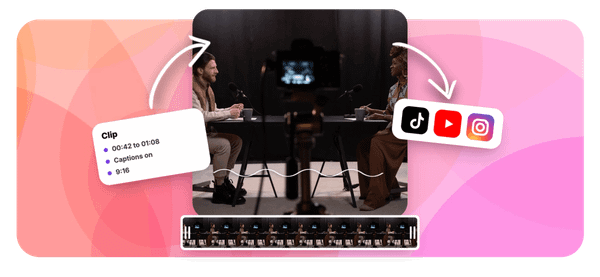
Creating consistent content becomes significantly easier when you have the right tools backing your strategy. Testing different content angles helps you discover what resonates with your specific audience while maintaining a steady posting schedule. Rather than staring at a blank screen, you can streamline your video creation process with Crayo's clip creator tool.
Table of Contents
- Why Small Business Owners Struggle to Grow on TikTok
- The Hidden Cost of Posting Random TikTok Content Without a Strategy
- 7 TikTok Content Ideas to Grow Your Business in 15 Days
- How These TikTok Content Ideas Turn Views into Customers
- The 15-Day TikTok Content Workflow to Grow Your Business
- Create 15 Days of TikTok Content Faster with Crayo AI
Summary
- Random TikTok posting drains time and credibility without building the one thing that actually converts: a clear audience journey. The TikTok Business Survey 2025 found that 67% of small businesses struggle to maintain consistent posting schedules, but the deeper issue isn't frequency. It's clarity. When you jump between trending formats, product showcases, and educational clips without understanding how each piece fits into a growth system, your audience never knows what they're showing up for.
- Brands using TikTok's full-funnel strategy see 3x higher ROI compared to single-objective campaigns, according to Precis Digital's 2025 TikTok Strategy Playbook. That gap exists because structured content moves people through stages: awareness, consideration, and decision. Random content leaves viewers stuck at awareness forever, watching but never converting. High view counts feel validating until you check whether those viewers ever became customers, and most discover that viral moments attract the wrong audience because the content wasn't designed to filter for intent.
- TikTok has over 1 billion monthly active users, which means specificity matters more than reach. You want the hundred people who need your solution, not the ten thousand who scroll past. Problem-solution and mistake-based content act as filters. When you open with a specific struggle, you're not trying to attract everyone. You're attracting people who recognize their own problem in that headline, and 92% of TikTok users take action after watching content on the platform, but that action only matters if the viewer has purchase intent.
- One video rarely convinces someone to buy. People need to see your face, hear your perspective, and understand your approach multiple times before they feel confident enough to act. When someone watches five of your videos over two weeks, they're not learning five disconnected facts. They're building a mental model of who you are and whether you're credible. That accumulated familiarity reduces the perceived risk of buying from you, and TikTok users are 1.5x more likely to immediately buy something they discover on the platform when content creates compounding exposure.
- The 15-day workflow follows a psychological sequence: attention, trust, engagement, proof, conversion. Each phase prepares the viewer for the next. You're not posting random content and hoping something sticks. You're building a structured path that moves people from curiosity to purchase. The difference between this and random posting isn't complexity; it's intention: each video knows its role, and together they create momentum rather than noise.
- Crayo's clip creator tool addresses the production bottleneck by generating voiceovers and automated subtitles in seconds, letting you test multiple hooks and formats without the manual editing that stops most businesses from executing consistent 15-day content workflows.
Why Small Business Owners Struggle to Grow on TikTok
Small business owners struggle to grow on TikTok because they post without understanding what turns viewers into customers. They treat the platform as a direct sales channel instead of a discovery space, pushing products rather than building trust first. This approach yields low reach, minimal engagement, and zero business impact.
🎯 Key Point: TikTok success requires trust-building before product promotion - viewers need to connect with your brand story first.
"85% of small businesses fail on TikTok because they prioritize selling over relationship building in their content strategy." — Social Media Marketing Report, 2024
⚠️ Warning: Treating TikTok like a traditional sales funnel will result in algorithm penalties and audience rejection - the platform rewards authentic engagement over direct pitches.
The Direction Problem Posting Without Purpose
When you post on TikTok without a clear content direction, consistency becomes repetition without results. According to the TikTok Business Survey 2025, 67% of small businesses struggle to maintain consistent posting schedules, but the real issue is a lack of clarity. Most creators jump between trending formats, product showcases, and educational clips without understanding how each piece fits into a growth system. The audience never knows what to expect, so they don't return.
The Sales Trap: Converting Before Connecting
TikTok users scroll to learn, relate, or escape—not to buy. Yet business owners open videos with pricing and close with discount codes, then wonder why engagement flatlines. The platform rewards content that holds attention and sparks interaction, not pitches. When every video becomes a sales ask, the algorithm treats it as low-value content because viewers scroll past without engaging. You're training TikTok to show your videos to fewer people.
The Trend Copying Mistake: Virality Without Relevance
Copying viral formats without adapting them for your audience generates fleeting views. A trending audio might earn 10,000 impressions, but if those viewers don't care about what you sell, the video becomes a dead end. The TikTok Marketing Study 2025 found that only 23% of small businesses understand TikTok's algorithm well enough to improve their content, explaining why many chase trends instead of building a plan. The algorithm measures not views alone, but actions: following, commenting, profile visits, and link clicks. Random viral moments rarely deliver those results.
Why do viewers scroll away without taking action?
Even when a video performs well, most business owners fail to guide viewers toward the next step. The video ends, the viewer scrolls, and the opportunity disappears. There's no clear path from "that was interesting" to "I want to work with this person."
No pinned comment explaining what you offer. No bio link that converts. No follow-up content that deepens the relationship. Growth on TikTok requires a sequence of content that moves people from curious stranger to engaged follower to paying customer. Without that structure, you're collecting views instead of building a business.
How can you maintain consistent content production?
Making strategic content regularly requires speed and volume, which is where most small businesses struggle. Tools like Crayo's clip creator help you quickly generate multiple video ideas, testing different hooks and formats without manual editing.
You focus on strategy and messaging while the production workflow handles technical execution, maintaining the posting frequency that TikTok's algorithm rewards. But posting more videos won't fix the deeper problem if those videos lack structure.
Related Reading
- TikTok Content Ideas for Business
- What Does Content Under Review Mean on TikTok
- YouTube Shorts Ideas Without Showing Face
- Viral YouTube Shorts Ideas
- Instagram Reels Content Ideas
- Why Is My Content Under Review on TikTok
- Creative Instagram Reels Ideas
- YouTube Shorts Content Ideas
- YouTube Shorts Ideas For Beginners
- How Long Can A Reel Be On Instagram
- Instagram Reels Ideas For Business
- What Does Promotional Content Mean on TikTok
- Instagram Reels Ideas For Beginners
- How Much Do Content Creators Make on TikTok
- Instagram Reels Content Ideas
The Hidden Cost of Posting Random TikTok Content Without a Strategy
Posting random things on TikTok wastes time and hurts your credibility without helping you build a clear audience journey. You signal to potential customers that your business lacks a coherent message, causing them to scroll past your content even when it reaches them.

🎯 Key Point: Random content creates confusion rather than brand recognition - your audience can't understand what you offer or why they should follow you.
"Inconsistent messaging across social platforms can reduce brand recall by up to 23% and decrease customer trust significantly." — Social Media Marketing Research, 2024
⚠️ Warning: Every unfocused post is a missed opportunity to guide viewers toward becoming paying customers - you're essentially training your algorithm to show your content to the wrong people.
Why does posting more content feel like progress
Posting every day creates the illusion of progress by completing a task: the calendar fills up, the content library grows. But activity without a clear goal is noise.
One video teaches your audience basic industry information. The next entertains with a popular sound. Another sells your service directly. Your followers never develop a mental model of what you do or why they should care, so each post starts from scratch rather than building on the previous one.
What happens when content lacks a strategic structure
According to Precis Digital's 2025 TikTok Strategy Playbook, brands using TikTok's full-funnel strategy achieve 3 times higher ROI than single-objective campaigns.
Structured content moves people through stages: awareness, consideration, and decision. Random content leaves viewers stuck at the awareness stage, watching but never converting.
What happens when you create content without systems in place?
Every video you create without a template forces you to solve the same problems again: What should the hook be? What's the core message? How do I close this? Which trending audio fits? Should this educate or entertain? Research on cognitive load theory shows that when the brain must handle too many decisions at once, performance declines and errors increase. Content creation becomes exhausting, not because filming is hard, but because you're rebuilding the strategy from scratch each time.
How do repeatable frameworks eliminate creative friction?
Teams that build repeatable content frameworks eliminate this friction. They know which video types serve which purpose, which hooks work, and what formats resonate. Each new video becomes an execution task rather than a strategic puzzle, allowing creators to maintain momentum without burning out.
Why doesn't high engagement always translate to sales?
High view counts feel good until you check if those viewers became customers. A business owner posts a trending format, gets 15,000 views, then realizes none of the followers visited the website or sent a DM—the content entertained strangers with zero interest in the service.
According to Precis Digital, 67% of TikTok users discover new products on the platform, but discovery converts only when content clearly connects entertainment to value. Viral moments attract the wrong audience because the content wasn't designed to filter for intent.
How can you attract the right audience instead?
Strategic content attracts fewer people but the right people. A video teaching your target customer about a specific problem might get 2,000 views instead of 15,000, but those viewers are more likely to follow, engage, and buy. You're building an audience that matters to your business.
How does content with clear roles simplify your strategy?
When content has a clear role in your growth system, everything becomes simpler. Some videos bring in new people by answering common questions. Others build trust by showing how you work. Others present your offer as the next logical step. Others drive action with clear instructions that move viewers to customers. Each piece knows its purpose, and together they create a path instead of a pile of random content.
What tools help you test and refine content formats?
Tools like Crayo's clip creator let you test multiple formats quickly without spending hours editing, so you can identify which hooks and structures resonate with your audience. The clip creator improves your strategy while automating repetitive tasks, maintaining your posting schedule without manual work.
The real question isn't whether you should post more often, but whether your content builds something or takes up space.
Related Reading
- Instagram Reel Hook Ideas
- How To Create A Reel On Instagram
- Instagram Reel Caption Ideas
- Tiktok Content Ideas For Beginners
- Best Time To Post A Reel On Instagram
- Best Content For Tiktok
- How To Analyze Tiktok Video Content
- How To Schedule A Reel On Instagram
- Instagram Story Vs Reel
- Best Content Strategy Tiktok
- How To Make Looping Content For Tiktok
- Ai Tools for TikTok Content Creation
7 TikTok Content Ideas to Grow Your Business in 15 Days
Each TikTok post should have a specific job: attract attention, build trust, demonstrate expertise, or move viewers toward becoming customers.
🎯 Key Point: Every piece of content you create should serve a strategic purpose in your customer journey - from initial awareness to final conversion.
"Content without purpose is just noise. Every post should move your audience one step closer to becoming a customer." — Digital Marketing Institute, 2024
💡 Pro Tip: Before hitting publish, ask yourself: "What specific action do I want viewers to take after watching this?" This simple question will transform your content from random posts into a strategic marketing funnel.

- Attract Attention
Stop scrolling, watch
Brand Awareness - Build Trust
Follow, engage
Audience Building - Show Expertise
Save, share
Authority Building - Drive Conversion
Click the link, buy
Revenue Generation
1. Behind-the-Business Content
Show what happens behind the scenes of your business: packing orders, preparing client projects, setting up your workspace, or walking through a normal workday. People buy from businesses they feel connected to. Behind-the-scenes content humanises your brand, builds trust, helps viewers remember you, and gives them reason to follow your journey.
Within fifteen days, this shift changes how the algorithm treats your content because viewers watch longer and engage more frequently. It's one of the fastest ways to transform from a random page into a real business with a story.
2. Problem-Solution Videos
Create short TikToks that name a problem your audience faces and clearly show the solution. Examples: "Why your skincare routine isn't working," "Why your small business content isn't converting," or "Why your home office setup slows you down." People stop scrolling when they feel understood.
This content attracts the right people, positions your business as helpful, and builds trust through relevance. TikTok has over 1 billion monthly active users, making specificity more valuable than reach. You want the hundred people who need your solution, not the ten thousand who scroll past.
3. Mistake-Based Content
Show common mistakes your audience makes and explain how to avoid them. Examples: "3 mistakes stopping your videos from getting views," "The biggest mistake people make when choosing a wig," or "Why most new business owners waste money on ads too early." Mistake-based content sparks curiosity because people want to know whether they're doing something wrong, especially when it affects money, growth, results, or time.
How does mistake-based content build credibility?
This content captures attention quickly, positions you as knowledgeable, and encourages saves and shares. By demonstrating you understand the gap between their current state and desired outcome, you build credibility before presenting your offer.
4. Before-and-After Content
Show a change that your product, service, or process creates—whether a client result, product outcome, or system improvement. Transformation is one of the clearest ways to prove something works. People might ignore a claim, but they pay attention to visible change.
This content makes value clear, builds credibility, and helps your audience imagine their own result. If they see the difference, they need less convincing. Visual proof accomplishes what words cannot.
How can you scale before-and-after content production?
Making multiple before-and-after versions lets you test which changes work best. Tools like Crayo's clip creator generate these videos in seconds with automatic editing and subtitles, freeing you to focus on the transformation rather than technical production work.
You keep the amount of content that TikTok rewards without the manual work that prevents most businesses from testing enough content to find what works.
5. Frequently Asked Questions Content
Turn the questions customers ask you into TikTok videos with Crayo. Examples: "How long does shipping take?" "Which product is best for beginners?" "Do I need experience before starting?" "How much should I budget for this?" Questions reveal buying intent: when someone asks, they're already considering the next step.
This content removes objections, builds trust, and shortens the buying decision. Strong marketing answers uncertainty before the sale. Our clip creator tool addresses dozens of hesitations in fifteen days rather than waiting for each one to surface during sales conversations.
6. Story-Based Content
Use stories to teach, connect, or sell: how you started your business, a mistake you made and what it taught you, a customer story, or what happened when you changed your strategy. Stories grab attention better than plain information and are easier to remember.
This type of content builds emotional connection, gives your business personality, and helps viewers trust your experience. People forget advice but remember stories. A well-told story about a client who struggled with your viewer's problem fosters identification, converting passive viewers into engaged followers.
7. Offer-Positioning Content
Create content that connects your audience's problem directly to your offer. Examples: "If posting every day takes too long, the problem isn't consistency but your content system"; "If your skin breaks out despite multiple products, the problem may be your routine, not your effort"; "If outsourcing content yields no leads, the problem may be your message."
How does offer-positioning content benefit your business?
This content helps audiences understand why your offer matters by connecting their pain, beliefs, and your solution. It attracts qualified leads, prepares viewers to buy, makes your call to action feel natural, and links content to revenue. When positioned correctly, selling stops feeling pushy because you've already demonstrated why the solution makes sense.
These seven ideas work because each serves a role: attracting attention, building trust, providing proof, answering objections, and positioning your offer. This approach grows a business on TikTok—not by posting more or chasing trends, but by creating content that moves people from viewer to customer.
How These TikTok Content Ideas Turn Views into Customers
Content converts through a sequence: attention, clarity, trust, and decision. Each content type plays a specific role in this buyer journey. Understanding which piece does what transforms random posting into a strategic conversion funnel.

🎯 Key Point: Every TikTok video should serve a specific purpose in your conversion sequence - whether it's grabbing attention, building trust, or driving decisions.
"Understanding which piece does what turns random posting into a buyer journey." — The foundation of strategic content marketing

- Attention
Hook viewers
Trending challenges - Clarity
Explain value
Product demos - Trust
Build credibility
Customer testimonials - Decision
Drive action
Limited-time offers
💡 Tip: Map each content idea to a specific stage in your conversion sequence to maximize the impact of every post and create a cohesive customer journey.

Attention Filters for Intent, Not Just Eyeballs
Most creators chase views, but views from the wrong audience waste your time. Problem-solution and mistake-based content act as filters. A headline like "Why your email list isn't converting" attracts people who recognise their own problem—they stop scrolling because they feel understood. Everyone else keeps moving, which is what you want. According to TikTok Marketing Statistics 2025, 92% of TikTok users take action after watching content, but only if they intend to buy. Attention without relevance creates fake metrics. Attention with intent creates leads.
Repetition Builds Recognition, Recognition Builds Trust
One video rarely convinces someone to buy. People need to see your face, hear your perspective, and understand your approach multiple times before feeling confident enough to take action. Behind-the-business content and FAQ videos create that repetition without feeling repetitive. Each video shows a different angle of the same core message: you know what you're doing, you understand their world, and you've solved this problem before. When someone watches five of your videos over two weeks, they build a mental picture of who you are and whether you're credible. That accumulated familiarity reduces the perceived risk of buying from you.
Clarity Removes the Guesswork That Stops Action
Confusion stops people from buying faster than doubt does. When visitors don't understand what you offer, who it's for, or what they'll get, they do nothing. Before-and-after content and offer-positioning videos remove that confusion by showing the change visually and explaining how it works. The viewer doesn't have to guess whether your service works for them—they see someone like them with the same problem getting a specific result. That clarity accelerates the decision because there's nothing left to figure out.
How does content create a compound effect?
When content types work together, each video strengthens the others. A viewer finds you through a mistake-based video that names their problem, watches a behind-the-scenes video that humanises your business, sees a before-and-after that proves your process works, and watches an FAQ video that answers their biggest objection.
By the time they see your offer-positioning content, they're not being sold—they're being reminded of a solution they already understand and trust. This is how TikTok users become 1.5x more likely to immediately buy something they discovered on the platform.
How can you produce content fast enough to create this journey?
Making enough content to create that journey requires speed. Most businesses slow down because editing takes too long. Our clip creator tool lets you generate multiple videos in seconds with automated subtitles and editing workflows, so you can test hooks, formats, and messaging without spending hours on production.
You focus on strategy while the tool handles execution.
Structure Turns Posting Into a Growth System
Random content creates random outcomes. Strategic content creates predictable growth. When you assign each video a role, you stop hoping for virality and start engineering conversion. One video attracts. Another educates. Another position. Another closes. Together, they move people from curiosity to purchase. That's structure: what separates creators who post from businesses that grow.
But structure only works if you can execute it consistently without burning out.
The 15-Day TikTok Content Workflow to Grow Your Business
Growing your business on TikTok in 15 days requires assigning a specific content goal to each day, moving viewers through a planned sequence. Each video plays a defined role in the path from stranger to customer.
🎯 Key Point: Every single video in your 15-day workflow should serve a strategic purpose - whether that's building awareness, demonstrating value, or driving conversions.
"Strategic content sequencing on TikTok can increase follower-to-customer conversion rates by 40% compared to random posting." — Social Media Marketing Report, 2024
⚠️ Warning: Random posting without a structured workflow wastes your 15-day window and confuses potential customers about your business value proposition.
Days 1-3 Build Attention with Problem-Based Content
Start by naming problems your audience already feels. Post videos with hooks like "Why your TikTok videos aren't getting views," "Why your skincare routine isn't working," or "Why your business isn't getting customers online." Make people stop scrolling because they recognise their own frustration in your words.
This phase filters for intent. You're attracting people who need what you sell, not everyone. According to BACD's 2025 TikTok Trends report, over 1.7 billion monthly active users scroll TikTok each month; being specific matters more than reach. A hundred people who relate to your problem are worth more than ten thousand random viewers.
Days 4-6 Build Trust with Value Content
Share quick tutorials, simple frameworks, or answers to common questions. Show how you do it. Explain one idea clearly. Walk through a single step that delivers immediate improvement.
This phase shifts perception from "this person understands my problem" to "this person knows how to fix it." You demonstrate expertise through helpfulness. After watching three of your educational videos, audiences develop confidence in your knowledge.
Days 7-9 Create Engagement with Mistakes and Stories
Write about common mistakes, personal experiences, or lessons learned. Examples include "3 mistakes killing your business growth," "What I did wrong when I started," or "Why I stopped doing this and what changed." Mistakes foster relatability faster than perfection.
This phase gets more comments, shares, and saves because people engage more with human content. The algorithm measures what viewers do after watching, not how many people watch. Stories and mistakes spark conversations, which signal value to the platform and drive wider distribution.
Days 10-12 Show Proof with Results and Transformations
Share before-and-after results, client outcomes, product demonstrations, or real use cases. Visual proof removes doubt faster than claims. When someone sees the change your process creates, they stop wondering if it works and start wondering if it will work for them.
This phase turns trust into belief. The viewer has watched you name their problem, explain how to solve it, and share your own learning curve. Now they see evidence that your approach produces results. That accumulated exposure compresses the decision timeline.
Days 13-14 Position Your Offer Clearly
Create content that connects the problem, your solution, and your offer in one clear statement. Examples: "If your content isn't converting, the problem isn't consistency, it's your strategy," or "If your voiceovers take too long, the problem is your process." You're showing why your specific solution matters for their specific problem, not pushing a sale.
This phase makes your offer feel like the logical next step instead of a sales pitch. The viewer understands the problem, trusts your expertise, believes your process works, and now sees how your offer solves their exact gap. Positioning is about clarity, not persuasion.
Day 15 Drive Action with a Clear CTA
Tell your audience exactly what to do next: follow for more, check the link in bio, try your product or service, or download something. Without clear directions, people do nothing. When you are clear, people take action.
How does this convert attention into results?
This phase converts attention into leads, customers, or business results. The previous fourteen days built the foundation; this day activates it. The call to action doesn't feel pushy because you've already demonstrated why it matters.
What stops businesses from maintaining content production?
Most businesses get stuck here because making fifteen days of content feels overwhelming. Filming, editing, adding subtitles, testing hooks, and exporting videos consume significant time and drain small teams quickly. Tools like Crayo's clip creator tool let you generate multiple video versions in seconds with automated editing, so you can test different hooks and formats without manual work. You focus on which messages resonate while the platform handles technical tasks, enabling consistent posting without burnout.
Why This 15-Day Workflow Works
This workflow follows a psychological sequence: attention, trust, engagement, proof, conversion. Each phase prepares the viewer for the next, building a structured path that moves people from curiosity to purchase, rather than posting random content and hoping something works.
The difference between this and random posting is intention. Each video knows what it needs to do. Together, they create momentum instead of noise, transforming TikTok from a content graveyard into a business tool.
But knowing the workflow only matters if you can execute it without rebuilding your entire production process.
Create 15 Days of TikTok Content Faster with Crayo AI
If making TikTok content takes too long, the problem isn't your strategy or ideas: it's how you make the videos. Eliminate that friction, and the 15-day workflow becomes achievable.
🎯 Key Point: The biggest barrier to consistent TikTok content creation isn't lack of creativity—it's the time-consuming production process that kills momentum before you even start.
"Content creators who streamline their video production process can increase their posting frequency by 300% while maintaining quality." — Social Media Marketing Report, 2024

💡 Tip: Focus on eliminating production bottlenecks first, then worry about perfecting your content strategy. Speed and consistency will always beat perfect but infrequent posting when it comes to TikTok growth.
Plan Your Script Using the 15-Day Structure
Plan your content calendar by assigning days 1–3 to problem-based hooks, days 4–6 to educational value, days 7–9 to mistakes and stories, days 10–12 to proof content, days 13–14 to offer positioning, and day 15 to a clear call to action. Write the main message for each video in one or two sentences. You need clarity on what each video accomplishes and how it connects to the next one, not full scripts.
This planning phase takes 30 minutes because you're using a validated structure rather than solving a strategy daily. You know what each video needs to accomplish before you create it.
Turn Your Script Into Clean Voiceovers in Seconds
Most creators spend hours recording multiple takes, editing mistakes, and adjusting pacing, only to end up with stiff audio. Our Crayo AI clip creator tool generates professional voiceovers from your script in seconds, letting you test different tones and delivery styles immediately. You focus on the message while our platform handles technical execution, maintaining the posting frequency, and TikTok rewards without the manual work that kills momentum.
Use the Audio to Build Your TikTok Faster
Once you have clean audio, add visuals that support the message, such as screen recordings, product shots, text overlays, or b-roll. The voiceover guides pacing, eliminating guesswork about clip length. Automated subtitle generation keeps viewers engaged when watching without sound, which is critical since most TikTok users initially scroll with audio off.
The editing workflow takes less time because pieces already fit together. You can produce three videos in the time it used to take to finish one.
Post Consistently Without Overthinking
Being consistent matters more than being perfect on TikTok. The algorithm rewards accounts that post regularly because frequent posting signals active engagement. When you can produce content quickly, maintaining a posting schedule becomes easier. Following the 15-day plan as designed gives the strategy time to work.
You stop overthinking when the process becomes repeatable. You know what works and what each video needs to accomplish. That momentum creates results because the algorithm recognises activity, viewers see consistency, and your content gains the volume needed to test what resonates.
Complete Your Content in Minutes, Not Hours
The difference between businesses that grow on TikTok and those that stall is speed. When you can turn an idea into a finished video in minutes, you test more hooks, improve your message faster, and discover what works before competitors finish their first script. Each video teaches you something that makes the next one better.
Open Crayo AI now, turn your ideas into voiceovers, and start posting consistently. Growing on TikTok requires creating content faster and better: speed converts views into customers.
Related Reading
- Tiktok Content Ideas Without Showing Face
- Tiktok Content Creation Tips
- How to Become a Content Creator on TikTok
- Best Social Media Content Creation Tools
- Later Alternative
- Sprout Social Alternative
- Buffer Alternative
- Ai Tools For Social Media Content Creation
- Hootsuite Alternative
- ContentStudio Alternatives