
Scroll through your feed for five minutes, and you will see exactly why TikTok brain rot is a real conversation people are having. Short clips, rapid cuts, and punchy opening lines have rewired how audiences decide what to watch and what to skip. The good news is that once you understand how social media hooks actually work, you can use that same attention economy to your advantage, and this article breaks down 7 proven hooks that can get you more views in the next 30 minutes.
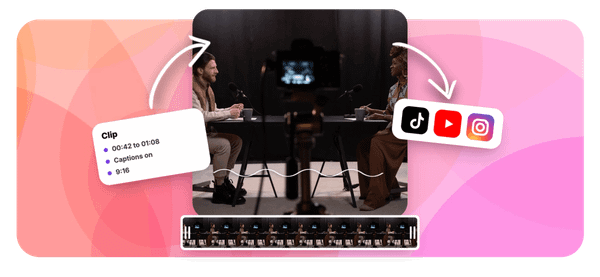
Getting more views is not just about posting more content. It is about grabbing attention in the first two seconds with the right caption hook, visual cue, or opening line that makes someone stop scrolling. That is exactly where Crayo's clip creator tool becomes useful. It helps you build scroll-stopping short-form content fast, so you can test different engagement hooks, refine your call-to-action strategy, and grow your audience without spending hours in the editing room.
Table of Contents
- Why Creators Struggle to Adapt Hooks Across Platforms
- The Hidden Cost of Cross-Posting the Same Hook Everywhere
- 7 Social Media Hooks to Get More Views in 30 Minutes
- The 30-Minute Workflow to Adapt One Hook Across Platforms
- Adapt Hooks Across Platforms Faster With Crayo
Summary
- Platform algorithms now actively penalize content that doesn't feel native to their environment. A 2026 algorithm analysis found that interest-graph recommendation systems are structurally designed to deprioritize cross-posted content, regardless of how strong the underlying idea is. Visible watermarks, mismatched aspect ratios, and hook patterns that don't match a platform's expected pacing all trigger suppressed reach before content gets a fair shot at a wider audience.
- The first 60 minutes after posting function as a critical evaluation window for every platform. When a hook underperforms during that window, the algorithm's initial retrieval layer stops pushing the content further, and the post never gets a fair distribution evaluation. Creators who misread this as an audience problem rather than a format problem tend to respond by posting more content, which scales the mistake rather than fixing it.
- Most creators absorb the cross-posting penalty across multiple platforms simultaneously without realizing it. According to Mailchimp's cross-posting research, marketers use an average of three social media platforms to distribute content. That means the same structural mismatch, a hook built for one platform posted identically across all three, repeats with every upload and compounds quietly over time.
- The seven hook types that consistently hold dwell time and drive completion rates follow a consistent pattern: a specific psychological trigger paired with a platform-native delivery format. Contrarian hooks create cognitive surprise by naming a belief the viewer already holds. FOMO hooks use concrete numbers rather than vague scale claims. Question hooks activate the viewer's internal monologue by naming a specific frustrating scenario. Value-promise, curiosity gap, specific-result, and native-format hooks each target a distinct attention mechanism that platforms reward with algorithmic distribution.
- Treating hook adaptation as format work rather than creative work changes the economics of cross-posting. The core idea stays identical across platforms. Only the opening structure, pacing, and tonal register change to match what each platform's ranking system is built to detect. According to Anchor Group's workflow optimization research, businesses that automate workflows report up to a 30% reduction in process completion time, and organizations with optimized workflows see up to a 40% improvement in team productivity.
- Dwell time and completion rate now carry more algorithmic weight than likes across Instagram, TikTok, YouTube, and LinkedIn combined, making them the two metrics that determine whether content gets distributed or buried. Per-platform tracking separates actionable performance data from a combined engagement number that hides which hook adaptation is working and which is dragging reach down.
Crayo's clip creator tool addresses the production bottleneck directly by generating platform-ready short-form video in seconds, so the time that remains in a creator's workflow goes toward writing native hooks and checking distribution penalty triggers rather than manual exporting and aspect ratio adjustments.
Why Creators Struggle to Adapt Hooks Across Platforms
Posting the same hook everywhere feels like the efficient move. One idea, one opening line, five platforms. The logic is clean. The outcome is not.
What most creators miss is that platform algorithms no longer behave like neutral distribution pipes. They now actively evaluate whether content feels native. Visible watermarks, wrong aspect ratios, and hook patterns that don't match a platform's expected pacing are all detectable signals. And when those signals fire, the penalty is not just reduced reach. It is suppressed reach before your content gets a fair shot at a second-tier audience.
A 2026 algorithm analysis confirms this directly: platforms built on interest-graph recommendation systems are structurally designed to deprioritize cross-posted content, regardless of how strong the underlying idea is.
What Each Platform Actually Rewards
The hook style that works on TikTok, audio and visual cues landing within two seconds, reads as noise on LinkedIn, where the algorithm and the audience both expect a professional insight delivered in the opening line.
- Instagram rewards a visual-first hook where the caption supports a striking image.
- Twitter/X punishes anything that doesn't land within tight character constraints.
These are not stylistic preferences. They are ranking signals. Your hook's format is part of what each system evaluates, not just the message inside it.
Adapt Hooks for Each Platform
The familiar approach is to write one strong hook, then copy and paste it into every scheduler. It feels like leverage. But what actually happens is that the hook performs on the platform it was built for and gets suppressed on every other one, damaging dwell time and completion rate. These two signals now carry more algorithmic weight than likes across Instagram, TikTok, YouTube, and LinkedIn combined. Creators who rely on Crayo's clip creator tool sidestep some of this friction by quickly generating platform-ready short-form content, making it realistic to test adapted hooks per platform rather than a time-consuming detour.
Why the First 60 Minutes Decide Everything
When a mismatched hook underperforms in the first 60 minutes, it trains the initial retrieval layer to stop pushing the post further. The content never gets a fair algorithmic evaluation because the hook failed the native format test before the idea inside it had a chance to land. The bottleneck is not weak content. It is an unchecked, copy-pasted hook that signals to the platform exactly what it was built to detect.
The fix is not writing more hooks. It is treating hook adaptation as format work, not creative work. The core idea stays identical. Only the opening structure, tone, and pacing change to match what each platform's ranking system is built to reward. Once that distinction clicks, the cost of what most creators are currently doing becomes very hard to ignore.
Related Reading
- TikTok Content Ideas for Business
- What Does Content Under Review Mean on TikTok
- YouTube Shorts Ideas Without Showing Face
- Viral YouTube Shorts Ideas
- Why Is My Content Under Review on TikTok
- Creative Instagram Reels Ideas
- YouTube Shorts Content Ideas
- YouTube Shorts Ideas For Beginners
- How Long Can A Reel Be On Instagram
- Instagram Reels Ideas For Business
- What Does Promotional Content Mean on TikTok
- Instagram Reels Ideas For Beginners
- How Much Do Content Creators Make on TikTok
The Hidden Cost of Cross-Posting the Same Hook Everywhere
Treating hook adaptation as format work, not creative work, reframes the economics of cross-posting entirely. The core idea travels for free. The opening structure, pacing, and tonal register each cost a few minutes to adjust per platform. That asymmetry matters because, according to Mailchimp's cross-posting research, marketers use an average of three social media platforms to distribute content, which means most creators absorb this penalty not once, but across every surface they post to simultaneously.
What the Efficiency Trap Actually Costs
The failure point is usually invisible at first. A creator posts the same hook across three platforms, sees one post perform well, and attributes the other two's underperformance to bad timing or low follower count. The actual cause, a documented distribution penalty triggered by non-native hook patterns, never gets diagnosed because the symptom looks identical to a dozen other possible explanations. That misdiagnosis is expensive. It means the fix never gets applied, and the penalty repeats with every upload.
Think of it like submitting a resume formatted for a different job. The underlying qualifications are real, but the format's signal causes the application to get filtered before anyone reads the content. A TikTok-paced hook landing on LinkedIn creates the same friction. The algorithm reads the pattern before the audience ever reaches the idea.
Make Platform-Specific Hooks the Priority
Most creators handle this by writing one strong hook and trusting the content to carry it. That instinct makes sense when you're managing three platforms, a posting schedule, and a production queue simultaneously. Tools like Crayo address this friction point, letting creators generate platform-ready short-form video in seconds instead of spending that saved time on the wrong part of the workflow. Once production speed is handled, the few extra minutes needed to adapt hook structure per platform stop feeling like a burden and start serving as the real strategic lever.
Why the Damage Compounds Quietly
The same issue surfaces across beginner accounts and established ones: early underperformance in the first 60 minutes gets misread as an audience problem rather than a format problem. Creators respond by posting more content, not by fixing the hook's opening structure. Volume increases while the underlying penalty stays in place, and reach stays suppressed on every platform the hook wasn't originally built for. The strategy scales, but the mistake scales with it.
Why Native Hooks Win Early Engagement
What makes this genuinely hard to catch is that the content itself is often strong. The idea is solid, the editing is clean, the caption is well-written. But the hook's pacing and structure signal non-native origin before any of that quality gets evaluated. The platform makes its distribution decision in seconds, and by the time the content's actual merit could theoretically rescue it, the early engagement window has already closed.
And the specific hooks that break through that window consistently, the ones that hold dwell time and drive completion rate on each individual platform, follow patterns that are far more learnable than most creators expect.
7 Social Media Hooks to Get More Views in 30 Minutes
Seven hook templates are learnable. That part is true. But knowing a template and knowing:
- Which one to deploy?
- For which audience?
- On which platform?
- In which order?
- Where most creators stall?
Each of the seven hooks below is built around a specific psychological trigger and a specific platform signal. Not just scroll-stopping language, but structure designed to earn dwell time and completion rate, the two metrics that now determine whether your content gets distributed or buried.
1. The Contrarian Hook
The contrarian hook works because it breaks an assumption the viewer already holds. The template is simple: "Forget everything you know about [topic] — [specific claim]." But the mechanism is precise. When a statement contradicts a deeply held belief, the brain registers what researchers call cognitive surprise, a pause that creates an involuntary moment of attention before the viewer can decide to scroll away. The specificity of the contradiction is what separates a hook that holds from one that feels like clickbait. "Productivity advice is wrong" is too vague to earn that pause. "Multitasking is why you're behind" names a behavior the viewer actually does, which makes the interruption feel personal rather than generic.
2. The FOMO Hook
Social proof is one of the oldest attention triggers, but the FOMO hook uses it differently than most creators expect. The template, "[Number] people are already [doing specific thing], here's why," isn't about impressing the viewer with scale. It's about activating the documented fear of being left out of something that's already in motion. The number has to be real and specific. "Thousands of people" reads as marketing language. "12,000 people switched to this method last month" reads as a fact worth investigating. That distinction, between a vague claim and a concrete one, is the difference between a hook that earns a scroll-stop and one that gets skipped.
3. The Question Hook
Questions are among the most straightforward engagement drivers in short-form content, and the reason is structural. A well-placed question activates the viewer's internal monologue, pulling them into the content before they've consciously decided to engage. The template, "[Specific, pointed question about a real pain point]?", works because it names something the viewer is already thinking about but hasn't articulated.
The failure point is specificity. "Are you struggling with productivity?" is too broad to feel personal. "Why does your team keep missing deadlines even when everyone's working overtime?" names a specific, frustrating scenario that a specific viewer recognizes immediately. That recognition is what drives comments, which platform ranking systems increasingly weight as a signal of genuine engagement.
4. The Value-Promise Hook
Most creators treat the opening line as a tease. The value-promise hook does the opposite. The template, "[Specific action] before [specific consequence]," states the value upfront and names the cost of ignoring it. That directness is especially effective for professional, insight-driven audiences, who scroll with less patience and more skepticism than entertainment audiences.
"Read this before your next interview so your role isn't the first cut when budgets tighten" works because it addresses a real, named fear and promises a specific, actionable return. This hook earns more than views. It earns saves, because viewers bookmark content they intend to return to, and saves signal high-intent engagement to platform algorithms.
5. The Curiosity Gap Hook
The curiosity gap hook states a specific outcome without explaining it immediately. "I cut my editing time by 80%, and it wasn't a new app." The brain is documented to feel discomfort when an information gap opens, and the specificity of the result makes that gap feel worth closing. A vague tease, "I found something surprising," creates no gap because there's nothing concrete enough to wonder about. The critical distinction here is that the gap has to be earned by the result, not manufactured by withholding. If the outcome stated in the hook isn't genuinely impressive or unexpected, the viewer has no reason to close the gap. The hook and the content have to be in honest conversation with each other.
6. The Specific-Result Hook
Concrete numbers outperform vague claims every time, and the specific-result hook is built entirely around that principle. The template, "[Exact number/stat], here's exactly how," sets a measurable expectation and immediately signals that the content will deliver proof, not opinion. "6 hours a week down to 90 minutes, here's exactly how" works because it gives the viewer something exact to evaluate. The viewer either believes that result is achievable for them or they don't, but either way, the specificity forces a real cognitive response.
Deliver on the Hook’s Promise
That response, curiosity or skepticism, holds attention into the body of the content, which is what drives completion rate specifically. Most creators who use this hook underestimate the second half of the template. "Here's exactly how" is a commitment. The content has to deliver a method, not a vague set of tips. When it does, completion rate climbs. When it doesn't, the hook earns the view but loses the distribution signal that actually matters.
7. The Native-Format Hook
The native-format hook isn't a template in the traditional sense. It's a principle.
- For video platforms, the visual payoff needs to appear within the first two seconds, before any verbal setup.
- For text-first platforms, the value proposition needs to be the opening line, stated directly.
Matching the hook's delivery to the platform's native format is a distribution signal in itself.
Match Hook Format to the Platform
Most creators who cross-post content handle the caption and thumbnail but leave the hook structure unchanged. That mismatch, a slow, text-paced opening on a fast video platform, or a video-style tease on a text-first feed, registers as non-native before any viewer makes a judgment about quality. The algorithm flags it first. The practical fix is to think of the hook not as a line of copy but as a format decision. What does this platform's audience expect to experience in the first two seconds? Start there, then build the hook backward from that expectation.
Putting the Templates to Work
The pattern across all seven hooks is the same:
- Specificity
- Matched to a documented psychological trigger
- Matched to a platform signal
Vague hooks fail not because they lack creativity but because they give the brain nothing concrete enough to respond to. According to Alex Cattoni's Copy Posse community, which has built an audience of 385,000 YouTube subscribers around exactly this kind of hook architecture, the difference between a hook that performs and one that doesn't is rarely about originality. It's about structure. The templates exist because the triggers are consistent, and the triggers are consistent because human attention works the same way across contexts.
Remove Production Friction From Hook Testing
The common bottleneck isn't knowing which hook to use. It's the production gap between identifying the right hook structure and getting the content out fast enough to stay relevant. Most clippers spend most of their time editing, which means the hook decision gets rushed or defaults to whatever worked last time. Crayo addresses that friction by handling the editing and formatting layer in seconds, freeing the creator to focus on hook selection and structure rather than timeline work.
Turn Hook Templates Into a Repeatable Workflow
What changes when you apply these templates isn't just the opening line. The entire content brief shifts. You're no longer writing toward a vague idea of something engaging. You're writing toward a specific trigger, a specific platform signal, and a specific outcome, whether that's comments, saves, or completion rate. That clarity changes what you cut, what you keep, and how you sequence the content that follows the hook. The seven templates are the framework. But the real question is whether you can execute them consistently, across multiple platforms, in the time you actually have. And that's where the workflow matters more than the templates themselves.
Related Reading
- Instagram Reel Hook Ideas
- How To Create A Reel On Instagram
- Instagram Reel Caption Ideas
- Tiktok Content Ideas For Beginners
- Best Time To Post A Reel On Instagram
- Best Content For Tiktok
- How To Schedule A Reel On Instagram
- Best Content Strategy Tiktok
- How To Make Looping Content For Tiktok
- Ai Tools for TikTok Content Creation
The 30-Minute Workflow to Adapt One Hook Across Platforms
Knowing the templates is one thing. Executing them under real-time pressure, across multiple platforms, without defaulting back to copy-paste is where most creators quietly lose ground. The workflow below is built to prevent that by separating each decision into a distinct step, so adaptation happens instead of getting skipped at the moment of publishing.
Minute 0-5: Strip the Idea Down to One Sentence
Write the core value of your hook in one sentence, completely separate from any platform-specific wording. Not "here's my TikTok hook," but the raw idea underneath it: most people spend an hour on something that takes ten minutes with the right method. That sentence becomes the source material for every version that follows. This separation is what makes genuine adaptation possible. Without it, you end up editing a TikTok script down for LinkedIn, which is not adaptation. It is compression, and the algorithm treats it differently.
Minutes 5-10: Choose 2-3 Platforms Deliberately
Posting to every platform you have an account on feels productive. It is actually a distribution tax. Proper adaptation requires real time per platform, and spreading that time across six accounts means none of them get the attention the algorithm rewards. Choose the two or three platforms where your audience is most active for this specific piece of content. That decision, made deliberately before you write a single word of a hook, is what keeps the rest of the workflow sustainable rather than theoretical.
Minutes 10-20: Write a Native Hook for Each Platform
This is the step most creators skip entirely. They adapt the caption, maybe trim the video length, and call it done. The hook itself stays unchanged. For each chosen platform, write a new version of the hook that matches its documented native pattern.
- Audio-visual and immediate for TikTok, where the first two seconds carry the full weight of retention.
- Insight-led for LinkedIn, where a professional opening line signals credibility before curiosity.
- Concise and frictionless for Twitter/X, where every extra word is a reason to scroll.
- Visual-first for Instagram, where the frame itself is the hook before any text appears.
These are not stylistic preferences. They are the specific signals each algorithm is built to detect and reward.
Rebuild Hooks for Each Platform
A common pattern among creators who struggle with reach is treating adaptation as a length adjustment rather than a structural rebuild. The core idea stays the same. The hook architecture changes completely, because each platform's audience arrives with a different attention posture and a different set of expectations about what comes next.
Minutes 20-25: Check for Mechanical Penalty Triggers
Before publishing, confirm two things:
- The correct native aspect ratio for each platform
- No visible watermark from another platform on any export
These are not aesthetic concerns. They are documented distribution signals that algorithms use to detect cross-posted content before a single viewer ever sees it. Most creators who regularly handle the hook adaptation step still lose reach here, because the check feels optional once the creative work is done. It is not optional. A perfectly written native hook in a vertically cropped video with a competitor platform's logo in the corner still gets suppressed.
Minutes 25-30: Publish and Track Per Platform
Set up separate tracking for dwell time and completion rate for each platform version before you publish. Don't use one combined engagement number across all platforms; use individual metrics per version. Combined numbers create the illusion of performance data while hiding whether any specific adaptation is actually working. The most common creators report is that they feel like they have data, but they cannot tell which platform is pulling and which is dragging. Per-platform tracking removes that ambiguity. If the LinkedIn version is underperforming while the TikTok version drives completion, you know exactly which hook to rebuild next time.
Why the Sequence Matters as Much as the Steps
The failure point is usually sequencing, not effort. Creators who understand every step in this workflow still default to one cross-posted version because they don't separate the steps over time. They happen in a blur at the end of the production process, when cognitive load is highest, and shortcuts feel justified. According to Anchor Group's workflow optimization research, businesses that automate workflows report up to a 30% reduction in process completion time. The same logic applies to content workflows: when each step has a defined time boundary, the total time shrinks and the quality of each decision improves because you are not making five decisions simultaneously.
Make Platform Adaptation Unavoidable
The workflow above is not about producing more content. It is about making the adaptation step structurally unavoidable, so the right version reaches each platform instead of the same version reaching all of them. Most creators handle editing manually, spending most of their 30 minutes on production rather than strategy. Crayo shifts that ratio by handling the technical production layer automatically, generating platform-ready short-form video in seconds so the time that remains goes toward writing native hooks and checking penalty triggers rather than exporting files and adjusting aspect ratios by hand.
The Before and After Is Not About Output Volume
Before this workflow: one hook written once, posted identically across every platform, tracked as a single engagement number that tells you almost nothing about what is actually working.
After: the core idea separated from its format, a native-pattern hook written for each chosen platform, mechanical triggers checked, and dwell time tracked per platform so each version can be evaluated and improved independently.
Optimize the Workflow for Each Platform
Organizations with optimized workflows see up to a 40% improvement in team productivity, which reflects what happens when process replaces guesswork: decisions get faster, outputs get sharper, and the same time investment produces measurably better results. The improvement is not about working harder or producing more. It comes from adapting the same core idea's format to what each platform's algorithm is specifically built to reward, and doing that consistently enough that the pattern compounds over time. But executing this workflow faster, without sacrificing the quality of each native hook, requires one more piece most creators haven't fully figured out yet.
Adapt Hooks Across Platforms Faster With Crayo
The missing piece is not strategy. You already have the workflow, the platform-specific targets, and the psychological triggers that make a hook land. What slows most creators down at this stage is the gap between knowing what each platform needs and producing several genuinely distinct versions of the same core idea without losing an hour to manual scripting.
Systemize Platform-Native Hook Creation
That is exactly where the clip creator tool closes the loop. Write your core idea once, open Crayo, and generate hook variations matched to each platform's native pattern in the time it would normally take to adapt just one by hand. The production bottleneck disappears, and what you skipped as a shortcut under time pressure becomes the standard way you work. Going viral is not luck. It is a repeatable process, and the creators compounding results across platforms are the ones who systemized the adaptation step rather than leaving it to willpower. Start with your core idea, generate platform-native hooks in Crayo, and let the output do the work your attention shouldn't have to carry.