
In a world full of TikTok brain rot, where attention spans shrink by the second, the difference between a video that gets watched and one that gets skipped comes down to the first three seconds. Your hook is everything. This article breaks down 7 practical ways to write scroll-stopping hooks in 30 minutes or less, so your content gets watched instead of swiped past.
If you want to move faster, Crayo's clip creator tool helps you build attention-grabbing hooks without spending hours staring at a blank screen. It gives you a clear starting point, so you spend less time guessing and more time creating content that actually holds attention from the very first frame.
Table of Comments
- Why Creators Struggle to Create Scroll-Stopping Hooks
- The Hidden Cost of Disconnected Pattern Interrupts
- 7 Ways to Create Scroll-Stopping Hooks in 30 Minutes
- The 30-Minute Workflow to Build a Scroll-Stopping Hook
- Create Scroll-Stopping Hooks Faster With Crayo
Summary
- Viewers decide whether to keep watching within the first 1.7 seconds of encountering a piece of content on mobile, according to Later Blog research. That window closes before most spoken lines or title cards even register, which means creators who lead with text-based hooks are already behind before the first word lands. The scroll-stop decision happens through the visual channel first, and everything else is secondary.
- The average human attention span has dropped to 8 seconds according to the Microsoft Attention Spans Research Report, which means winning the first second and losing the next seven is functionally the same as losing the viewer entirely. A pattern interrupt that generates a stop but delivers no signal about what comes next burns through that window without giving the viewer a reason to stay.
- Creators consistently discover that their highest stop-rate videos and their highest completion-rate videos are almost never the same ones. Interrupts built around unrelated shock value can produce strong first-second retention numbers while quietly collapsing completion rates, a disconnect that raw view counts hide completely. Because the two metrics typically live in separate parts of a dashboard, most creators never connect them until the algorithm has already penalized the video for underperformance.
- Direct address hooks with specific audience targeting generate 2.1x higher save rates than generic hooks, according to documented analysis from James Pollard. The specificity is the mechanism. Naming the exact viewer rather than gesturing toward a broad audience creates a gap the viewer feels personally, which compounds the attention captured by the visual interrupt rather than competing with it.
- Hooks that open with a specific number see up to 36% higher engagement than vague openers, according to Active Toast's research on scroll-stopping psychology. Creators who identify the exact payoff first, then build the visual interrupt directly around that payoff, produce more consistent results than those who design for shock and hope the connection to the content follows.
- Content creators who test at least three hook variations per post report twice the average reach of those who do not, according to Active Toast research, but that advantage only compounds when creators track which variation outperformed and why. Tagging each video by interrupt style and checking completion rate broken down by that tag is the ongoing diagnostic that turns individual videos into usable data.
Crayo's clip creator tool addresses this by letting creators generate multiple hook variations from the same content idea without rebuilding the video from scratch, which makes testing a layered three-technique opening against a simpler version a realistic part of the publishing workflow rather than an occasional effort.
Why Creators Struggle to Create Scroll-Stopping Hooks
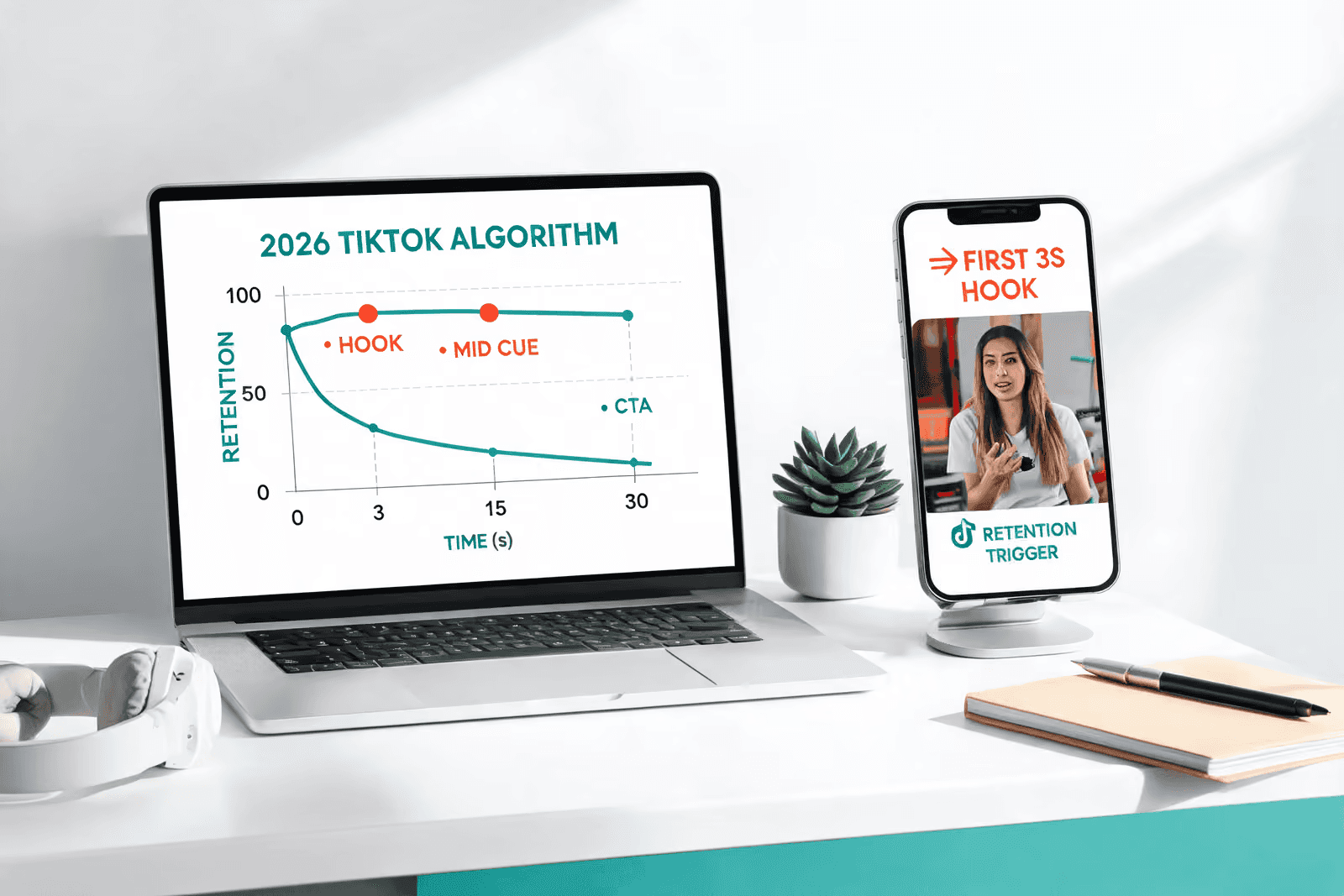
Stopping the scroll and holding the viewer are two separate jobs, and most creators only train for one. The common instinct is to chase the most jarring, unexpected opening possible, because pattern interruption genuinely works at the first-second level. The problem surfaces immediately after: a disconnected interrupt wins the stop and loses the viewer in the same breath. The brain processes a visual signal before a conscious decision even forms. According to the Later Blog, people spend an average of 1.7 seconds looking at a piece of content on mobile before scrolling past, which means the scroll-stop decision happens faster than most verbal or text-based hooks can register. Creators who lead with a spoken line or a title card are already behind before the first word lands.
The Interrupt-Content Disconnect
The failure pattern is consistent across creators at every level. A jarring visual glitch opens the video, the first-second stop rate looks strong, and then the completion rate collapses because the interrupt had no relationship to the content that followed.
- The viewer stopped
- Scanned for a reason to stay
- Found none
- And left
That wasted stop is not a hook problem in the traditional sense. It is a connection problem, and raw view counts hide it completely.
Catching Disconnected Hooks Early
Most creators diagnose this too late, if at all. The retention graph only reveals the drop-off after the algorithm has already decided the video underperforms, and general swipe-away rates capture the stop without surfacing whether the interrupt style connected to the content that followed.
Creators running multiple videos through the same performance lens often discover their most visually aggressive hooks produced the worst completion rates, a pattern invisible when you only check total views. Crayo addresses this earlier in the process, giving creators a structured starting point for hooks that are built to connect, not just interrupt, so the analysis happens before the algorithm does.
The Eight-Second Window
According to the Microsoft Attention Spans Research Report, the average human attention span has dropped to 8 seconds, which means the window between the scroll-stop and the hold is narrower than most creators account for. An interrupt that wins the second one but delivers no signal about what comes next burns through that window instantly. The hook has to do two things at once: break the pattern and immediately answer the viewer's unspoken question, "Is this worth the next seven seconds of my life?"
Designing Hooks as Unified Systems
The creators who consistently convert stops into real watch time treat the hook as a single connected mechanism, not two separate decisions. The interrupt and the content it leads into are designed together, so the visual that breaks the pattern is also the first piece of evidence that the content is worth staying for. That is the difference between a hook that earns attention and one that borrows it for a second and gives nothing back. And what that disconnection actually costs you, in reach, in algorithm trust, and in compounding distribution loss, is more significant than most creators ever stop to calculate.
Related Reading
- Short Form Content Ideas
- Short Social Media Videos
- How To Make Videos For Social Media
- How To Increase Video Engagement
- Video Storytelling
- Social Media Content Ideas
- Emotional Hooks
- How To Get More Comments On Youtube
- YouTube Average View Duration
The Hidden Cost of Disconnected Pattern Interrupts
Capturing attention and keeping it are two different problems, and most hook strategies only solve the first one. The completion-rate gap that opens up when a pattern interrupt disconnects from the content it introduces is not a minor inefficiency. It is a compounding distribution problem that quietly erodes reach every time a video is published.
What the Visible Metric Hides
The failure point is almost always the same:
- Creators check the stop rate
- See a strong number
- And move on
Completion rate sits in a separate part of the dashboard, requires an extra click, and rarely gets the same attention. According to LinkedIn Pulse's research on disconnected systems, employees spend up to 30% of their time searching for information across disconnected systems, and the same fragmentation principle applies here. When the metric that tells you whether viewers stayed lives in a different place than the metric that tells you whether they stopped, most creators never connect the two. The result is a hook strategy optimized for a number that only measures the first half-second of a video's job.
The Scroll-Stop vs. Completion Gap
A common pattern surfaces across creators who run this diagnostic for the first time: their highest stop-rate videos and their highest completion-rate videos are almost never the same ones. The interrupt that generated the most pauses was often built around unrelated shock value, while the videos that held viewers longest used an opening visual directly tied to the content's payoff. That gap is not random. It is the documented cost of treating the scroll-stop as the finish line rather than the starting line.
Visual-First Hook Construction
Most creators handle hook construction by writing the spoken line first, then finding a visual to support it. That sequence feels natural because words are easier to draft than visuals. But the scroll-stop decision is made before the spoken line finishes registering, which means the visual channel is doing the real work whether the creator designed it that way or not. Crayo is built around this reality, letting creators design and produce the visual hook first, then align the spoken content to it, compressing a process that typically takes hours into something that moves at the speed the algorithm actually rewards.
Why Intensity Without Connection Backfires
The mechanism-generalization error is worth naming precisely because it is so logical on the surface. Pattern interruption is a real neurological trigger. The brain's prediction system responds involuntarily to anything that violates the expected feed pattern, so it is reasonable to conclude that a stronger interrupt produces a stronger response. The problem is that the involuntary attention response and the decision to keep watching are governed by different systems.
- The first is automatic.
- The second requires the viewer to find a reason to stay, and a disconnected interrupt gives them nothing to hold onto once the initial surprise resolves.
The Payoff-Driven Visual Hook
The practical fix requires no additional production time. It is a redirect, not an addition. Instead of asking "what is the most jarring thing I can open with," the question becomes "what visual from inside this video's actual payoff is also the most arresting thing I can show first." A jarring zoom onto the specific number you are about to explain does both jobs simultaneously. It stops the scroll, and it signals the content, which means the viewer who stays past the interrupt already knows why they are there. The frustrating part is that this adjustment costs nothing to implement, but the creators who need it most are the ones least likely to discover it by checking their own analytics.
7 Ways to Create Scroll-Stopping Hooks in 30 Minutes
Seven techniques separate hooks that stop the scroll from hooks that also hold it. Each one below targets a specific failure point, and together they compound into an opening that earns both the pause and the watch time.
1. Design the Interrupt Around Your Actual Payoff
Identify your video's specific result before you touch the edit. Then build the visual interrupt directly around that result: a sudden zoom onto the actual number, a glitch effect revealing the actual outcome. If you removed the interrupt and the video's core point stayed intact, the interrupt is decorative, not functional. The test is simple. Ask whether your opening frame could serve as the first second of a completely unrelated video. If the answer is yes, you have a scroll-stop that converts into nothing.
2. Lead With the Visual Channel First
Design the first frame before you write a single spoken line. The scroll-stop decision happens through the visual channel first, and the spoken hook reinforces it rather than carrying it. Test your hook's first frame with the audio off. If it doesn't stop you, the spoken line won't save it. Most creators invert this process. They write the script, then add visuals around it, which means the slower channel is doing the heavier lifting at exactly the wrong moment.
3. Use Motion Anomaly, Not Just Static Surprise
- A freeze frame
- A sudden speed ramp
- A jarring cut
It creates a motion signature the brain flags as unusual. Static visual surprises can still blend into a feed where every video moves at standard speed. Motion anomaly breaks that specific pattern and triggers the same prediction-violation response, but through a channel most creators ignore entirely. Match the motion anomaly to something your topic can naturally support. A freeze frame works for a reveal. A speed ramp works for a transformation. Motion for its own sake, disconnected from the content, runs straight into the failure mode covered earlier.
4. Add Direct Address to a Specific Viewer
Name the exact person your video is for, directly in the hook. Not anyone who invests, but someone who invests in index funds and ignores tax location. The specificity is the mechanism. According to James Pollard on LinkedIn, direct address hooks with specific audience targeting generate 2.1x higher save rates than generic hooks, a documented advantage that pure shock value alone doesn't replicate. Combine direct address with your visual interrupt rather than choosing between them. The two work in different channels simultaneously: the visual stops the scroll, the direct address tells the right viewer exactly why they should stay.
5. Layer Three Techniques in Sequence
The most durable hooks layer pattern interrupt, incomplete visual, and direct address in sequence within the first few seconds. The interrupt stops the scroll. The incomplete visual creates a specific unanswered question. The direct address establishes who this is for. Each layer reinforces the last instead of competing with it. Most creators default to a single technique in isolation. The compounding effect of all three in sequence is not subtle. It's the difference between one reason to stay and three reasons stacked before the viewer consciously decides anything.
Layered Hook Creation and Testing
Most creators handle hook creation by writing a line, recording it, and calling the opening done. The familiar approach isn't wrong; it's just incomplete. As complexity grows and feeds get more saturated, a single-technique hook loses ground to creators running layered openings. A clip creator tool like Crayo addresses this directly: it lets creators generate multiple hook variations from the same content idea in seconds, so testing a layered three-technique opening against a simpler version doesn't require rebuilding the entire video from scratch.
6. Check Completion Rate by Interrupt Style
Tag each video by which specific interrupt style it used, then check completion rate broken down by that tag. View count and first-second retention alone won't tell you whether a given interrupt style is actually converting into watch time. Only checking both numbers together reveals the disconnect pattern when it exists. This is the ongoing diagnostic, not a one-time audit. The interrupt styles that show strong stop rates but weak completion are the ones to retire, regardless of how visually striking they are.
7. Test the Interrupt Alone Before Finishing the Edit
Preview your opening frame or first half-second in isolation before finishing the full edit. Ask whether it would stop a scroll without the context of the rest of the video. Confirm it connects to the payoff before locking it into production. Catching a disconnected interrupt before full production costs almost nothing. Discovering it through a completion-rate drop after publishing costs the distribution the video could have earned. The revision happens either way. The only variable is when.
What Changes When You Apply All Seven
Before applying these techniques: interrupts chosen for maximum shock regardless of content connection, hooks built around spoken lines first, no direct address, single-technique openings, and performance judged by views or first-second retention alone.
After: the interrupt built directly around the payoff, visuals designed before the script, motion anomaly used deliberately, direct address layered in, and completion rate checked specifically by interrupt style.
The difference is not making hooks more shocking. It's connecting whatever grabs attention directly to the content that has to hold it. That connection is the craft. Shock without it is just noise. 15 scroll-stopping hooks that generated millions of impressions share one structural trait: the opening moment signals exactly what the viewer is about to get, not just that something unexpected is happening.
Related Reading
- How To Do Text To Speech On Tiktok
- Tiktok Retention Rate
- What Is Brainrot Content
- How To Make Brainrot Videos
- How To Create Pov Videos
- Long Form Video Content
- Tiktok Content Strategy
- Sludge Content
- How to Make TikTok Videos More Engaging
The 30-Minute Workflow to Build a Scroll-Stopping Hook

Executing the techniques consistently is a different problem than understanding them. The gap between knowing what works and producing it reliably, under a real deadline, is where most creators lose ground. What follows is a workflow that closes that gap by sequencing the decisions in the right order.
Minute 0-5: Lock Down Your Specific Payoff
Write down the exact result, number, or moment your video delivers before you design anything visual. Not a topic. Not a theme. The specific payoff: "cutting a six-hour task to ninety minutes using one method" rather than "productivity tips." This single step changes the entire production sequence. Your visual interrupt now has a target to connect to, rather than a general idea to gesture toward. Skip this step, and you are designing a hook for a video that does not yet have a defined destination.
Minutes 5-15: Build the Visual Interrupt Around That Payoff
Most creators design the visual first and hope it connects to the content. The smarter sequence runs in the opposite direction: the payoff you just identified becomes the brief for your opening frame. A sudden zoom, a motion anomaly, an incomplete visual, each of these works when it signals the specific payoff rather than just triggering a generic startle response. According to Active Toast's research on scroll-stopping psychology, hooks that open with a specific number see up to 36% higher engagement than vague openers, which is exactly why payoff-first design produces more consistent results than shock-first design. The number or result you identified in minute zero belongs in the first frame, not buried in the middle of the video.
Minutes 15-20: Layer Direct Address Into the Sequence
After the visual interrupt and any incomplete-visual moment, add a direct-address line that names the specific viewer within the first few seconds. Not everyone or people who want to grow. The person. Layering interrupt, incomplete visual, and direct address in sequence compounds attention capture beyond what any single technique achieves alone. The order matters because each element builds on the psychological state the previous one created. Interrupt breaks the scroll pattern. Incomplete visuals create a gap the brain needs to close. Direct address makes that gap feel personal.
Minutes 20-25: Test the Interrupt in Isolation
Preview the opening frame or first half-second alone, without the rest of the video. Ask two questions:
- Would this stop a scroll on its own?
- Does it clearly connect to the payoff you identified in minute zero?
The failure point is usually visible here, before it becomes expensive. A weak or disconnected interrupt caught at this stage costs nothing to fix. The same disconnect discovered through a completion-rate drop after publishing costs you reach, distribution, and time you cannot recover. Catching it now is not perfectionism; it is the cheapest quality check available.
Visual-First Workflow vs. Bolted-On Hooks
The common workflow most creators use runs in the opposite direction:
- Write the script
- Film the content
- Then bolt a hook onto the front and hope it holds
That sequence produces interrupts that feel decorative rather than functional, because the hook was never designed around a specific payoff to begin with. Crayo is built for creators who have already internalized this sequence, compressing the production and editing steps so the time saved goes toward testing hook variations rather than wrestling with timelines.
Minutes 25-30: Produce, Publish, and Tag by Interrupt Style
Finish production, then publish and tag the video by which specific interrupt style it used. Motion anomaly. Direct address. Specific number in frame. Incomplete visual. Whatever the primary technique was, label it. This tag is the step most creators skip, and it is the one that turns a single video into a data point. Active Toast's psychology research found that content creators who test at least three hook variations per post report twice the average reach of those who do not, but that advantage only compounds if you know which variation outperformed and why. Without the tag, you are running an experiment with no record of what you tested.
Why the Sequence Matters More Than the Techniques
The seven techniques covered earlier are not the hard part. The hard part is designing the interrupt and the content as a single connected unit rather than two separate decisions made at different points in the process. This workflow forces that connection by putting payoff identification first. Every subsequent decision, the visual design, the direct address, the isolation test, gets made in reference to a specific target rather than a general intention. The result is not a more creative hook. It is a more accurate one.
Payoff-Centered Hook Workflow Shift
Before this workflow: the pattern looks like this: an interrupt designed for maximum shock, spoken content written before the visual, no direct address, no tracking.
After it: the payoff identified first, the visual interrupt built around it, direct address layered in sequence, the interrupt tested in isolation, and the video tagged for future tracking.
The improvement does not come from making hooks more dramatic. It comes from building the scroll-stopping moment directly around the content it needs to hold. And once the workflow is internalized, the next question is not whether you can build better hooks. It is how fast you can build them consistently, and that changes the game entirely.
Create Scroll-Stopping Hooks Faster With Crayo
Speed is where strategy either compounds or collapses. You can internalize the payoff-first framework, understand why visual interrupts need to connect directly to content, and still lose ground if building each hook takes longer than your publishing cadence allows. That gap, between knowing what works and producing it consistently, is where most creators quietly stall.
Open the clip creator tool, describe your video's specific payoff, and generate a hook with a visual interrupt built directly around that payoff. No separate design step. No manual effort to keep the interrupt and the content aligned. The connection that takes the most discipline to maintain in a fully manual process gets built into the output from the start, which makes consistent execution realistic rather than occasional. Going viral is not a creative accident. It is a repeatable outcome built on fast, connected decisions made at the hook level, every single time you publish.
Related Reading
• Best Video Format For Tiktok
• YouTube Hooks
• Best Tiktok Hooks
• Brainrot Examples
• Scroll Stopping Hooks
• Pov Ideas For Tiktok
• Social Media Hooks
• How To Make A Good Hook
• Viral Hooks For Instagram