

If you have ever found yourself stuck in a loop of short videos, you already know what TikTok brain rot feels like: that pull to keep watching, keep scrolling, never stopping. Instagram plays the same game, but it gives creators two very different tools: Stories and Reels. Knowing the difference between the two is not just useful trivia. It shapes how your content performs, who sees it, and whether your audience actually sticks around. This article breaks down 7 key differences between Instagram Stories and Reels so you can choose where to put your energy.
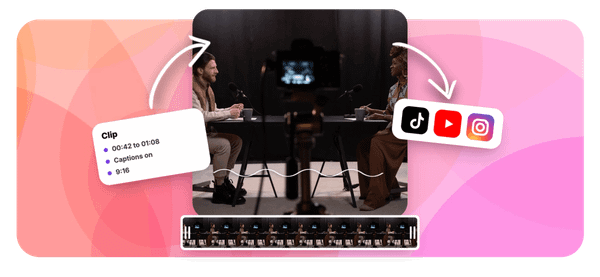
Once you understand how Stories and Reels differ in format, reach, audience engagement, content duration, and visibility, you can start posting with real purpose instead of guessing. That is where Crayo's clip creator tool becomes genuinely useful. It helps you take raw footage and shape it into content that fits the right format from the start, saving time and helping you show up consistently on Instagram without the extra back-and-forth.
Summary
- Reels and Stories run on separate ranking systems, so posting the same content to both formats doesn't split the difference. It misses both targets. According to Socialinsider's 2025 benchmarks, Reels achieve an average reach rate of 30.81% compared to Stories' 12.35%, and that gap reflects structural design, not content quality. Reels push through the Explore page, the Reels tab, and suggested content feeds to reach non-followers, while Stories are capped to existing followers by default.
- The signals each format rewards are not variations on the same logic. Instagram's head of product confirmed in January 2025 that Reels prioritize watch time and DM shares, while Stories weight recency and relationship closeness. DM shares on Reels carry roughly three to five times more algorithmic weight than a like, while direct replies and close-friend interactions carry the most weight in Stories.
- Interactive tools are native to Stories in a way Reels cannot replicate. Polls, question stickers, quizzes, and emoji sliders turn passive viewers into active participants, and Instagram's own business data confirms that one in five Stories receives a direct message reply. These features feed the relationship-closeness signal that Stories' ranking system is specifically built to reward.
- Content lifespan shapes how each format functions in practice. Reels stay on a profile indefinitely and remain searchable long after posting, making them the right vehicle for content meant to be discoverable months later. Stories disappear after 24 hours, which creates a different kind of urgency. That impermanence is not a weakness but a feature, one that drives higher-frequency, lower-stakes check-ins from an audience that already follows you.
- Format selection works best as a structured decision, not a habit. Identifying the goal first, whether that is reaching new people or deepening connection with existing followers, determines which ranking system evaluates the content and what success actually looks like. Judging a Story by Reel metrics, or vice versa, can make both formats seem to fail when neither actually did. The metric that matters for Reels is reach rate. The metric that matters for Stories is reply and interaction rate.
- Reels function as the top of the funnel, bringing in new followers, while Stories determine whether those followers develop into a genuinely engaged audience over time. A Reels-only strategy can produce strong follower counts while leaving relationship depth flat. A Stories-only approach builds connection but removes content from the discovery infrastructure entirely.
Crayo's clip creator tool addresses the production side of this equation by generating subtitle-optimized, hook-first short-form clips structured around the watch time and share signals that drive Reels distribution, which reduces the friction that pushes creators toward convenience-based format choices.
Why Creators Struggle to Choose Between Instagram Stories and Reels

Stories and Reels look identical on the surface:
- Vertical
- Short-form video
- Same app
- Same creator tools
That surface similarity is exactly what makes the choice so consistently wrong. Instagram runs each format through a separate AI-driven ranking system with different signals, goals, and audiences, which means posting the right content in the wrong format is the same as not posting at all.
The failure point is usually a habit disguised as a strategy. Most creators pick a format based on what feels faster to produce that day, not based on what the format's ranking system is actually built to reward. A creator who posts an educational tip as a Story expecting discovery reach will only reach people already following them, because Stories structurally cap at existing followers. That same tip posted as a Reel gets pushed through the Reels tab, Explore page, and suggested content feeds to people who have never heard of the creator.
Why the Visual Similarity Creates a Mechanical Blind Spot
The confusion runs deeper than convenience. Because both formats are vertical and short, creators assume the mechanics underneath are equally similar. They are not. According to Socialinsider's 2025 Instagram benchmarks, Reels achieve an average reach rate of 30.81% of total followers, while Stories average 12.35%, and Reels extend well beyond followers entirely. That gap is not a performance difference between two similar tools. It is the structural difference between a format built for discovery and one built for depth with people who already trust you.
Engagement Mechanics Matter
The format-goal mismatch also shows up in engagement mechanics.
- Stories carry native interactive tools, polls, question stickers, quizzes, and sliders, that generate one-to-one responses
- Reels cannot replicate. Instagram's own business data confirms one in five Stories receives a direct message.
Reels, meanwhile, are optimized for saves and DM shares, signals that carry roughly three to five times more algorithmic weight than a like, and that compound distribution over time. These are not cosmetic differences. They determine which ranking system evaluates your content and whether that system is even designed to accomplish what you wanted.
Format Fit Drives Results
Most creators handle this by defaulting to whichever format is easiest that day, or by posting the same content to both and hoping one lands. The hidden cost is that content gets evaluated by the wrong system for what it is actually trying to accomplish, producing inconsistent results with no clear diagnosis.
Creators who want to produce short-form clips optimized for reach and discoverability often find that tools like Crayo's clip creator tool reduce the friction of producing Reels-ready content consistently, since the format, pacing, and subtitle structure are already aligned with what Instagram's Reels ranking system rewards.
What the Right Format Match Actually Changes
When you choose a format by goal rather than habit, the system evaluates each piece of content based on what it was built for.
- Reels optimized for watch time and DM shares reach non-followers and compound distribution over time.
- Stories built around interactive stickers drive direct responses from an existing audience that already trusts you.
The content itself does not have to change. Where it lives changes everything about who sees it and why. But knowing which format to choose is only part of the equation. What most creators still underestimate is the specific cost that accumulates when they keep treating these formats as interchangeable, and that cost is more concrete than most expect.
Related Reading
- TikTok Content Ideas for Business
- What Does Content Under Review Mean on TikTok
- YouTube Shorts Ideas Without Showing Face
- Viral YouTube Shorts Ideas
- Why Is My Content Under Review on TikTok
- Creative Instagram Reels Ideas
- YouTube Shorts Content Ideas
- YouTube Shorts Ideas For Beginners
- How Long Can A Reel Be On Instagram
- Instagram Reels Ideas For Business
- What Does Promotional Content Mean on TikTok
- Instagram Reels Ideas For Beginners
- How Much Do Content Creators Make on TikTok
The Hidden Cost of Treating Stories and Reels as Interchangeable

Treating Stories and Reels as interchangeable formats is not a creative mistake. It is a structural one, and the cost shows up in the metrics that actually matter:
- Reach rate
- Reply rate
- Follower growth
Where the Mismatch Actually Hurts
The failure point is usually invisible until you look at the numbers side by side. A creator posts relationship-building content as a Reel and gets broad impressions from strangers who never reply. Another posts growth-oriented content as a Story and watches it stop dead at their existing audience. Neither piece of content was weak. The format was simply working against the goal from the moment it was published.
Socialinsider's 2025 benchmarks confirm this gap is not marginal: Reels average a 30.81% reach rate while Stories average 12.35%, a difference that compounds across every post.
Why the Wrong Habit Forms in the First Place
The same issue surfaces across creators at every follower count: convenience drives format selection more than strategy does. When you produce one version of a video and post it wherever feels fastest, you are essentially letting your schedule make a decision that your ranking algorithm will enforce.
Reels and Stories do not share a ranking system. They do not share distribution logic. Posting growth content to Stories does not just underperform; it removes the content from the discovery infrastructure entirely, because Stories have no Explore page equivalent and no suggested-content pathway to non-followers.
Reels as the Default Discovery Format
Most creators handle this by defaulting to whichever format they used last, because the visual similarity between vertical short-form videos in the same app makes the underlying mechanics feel identical.
Crayo addresses a related friction point: when producing optimized, subtitle-driven short clips at volume, the format decision becomes part of the production workflow rather than an afterthought, so Reels get treated as the default discovery vehicle they were built to be.
What Each Format is Actually Rewarding
The critical difference is not content quality. It is signal type. Instagram's head of product confirmed in January 2025 that Reels prioritize watch time and sends, while Stories prioritize recency and relationship closeness. These are not variations on the same system. They use separate ranking logic and have different success conditions. Chasing DM replies from a Reel, or expecting a Story to accumulate shares that push it into new feeds, means optimizing for signals the format was never designed to reward.
Goal-Matched Format Strategy
When you match format to goal deliberately, each surface delivers the specific outcome it was built for:
- Reels expand your audience through discovery
- Stories deepen connection with the audience you already have
Trying to get both outcomes from one format does not split the difference. It misses both targets. The cost is not a failed post. It is a pattern of effort that never fully converts into either growth or relationship depth, regardless of how strong the content itself is. And once you see how specifically each format's ranking logic is engineered, the differences between them turn out to be sharper and more consequential than most creators ever account for.
Related Reading
- Instagram Reel Hook Ideas
- How To Create A Reel On Instagram
- Instagram Reel Caption Ideas
- Tiktok Content Ideas For Beginners
- Best Time To Post A Reel On Instagram
- Best Content For Tiktok
- How To Schedule A Reel On Instagram
- Best Content Strategy Tiktok
- How To Make Looping Content For Tiktok
- Ai Tools for TikTok Content Creation
7 Key Differences Between Instagram Stories and Reels

Reels and Stories share a screen but serve completely different masters. Each format runs its own ranking logic, rewards its own engagement signals, and reaches a fundamentally different audience. Knowing the seven differences below tells you exactly which format to deploy for a given goal.
1. Reach: Who Can Actually See Your Content
Reels distribute through the Explore page, the Reels tab, hashtags, and suggested content feeds, putting your video in front of people who have never heard of you. Stories stay inside your existing follower base unless someone visits your profile directly. The structural reach ceiling is baked into the format itself, not into your content quality or posting frequency.
This distinction matters most for clippers and short-form creators who are building an audience from scratch. A perfectly edited Reel with tight subtitles and a strong hook can reach non-followers at scale. The same video posted as a Story reaches only the people who already chose to follow you, which means it starts the distribution race already lapped.
2. Primary Ranking Signal: What the Algorithm Actually Measures
Instagram's head of product confirmed that:
- Reels prioritize watch time and DM shares
- Stories weight recency and relationship closeness
These are not minor differences in emphasis. They are completely separate optimization targets that require different creative decisions at the production stage.
A Reel built for DM shares needs a hook strong enough to make someone think of a specific friend the moment it ends. A Story built for relationship closeness needs consistency and a reason to reply, not a reason to repost. Content engineered for one ranking signal will underperform inside the other format's logic, regardless of production quality.
3. Interactivity: Tools That Create Conversation
Stories carry native interactive tools that Reels simply do not:
- Polls
- Question stickers
- Quizzes
- Emoji sliders
These are not cosmetic features. They turn passive viewers into active participants and directly drive the one-to-one replies that Stories' ranking system rewards.
One in five Stories receives a direct message reply, a figure tied specifically to this interactive infrastructure. Reels generate saves and shares at higher rates, but they cannot replicate the back-and-forth that a well-placed poll or question sticker creates. If your goal is a response, not a reshare, the format choice is already decided for you.
4. Content Lifespan: Permanent Discovery vs. Intentional Disappearance
- Reels stay on your profile indefinitely and remain searchable in the Reels tab long after posting.
- Stories vanish after 24 hours.
Most creators treat this as a weakness in Stories, but the temporary nature is precisely what makes them work.
Because Stories disappear, followers check them with a different urgency. No archive to scroll back through, no permanent record to judge. That impermanence creates a low-pressure, high-frequency touchpoint that permanent content can't naturally replicate. Use Reels for content you want discoverable six months from now. Use Stories for content that is only relevant today.
5. Engagement Signal Weighting: Not All Interactions Are Equal
DM shares on Reels carry roughly three to five times more algorithmic weight than a like, according to documented analysis of Instagram's distribution behavior. Saves rank second. Comments and likes trail significantly behind. This weighting exists because Instagram treats shares as a signal that the content was genuinely valuable enough to pass to someone else.
Stories operate on a different signal hierarchy entirely. Direct replies and close-friend interactions carry the most weight, because Stories' ranking system is built around relationship proximity, not broadcast potential. Optimizing for likes across both formats is one of the most common and costly format strategy mistakes a creator can make.
6. Content Type Fit: Broad Appeal vs. Personal Relevance
The failure point is usually a mismatch between content intent and format expectation.
- Reels perform best with content designed for strangers:
- Educational clips
- Entertainment
- Tutorials
- Anything with broad-audience appeal
- Stories perform best with content your existing audience already has context for:
- Behind-the-scenes moments
- Quick updates
- Time-sensitive announcements
Audience Expectations in Stories
Most creators who post broad-appeal content to Stories find it underperforms, not because the content is weak, but because their followers already know them and want something more immediate and personal. The audience's expectation shifts the moment they tap into Stories. Match the content to that expectation, not to the format you happen to be in the mood to use.
Reels Production for Growth
Most creators choose formats by defaulting to whatever feels faster in the moment. That approach works until you notice your Reels reach thousands of non-followers while your audience depth stays flat, or your Stories get replies but your account isn't growing.
Platforms like a clip creator tool are built specifically for the Reels side of this equation, generating subtitle-optimized, hook-first short-form clips designed for the watch time and share signals that drive Reels distribution, which removes the production friction that pushes creators toward Stories by default.
7. Growth Strategy Role: Funnel Entry vs. Relationship Depth
Reels are the top of the funnel. They bring new people in. Stories happen after someone follows you: the ongoing relationship that determines whether that follower becomes a genuinely engaged audience member or just a number on a profile.
A Reels-only strategy can generate strong follower counts while producing an audience that never really connects with the creator behind the content. Stories close that gap. They are where the relationship either deepens or quietly fades. The creators who build durable audiences use both formats deliberately, not interchangeably, treating each as a distinct tool with a distinct job.
Real-Time Format Decision
The seven differences above are not a checklist to memorize. They are a decision filter. Every piece of content you create answers one of two questions:
- Do I want new people to find this?
- Do I want the people who already found me to go deeper?
The format you choose should follow directly from that answer, not from habit or convenience. But knowing the differences is only half the equation. The harder part is building a repeatable decision process that works in real time, before you hit record.
The 10-Minute Workflow to Decide Between a Story and a Reel

Choosing a format without a goal is just guessing with extra steps. The workflow below turns that decision into a repeatable system, one that takes roughly ten minutes and produces a clear answer every time.
Minute 0-3: Name the Specific Goal
Before anything else, decide whether this piece of content is meant to reach people who have never heard of you, or to deepen something with people who already follow you. That single question determines which of Instagram's two separate ranking systems will evaluate your content. Get this wrong and everything downstream, the hook, the sticker, the caption, suffers for it.
Minute 3-5: Match the Goal to a Format
If the goal is reach or growth, plan for a Reel. If the goal is direct interaction or relationship depth, plan for a Story with an interactive sticker. This is where the format decision actually gets made, based on Instagram's confirmed ranking priorities rather than habit or convenience.
The failure point is usually here. Most creators skip this step entirely, defaulting to whichever format they used last, and then wonder why their content underperforms. Format selection is not a creative preference. It is a structural decision with measurable consequences.
Minute 5-7: Optimize for the Format's Specific Signal
For a Reel, sharpen the hook inside the first three seconds and build in a clear reason someone would send it to a friend. Shares and sends carry far more algorithmic weight in Reels than passive views do. For a Story, add a specific interactive element, a poll, a question sticker, or a quiz, that invites a direct response and feeds Instagram's relationship-closeness signal.
Optimizing generically across both formats is like training for a sprint and a marathon with the same workout. The signals each format rewards are structurally different, and your production decisions need to reflect that.
Minute 7-9: Check for Content-type Mismatch
The same issue surfaces in both Reels and Stories: creators publish content that is technically formatted correctly but the wrong type for the format. Broadly useful or entertaining content belongs in a Reel. Timely, personal, or behind-the-scenes content belongs in a Story. Catching a mismatch here, before publishing, costs nothing. Discovering it in weak performance afterward costs reach, time, and momentum.
Strategic Production Workflow
Most creators handle this check informally, if at all. They finish editing, feel satisfied with the output, and publish without asking whether the content's nature actually matches the format's strength. That gap is where avoidable underperformance lives.
Creators who produce Reels at volume know this friction well. The editing process itself can slow down the decision cycle, especially when you're trying to move fast. Platforms like Crayo address this directly, with AI-generated subtitles, voiceovers, and optimized clip formatting built into a single workflow, so the production side doesn't become the bottleneck when the strategic decision is already clear.
Minute 9-10: Track the Right Metric
Publish, then track reach rate specifically for Reels, or reply and interaction rate specifically for Stories. Not a combined engagement number. Not total impressions. The metric that tells you whether the format actually worked for its intended purpose.
A Reel with strong saves and shares but low comments is performing correctly. A Story with high poll responses but zero reach is also performing correctly. The problem is when creators judge a Story by Reel metrics or vice versa, which makes both formats look like they failed when neither did.
Why the Sequence Matters
The workflow's value is not in any individual step. It is in the order. Goal identification comes before format selection, which comes before optimization, which comes before publishing. When that sequence collapses, and it collapses most often at the goal identification step, every downstream decision defaults to habit.
Reels generate an average reach rate of 30.81% compared to Stories' 12.35%. That gap does not close with better editing or more consistent posting. It closes when you choose the format deliberately, matching it to a content goal the format's ranking system is built to reward.
Before vs. After this Workflow
Before: format chosen by convenience, content optimized generically, performance tracked with one number that blurs the difference between reach and relationship. After: goal identified first, format matched deliberately, content optimized for the signal that format's algorithm rewards, and performance tracked with the metric that reveals whether it actually worked.
Improvement doesn't come from producing more content. It comes from stopping the habit of treating two structurally different systems as interchangeable.
Create the Right Format Faster With Crayo
The part most creators overlook isn't the strategy. It's the gap between knowing which format fits and actually producing content built for it. That gap is where good intentions turn into posting the same clip everywhere and hoping something sticks.
Open Crayo’s clip creator tool, define your content's specific goal in the first three minutes, and generate a version optimized for the format that matches it.
- Building for reach means a Reel with a front-loaded hook and subtitle-driven pacing that rewards shares.
- Building for relationship means a Story concept anchored around a direct interactive element.
Crayo handles the production side of that distinction, which is what makes format-specific optimization realistic at scale rather than a one-off effort reserved for your best-performing weeks. Creators who consistently hit reach aren't guessing better. They're removing the friction that pushes everyone else back toward convenience. Match the goal, generate the right version, track the metric that actually tells you if it worked.