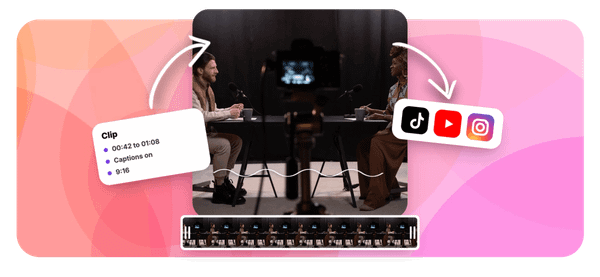


Short social media videos have quietly taken over how people consume content online, and if you have ever caught yourself watching clip after clip without realizing an hour has passed, you already know what TikTok brain rot feels like. That pull is real, and it is also a signal that short-form video content holds serious attention in today's feed. The good news is that the same attention can work in your favor, and this article breaks down 25 short social media video ideas you can use to earn $1,000 in just two weeks.
Getting started is easier than most people think, especially with a tool like Crayo's clip creator, which helps you produce scroll-stopping vertical videos fast without needing editing skills or expensive software. Instead of spending hours cutting footage, you can focus on picking the right video formats from this list and publishing consistently, which is exactly what turns views into real income.
Table of Contents
- Why Most Creators Struggle to Create Profitable Short Social Media Videos
- The Hidden Cost of Creating Short Social Media Videos Without a Monetization Strategy
- 25 Short Social Media Videos to Earn $1,000 in 2 Weeks
- The 2-Week Workflow Creators Use to Turn Short Social Media Videos Into Income
- Turn Short Social Media Videos Into Revenue Faster With Crayo
Summary
- Short-form video content holds serious attention, but views and income rarely move together. According to UT Dallas News Center, only 4% of creators on platforms like YouTube earn enough to reach the U.S. poverty line. That gap is not a talent problem. It is a structural one, rooted in building content without a clear path from viewer to revenue.
- Production costs compound quickly when there is no monetization strategy behind the content. Brands can spend up to $50,000 per month on social media video content without a clear ROI strategy, according to Vidico, and businesses separately spend an average of $4,000 to $7,000 per month on social media management with no defined return.
- Volume alone does not solve the monetization problem. Creators who publish more without a structured format tend to accelerate the problem rather than fix it. Each video built from scratch without a defined audience, a specific problem it addresses, and a single conversion action is content without a role. The creators who scale profitably are not working harder.
- Certain video formats consistently outperform others because they meet viewers at a moment of intent. Tutorials, product comparisons, beginner guides, and problem-and-solution videos attract audiences who are already close to a decision, which is why they convert at higher rates than general interest content. Viewer intent is the most valuable signal in short-form monetization, and format selection is how creators align with it.
- Publishing speed directly affects income potential. UT Dallas News Center reports that short-form video content generates 3x more engagement than long-form content on average, but that return only compounds when creators publish consistently enough for the algorithm to surface their content to new viewers. Full-time creators who have solved the execution problem earn an average of $44,000 per year, according to Zencastr, while those still assembling manual workflows rarely reach that threshold.
- Analytics review is the step most creators skip, and it is where a content system pays its biggest dividend. Knowing which video format drove affiliate clicks versus saves without conversions removes guesswork from the next publishing cycle. A feedback loop turns a growing content library into a compounding asset rather than just a growing archive.
Crayo's clip creator tool addresses the execution bottleneck directly by consolidating AI voiceovers, subtitle generation, and footage optimization into a single workflow, reducing the time from idea to published video from hours to minutes.
Why Most Creators Struggle to Create Profitable Short Social Media Videos

Most creators spend their energy chasing views, then wonder why the income never follows. The real problem is not output. It is building short-form video content without a system that connects the right audience, the right format, and a clear path to revenue. Views are a signal. They are not a business. The pattern surfaces constantly across TikTok, Instagram Reels, and YouTube Shorts. A creator publishes a vertical video that gets 200,000 views, feels the rush, then watches their next ten videos flatline. What looked like momentum was actually randomness. Without a repeatable content structure tied to a single audience and a single monetization goal, every viral moment resets to zero.
Why Views and Income Rarely Move Together
According to the UT Dallas News Center, only 4% of creators on platforms like YouTube earn enough to reach the U.S. poverty line. That number is not a talent gap. It is a strategy gap. Most creators optimizing for reach are unknowingly building an audience that has no reason to buy, subscribe, or click. Engagement without intent is noise.
Building a System Over Isolated Posts
The failure point is usually structural. Most beginners treat short social media videos as isolated posts rather than components of a content system.
- They switch between niches when growth stalls.
- Copy trending audio without asking whether it appeals to their target viewers.
- Publish without a call to action that moves people toward revenue.
Each of those decisions feels reasonable in the moment. Together, they create a feed that looks busy but converts nothing. Creators who build around a single content pillar, one specific problem for one specific audience, compound their results because every video reinforces the same trust signal.
Overcoming the Idea and Production Bottleneck
Most creators handle idea generation by scrolling competitor profiles or waiting for inspiration. That approach works until it does not, which is usually around week three. Crayo exists precisely because the bottleneck for most short-form creators is not editing skill or camera quality. It is the time lost between ideas and the inconsistency that follows. When a tool handles the production layer, including AI voiceovers, subtitles, and optimized footage, creators can redirect that energy toward strategy, the part that actually determines whether a video earns or just performs.
Content vs. Strategic Monetization Assets
The critical difference between creators who monetize and those who plateau is not posting frequency or production quality. It is whether each piece of content serves a defined purpose inside a larger system. A short video without a monetization role is just content. A short video built around one audience problem, one format, and one conversion action is an asset. That distinction is small in theory and enormous in practice. And what most creators never realize is that the gap between publishing and profiting is not about working harder. It is about something far more specific and far more fixable.
Related Reading
- Tik Tok Brain Rot
- How To Increase Video Engagement
- Viral Content Ideas
- Emotional Hooks
- Short Social Media Videos
- How To Make Videos For Social Media
- How To Get More Comments On Youtube
- YouTube Average View Duration
- Video Storytelling
- Social Media Content Ideas
- Why Are My Tiktok Videos Not Getting Views
The Hidden Cost of Creating Short Social Media Videos Without a Monetization Strategy

Chasing views without a revenue destination is not a content strategy. It is a treadmill. And the longer you stay on it, the more expensive it becomes, not just in time, but in the compounding opportunity cost of attention you already earned but never converted.
Where the Real Spending Problem Hides
The failure point is usually invisible until you start measuring outputs against outcomes. According to Vidico, brands can spend up to $50,000 per month on social media video content without a clear ROI strategy. That number sounds extreme until you account for editing hours, platform management, creative iteration, and the quiet cost of publishing content that was never designed to do anything specific. Most creators never add up those hours. If they did, the math would be uncomfortable.
Unfocused Spend vs. Monetization Systems
The same pattern surfaces in solo creators and small teams as it does in brand marketing departments:
- Content gets made
- Content gets posted
- Then everyone waits to see what happens
Waiting is not a system. Digital Applied's Social Media Marketing Costs 2026 guide reports that businesses spend an average of $4,000 to $7,000 per month on social media management without a clear monetization strategy. The spending is real. The return is optional.
Why Production Volume Becomes a Trap
When creators try to solve this by producing more short-form clips, more reels, more vertical video content, they often accelerate the problem rather than fix it. Volume without structure means more content competing for the same undefined outcome. Scripting, filming, editing, and publishing each piece from scratch burns creative energy that could be redirected toward building a repeatable format. The creators who profitably scale their short-form video output are not working harder. They are working inside a system where each step feeds the next without rebuilding from zero.
Streamlining Production for Conversion Focus
Most short video workflows are assembled manually, piece by piece, every single time. That is where Crayo changes the equation. Rather than treating each clip as a standalone production job, it consolidates AI voiceovers, subtitle generation, and gameplay footage optimization into a single workflow, so creators can stop spending their best hours on production mechanics and start directing that energy toward content decisions that actually affect conversion.
What Profitable Short Video Content Actually Requires
Constraint-based thinking solves this faster than any new idea or trending format. If your short video has:
- One audience
- One problem it addresses
- One action it asks viewers to take
It has a monetization role. Without those three elements, even a clip with a million views is just noise with good numbers attached. The short-form creators who build real income streams are not necessarily the most talented editors or the most entertaining personalities. They are the ones who treat each piece of vertical content as a deliberate move inside a larger system, where the format serves the audience, and the audience serves the offer. And the surprising part is that once that system exists, the volume question answers itself.
Related Reading
- How To Do Text To Speech On Tiktok
- Tiktok Retention Rate
- What Is Brainrot Content
- What Is Italian Brainrot
- How To Make Tiktok Videos More Engaging
- Italian Brainrot Quiz
- How To Make Brainrot Videos
- How To Create Pov Videos
- Long Form Video Content
- Tiktok Content Strategy
- Sludge Content
25 Short Social Media Videos to Earn $1,000 in 2 Weeks

Creators who build real income from short-form content share one habit: they publish with intention, not impulse. Every video they create targets a specific viewer at a specific moment in their decision-making process, whether that person is researching a tool, trying to solve a problem, or deciding between two options. That alignment between viewer intent and video purpose is what turns a content library into a revenue engine.
1. AI Tool Tutorials
People searching for AI writing tools, image generators, or productivity apps are not browsing passively. They are actively trying to make a decision. Tutorial videos that walk through real use cases attract buyers, not just viewers, which is why AI tool content consistently outperforms general interest videos in affiliate conversion rates.
2. Product Comparison Videos
The failure point in most comparison content is that creators compare too broadly. Narrowing the comparison to two or three specific tools within a niche (say, AI video editors for short-form creators) attracts viewers who are already close to making a purchase. That purchase intent is the most valuable audience signal in short-form video monetization.
3. Educational Videos
Pattern recognition shows up clearly here: creators who teach business, finance, or marketing consistently build audiences with higher conversion potential than creators who entertain. The reason is trust. When someone learns something useful from you three times in a row, your fourth video recommendation carries weight that no paid ad can replicate.
4. Problem-and-Solution Videos
The most searchable short videos answer a question someone typed into a search bar.
- Beginner mistakes in the niche.
- How to fix a common problem.
- Step-by-step guide to a specific task.
These formats work because they meet viewers at the exact moment they feel stuck, and a product recommendation inside that context feels like help, not a pitch.
5. List Videos
Lists hold attention because they create a completion loop. Once a viewer knows they are watching "7 Side Hustles for 2025," they tend to stay until the end to make sure they do not miss one. That retention creates natural space to introduce affiliate recommendations, services, or calls to action without interrupting the viewing experience.
Eliminating Bottlenecks With Unified Workflows
Most creators approach these formats by:
- Scripting manually
- Editing clip by clip
- Publishing whenever the workload allows
That process works at low volume, but it breaks down the moment you try to publish consistently across multiple formats each week. When scripting, voiceover recording, subtitle syncing, and exporting all happen in separate tools, the workflow becomes the bottleneck, not the ideas. A clip creator tool like Crayo removes that friction by handling AI voiceovers, subtitles, and optimized footage inside a single workflow, so the time between idea and published video shrinks from hours to minutes.
6. Behind-the-Scenes Videos
Showing your content creation process or daily workflow does something educational content alone cannot: it builds familiarity. Viewers who feel like they know how you work are more likely to trust your recommendations. That trust is the invisible infrastructure behind every successful affiliate or product-based income stream.
7. Before-and-After Videos
Results-based content performs because it makes abstract outcomes concrete. A before-and-after showing a redesigned workflow, a transformed result, or a measurable improvement gives viewers a reference point for what is possible. That reference point is exactly what makes a product or service recommendation feel credible rather than promotional.
According to fitxfearless (Bismarck Ebiweh) on Instagram, a short video content strategy on Instagram can generate $1,000 every two weeks, and the reel documenting that result earned over 4,314 likes, which signals that audiences are not just curious about these outcomes; they are actively engaged with them. That engagement is proof that income-focused short-form content has a ready audience already searching for it.
8. Industry News Videos
The creators who cover AI updates, platform changes, or technology releases become the filter their audience relies on. People will follow a creator who saves them 30 minutes of research every week before they follow a creator who entertains them occasionally. Consistent returning viewers are the foundation of any monetization strategy that compounds over time.
9. Myth vs. Fact Videos
Challenging a widely held belief in your niche will almost automatically generate comments. When viewers disagree or want to share the video to prove a point to someone else, your distribution grows without any additional effort. That organic reach is especially valuable in the early stages of building a content library.
10. Mistakes to Avoid Videos
Audiences searching for mistakes to avoid are problem-aware, meaning they already understand that they need help. That awareness makes them far more receptive to a solution you recommend inside the video. The key is specificity: "5 beginner mistakes in AI video editing" outperforms "common content creation mistakes" because it speaks to one person with one problem.
11. Tool Recommendation Videos
When viewers search for tool recommendations, they are usually 48 to 72 hours away from a purchase decision. A specific, honest recommendation video that shows the tool in action, explains who it is for, and links to an affiliate offer converts at a meaningfully higher rate than a general review. Specificity is the variable that separates a helpful video from a forgettable one.
12. Quick Tips Videos
Short, actionable advice travels well across every major vertical video platform, from TikTok to Instagram Reels to YouTube Shorts. The reason is format fit: a 45-second tip requires no commitment from the viewer, which lowers the barrier to watching, saving, and sharing. High save rates signal to platform algorithms that the content has lasting value, which extends organic reach.
13. Beginner Guides
Evergreen search demand is the most underrated asset in short-form content. A beginner's guide to setting up an AI workflow or starting a faceless YouTube channel will attract viewers 18 months from now just as reliably as it does today. Building a library of beginner-focused videos creates a compounding discovery engine that keeps working long after the publish date.
14. Frequently Asked Questions
Answering common audience questions on camera does two things simultaneously: it reduces the friction that prevents new viewers from trusting you, and it demonstrates expertise in a way that feels earned rather than performed. The creators who answer FAQs consistently tend to see higher follow rates from first-time viewers because the content signals that they understand their audience deeply.
15. Product Demonstrations
Seeing a product work in real conditions removes the last objection most buyers carry. A software walkthrough that shows exactly how a tool solves a specific problem, without overselling, converts better than any written review. The short-form format works especially well here because it forces the creator to highlight only the most relevant features, keeping the viewer's attention focused on the outcome.
16. Success Story Videos
Real examples make results more believable than statistics alone. A specific story about how one person used a tool or process to achieve a measurable outcome gives viewers a mental model they can apply to their own situation. That mental model is what moves someone from this is interesting to I want to try this.
17. Time-Saving Tips
Saving time is a universal outcome that transcends niche boundaries. Automation workflows, AI shortcuts, and productivity systems all share the same emotional appeal: more output, less effort. Videos that teach time-saving techniques tend to generate high share rates because viewers send them to colleagues, friends, or followers who face the same constraints.
18. Trend Breakdown Videos
The constraint here is timing. Trend-breakdown content has a short window of peak relevance, so the creator who publishes first captures most of the search volume. Building a workflow that allows you to script, produce, and publish a trend breakdown within hours of a major announcement is a genuine competitive advantage in short-form content.
19. Challenge Videos
A 7-day or 30-day challenge creates a structural reason for viewers to return. Each update video builds on the last, which means the audience who watches day one is invested in seeing the outcome. That return viewership is one of the most reliable signals of an engaged audience, and engaged audiences convert at significantly higher rates than passive ones.
20. Resource Roundups
Curated resource videos work because they transfer effort. The viewer does not have to research 15 tools or websites; you did it for them. That time savings creates goodwill, and goodwill is the currency that makes affiliate recommendations feel like favors rather than sales.
21. Workflow Videos
Showing a repeatable system gives viewers something they can immediately apply. The best workflow videos do not just describe a process; they show it in motion, with real inputs and real outputs. That specificity is what earns the saved tag, and saved videos continue generating views and conversions long after the initial publish.
22. Reaction Videos
Reaction content works when the creator's perspective adds something the original content lacks:
- Context
- Critique
- A contrarian take
A reaction to a new AI tool release that explains what the tool actually does well (and where it falls short) builds more credibility than a reaction that simply agrees with the announcement. Credibility is the asset that makes every future recommendation more valuable.
23. Comparison Videos
The same logic that applies to product comparison videos applies here but is extended to strategies and methods. "AI video editing vs. manual editing: which earns more?" attracts a viewer who is actively deciding between two paths. That decision-making context is where affiliate links and service recommendations perform best.
24. Prediction Videos
Prediction content earns engagement in two waves: when it is published, and when the prediction is proven right or wrong. Viewers return to comment, share, and discuss, which signals ongoing relevance to platform algorithms. That second wave of engagement is a distribution advantage that most other video formats cannot replicate.
25. Step-by-Step Tutorials
The most durable short-form content is comprehensive enough to fully solve a real problem. A step-by-step tutorial that walks a viewer from zero to a working result, whether that is a finished video, a configured tool, or a launched workflow, positions the creator as a trusted resource. Trusted resources are followed, recommended, and returned to, compounding the behavior that turns a content library into a long-term income asset.
The difference between a creator who earns consistently and one who earns occasionally is not talent or luck. It is the choice to build a library of videos that each serve a specific purpose inside a larger system, where every format connects viewer intent to a revenue outcome. But knowing which formats to use is only half the equation, and the other half is what most creators never figure out on their own.
The 2-Week Workflow Creators Use to Turn Short Social Media Videos Into Income
Separating the work into stages solves the overwhelm. But execution speed is where most creators still bleed time, because even a clean workflow can stall when every task is manual. The familiar approach is to open a notes app, brainstorm ideas, write a script in a Google Doc, record or source footage, edit in a separate tool, add captions in another, and then publish. Each step requires a context switch. Each switch costs momentum. Across 25 videos, that friction compounds into days of lost production time, and the publishing calendar starts slipping before the first week is done.
The Hidden Cost of Non-Scalable Execution
That gap between knowing the workflow and executing it without bottlenecks is where most creators quietly give up. According to the Zencastr Blog, full-time content creators earn an average of $44,000 per year, which sounds reasonable until you realize that number reflects creators who have solved the execution problem, not just the strategy problem. The ones still stitching tools together manually rarely reach that threshold.
Most creators handle production by treating each video as its own project. The hidden cost is that this approach does not scale. When scripting, voiceover generation, caption placement, and clip formatting all live in separate tools, batch production becomes nearly impossible, and the content library you planned in Days 3 through 5 never gets built fast enough to matter.
Accelerating Batch Production Through Workflow Integration
Crayo addresses exactly this friction point. Instead of jumping between tools for voiceovers, subtitles, and footage, creators can generate short-form videos within a single workflow, so the batch production stage of the 2-week plan runs faster and with fewer decision points slowing it down. The barrier to consistent publishing is no longer skill or editing experience. It is simply whether your tools match the speed your workflow demands.
Why Does Publishing Speed Directly Affect Income
Short-form video content generates 3x more engagement than long-form content on average, which means the return on every video you publish is higher than most creators expect. But that return only compounds if you are publishing consistently enough for the algorithm to surface your content to new viewers. A two-week workflow that produces 10 videos beats a two-month workflow that produces 3, every time.
The analysis stage in Days 13 through 14 is where the workflow pays its biggest dividend, and most creators skip it entirely. When you know which video format drove affiliate clicks and which one drove saves but no conversions, you stop guessing about what to create next. You have a replicable signal. That signal is what separates a content library that grows in value from one that just grows in volume.
Compounding Growth Through Feedback Loops and Tooling
Consistent publishing without a feedback loop is just noise. Consistent publishing with one is a compounding asset. Every week you run the analytics review, you get slightly better at predicting which hooks, formats, and topics will move viewers toward the monetization step you built into the video. The part most creators never anticipate is how quickly the right tool changes what feels possible.
Turn Short Social Media Videos Into Revenue Faster With Crayo
The right tool does not just save time. It changes what you attempt. When the production barrier drops low enough, you stop asking, "Is this idea worth the effort?" and start asking, "How many versions of this can I test?" That shift, from scarcity thinking to volume thinking, is where consistent short-form revenue actually begins.
Most creators who struggle with monetization are not short on ideas. They are short on execution speed. Crayo handles the steps that slow most creators down, from ideation and scripting to AI voiceovers and publish-ready video output, so the gap between a good idea and a live video shrinks from hours to minutes. That compression is what makes a two-week content system feel sustainable instead of exhausting.
Related Reading
• Pov Ideas for TikTok
• Viral Hooks For Instagram
• Brainrot Examples
• YouTube Hooks
• Social Media Hooks
• Best Tiktok Hooks
• How To Make A Good Hook
• Best Video Format For Tiktok
• Scroll-Stopping Hooks