

If you've ever opened TikTok just for a minute and looked up 40 minutes later wondering where the time went, you've felt the pull of TikTok brain rot firsthand. That same addictive scroll behavior is exactly what makes TikTok such a powerful platform for creators and brands, but only if you show up with a clear content plan. This article breaks down 7 practical ways to build a TikTok content strategy in 30 minutes, so you stop posting randomly and start growing with purpose.
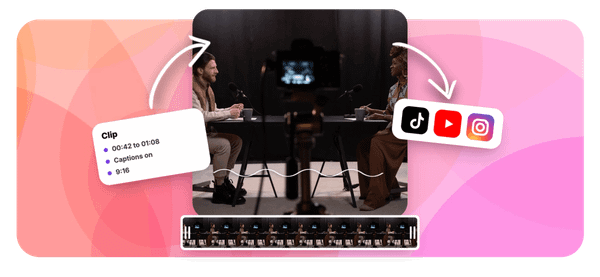
Having a solid content calendar, a consistent posting schedule, and a strong sense of your target audience can feel overwhelming at first, but tools like Crayo's clip creator make the process faster and simpler. Crayo helps you turn raw ideas into polished, ready-to-post TikTok videos without needing editing skills or hours of production time, so you can focus on what actually matters: creating content that connects with your audience and keeps them coming back.
Table of Contents
- Why Creators Struggle to Build a TikTok Content Strategy
- The Hidden Cost of Confusing Posting Volume With Strategy
- 7 Ways to Build a TikTok Content Strategy in 30 Minutes
- The 30-Minute Workflow to Plan Your TikTok Content Strategy
- Execute Your TikTok Content Strategy Faster With Crayo
Summary
- TikTok's algorithm doesn't reward posting volume. It evaluates each video against a small test audience of around 300 to 500 users before deciding whether to push it further. If the content doesn't match a recognizable interest cluster, it fails that test quietly with no feedback and no second chance. This means posting frequently into the wrong niche produces no compounding effect, just repeated failed auditions.
- Watch time and completion rate are the metrics that actually drive distribution on TikTok, not follower count or raw views. Videos that hold viewer attention for at least 50% of their duration are more likely to be promoted by the platform. Most creators optimize for the wrong numbers, which creates a feedback loop that points their content strategy in the wrong direction from the start.
- Documented strategy makes a measurable difference in content outcomes. Marketers who document their strategy are 3 times more likely to report success than those who don't, according to the Content Marketing Institute's 2025 Annual Report. On TikTok, that documentation means defining a specific niche, two or three recurring content pillars, and the audience behavior signals you're optimizing toward before you start posting.
- Keyword-optimized captions carry real discoverability weight beyond hashtag categorization. TikTok's expanded search functionality means on-screen text, voiceovers, and captions all factor into how content gets surfaced. Videos with captions see up to 55% more engagement on TikTok, according to Loomly, which reflects how much the platform rewards content that gives its system more context to work with.
- The audience attention on TikTok is already substantial. Users spend an average of 95 minutes per day on the app, and the platform has over 1 billion monthly active users worldwide. The challenge isn't finding an audience. It's whether a content strategy is specific and consistent enough to capture a reliable share of that attention rather than producing one-off view spikes that don't compound into follower growth.
- Trend participation feels like smart platform behavior but often dilutes the focused signal the algorithm is trying to build. Jumping on five unrelated trends in a single week may produce short-term view spikes, but those spikes don't reinforce the same interest cluster. The account stays perpetually new to the algorithm, never building the distribution momentum that comes from being consistently recognizable within one niche.
Crayo's clip creator tool addresses the production bottleneck that causes most focused TikTok strategies to collapse, compressing scripting, voiceover, subtitle formatting, and final output into a single session so creators can maintain niche consistency and posting cadence at the same time.
Why Creators Struggle to Build a TikTok Content Strategy
Posting more is not the same as posting better. Most creators discover this the hard way, after weeks of consistent output with little to show for it, because the instinct to just keep going feels like discipline when it's actually drift. The core problem is structural. TikTok's algorithm doesn't reward volume uniformly. According to the Hootsuite Blog, each video gets evaluated with an initial test audience of around 300 to 500 users before the platform decides whether to push it further. That means every post is essentially a small audition, and if the content doesn't match a recognizable interest cluster, it fails the audition quietly, with no feedback and no second chance.
What the Algorithm is Actually Measuring
The failure point is usually mismatched signals. A creator who posts cooking videos one day, motivational content the next, and gaming clips the day after gives the algorithm nothing consistent to work with. Interest clusters require repetition to form. Without a defined niche and at least two or three content pillars that recur predictably, the algorithm treats each video as a standalone event rather than part of a growing identity. That's the structural disadvantage most creators never see coming. And it compounds quietly, because effort keeps going in while the system keeps failing to categorize the account.
Prioritizing Watch Time Over Superficial Metrics
Watch time is the metric that actually moves distribution, not follower count and not raw views. Videos holding viewer attention for at least 50% of their duration are more likely to be promoted. That single data point reframes what good content means on TikTok. It's not content that looks polished or follows a trending sound. It's content that keeps a specific person watching past the halfway mark, which requires knowing exactly who that person is before you hit record.
Streamlining Production to Focus on Strategy
Most creators handle this by editing in whatever app feels familiar, adding subtitles manually, and hoping the format holds attention long enough. The hidden cost is that slow production cycles compress posting frequency and leave less time for the strategic thinking that actually drives niche consistency. Crayo address that specific friction by generating formatted, subtitle-ready short-form videos in seconds, so creators can spend their actual time on niche positioning and content pillar planning rather than production logistics.
The Trap of Inconsistent Trend-Chasing
Trend-chasing makes this worse in a way that feels counterintuitive. Jumping on every trending sound or format seems like smart platform behavior, but it scatters the signal the algorithm is trying to build. A creator who participates in five unrelated trends in a single week may see short-term view spikes, but those spikes don't reinforce the same interest cluster. The account stays perpetually new to the algorithm, never building the distribution momentum that comes from being consistently, recognizably one thing. What it actually costs to keep mistaking activity for strategy is more than lost time.
Related Reading
- Short Form Content Ideas
- Short Social Media Videos
- How To Make Videos For Social Media
- How To Increase Video Engagement
- Video Storytelling
- Social Media Content Ideas
- Emotional Hooks
- How To Get More Comments On Youtube
- YouTube Average View Duration
The Hidden Cost of Confusing Posting Volume With Strategy

Posting more costs you less than you think it does in production time. What it actually costs is the compounding growth that never starts because the algorithm never gets a clear enough signal to act on. The failure point is usually invisible. A creator posts six times a week, watches the view counts fluctuate, and reads the activity as progress. But the algorithm is not counting posts. It is measuring whether each new piece of content reinforces the same interest cluster as the last one. Without that reinforcement, distribution resets with every upload. The effort is real. The accumulation is not.
The Power of a Documented Content Strategy
According to the Content Marketing Institute's 2025 Annual Report, marketers who document their strategy are 3x more likely to report success than those who don't. That gap is not about talent or posting frequency. It is about whether the effort is pointed at something specific enough to build on. On TikTok, a documented content strategy means knowing your niche, your two or three recurring content pillars, and the audience behavior signals you are optimizing toward. Without that, volume is just noise at scale.
The Illusion of Trend-Driven Growth
The familiar workaround is to treat trend participation as a substitute for strategy. A trending sound drops, and joining it feels like a smart shortcut into distribution. Sometimes it produces a spike. But a spike built on a mismatched trend does not pull the right viewers into your audience, and it does not teach the algorithm anything useful about who you are making content for. Creators who rely on Crayo to move fast on formats and production understand that speed matters most when it is pointed at the right niche, not just the nearest trend.
The Limits of Undifferentiated Content
The same pattern surfaces across account sizes and categories: creators who post broadly across unrelated topics feel busy, but their effort stays linear. Each post competes in a feed that, according to Orbit Media's 2025 Content Marketing Report, only 29% of content marketers rate as very or extremely successful for their organization. The math is not encouraging for undifferentiated content. A specific niche with consistent pillars does not just help the algorithm. It gives viewers a reason to follow rather than just watch once and scroll on.
Defining Niche and Pillars for Compounding Impact
The fix costs less than most creators expect. Defining one niche and two or three content pillars is a planning decision, not a production one. It does not require more videos. It requires that the videos you are already making point in the same direction, so that each one builds the audience to match the previous one started. The real question is not whether you can build a focused strategy. It is whether you can do it fast enough to matter before the window of TikTok's current growth advantage narrows.
7 Ways to Build a TikTok Content Strategy in 30 Minutes
Each of the seven techniques below works because it gives TikTok's algorithm something specific to act on.
- A defined niche gives the cluster-matching system a clear pattern.
- Recurring content pillars reinforce that pattern with every upload.
- Watch time and completion rate tell you whether the pattern is resonating.
- Trend filtering protects the pattern from dilution.
- Consistent posting frequency sustains the signal.
- Keyword-optimized captions extend discoverability beyond the feed.
Regular analytics review sharpens the whole system over time. Remove any one of these and the others lose leverage.
1. Define One Specific Niche, Not a Broad Category
The failure point is usually precision. Fitness is a category. Home workouts for people with no equipment and under 20 minutes is a niche. The algorithm's interest-cluster system needs a specific, consistent signal to confidently place your content in front of the right audience. Broad categories give it too many possible matches, which means weaker placement and slower audience accumulation. Narrow your niche until you can describe it in one sentence that names a clear, identifiable audience. Then commit to it across at least 10 consecutive posts before reconsidering. That commitment period is not arbitrary; it is the minimum window the algorithm needs to build a reliable pattern from your content.
2. Build 2-3 Recurring Content Pillars Within That Niche
Unstructured content within even a well-defined niche still reads as random. An audience needs to recognize what you do, not just what you cover. Two or three recurring formats, a tutorial, a myth-bust, a behind-the-scenes, give your content a recognizable identity that reinforces the same audience match with every upload.
- Rotate consistently between these pillars rather than inventing a new format every post.
- Track which pillar produces the strongest retention numbers and lean into it further.
The goal is not variety for its own sake. It is a recognizable pattern that makes both the algorithm and your audience confident about what comes next.
3. Track Watch Time and Completion Rate as Primary Metrics
Most creators check view counts and follower growth because those numbers are visible and feel meaningful. They are not the metrics that drive distribution. The algorithm weighs watch time and completion rate far more heavily than follower count, which means optimizing for the wrong numbers creates a feedback loop that points in the wrong direction.
- Check watch time and completion rate for every video.
- Identify which pillar or topic produces the strongest retention and make more content matching that pattern.
- Deprioritize formats with high views but weak completion, even if they feel like wins.
The metric that matters is whether people watch to the end, not whether they clicked.
4. Evaluate Every Trend Against Niche Fit Before Participating
The same issue surfaces in trend-chasing that surfaces in broad category thinking: participation that feels productive but dilutes the focused signal you are trying to build. Joining a trending sound that has nothing to do with your niche produces an audience spike matched to the trend, not to your content. That spike does not compound. It resets. Before joining any trend, check whether it can be adapted to fit your specific niche and content pillars. If the adaptation requires abandoning your niche entirely, skip it. Trends that reinforce your niche are worth participating in. Trends that require you to become a different creator for a week are not.
5. Post Consistently, But Prioritize Niche Fit Over Raw Frequency
Consistency matters, but it compounds within a focused niche. Frequency without focus produces more diluted content faster, which is the opposite of what a focused strategy is designed to achieve. A sustainable posting rhythm of roughly two to five times per week is a reasonable range for most creators, but the specific number is less important than whether every post reinforces your niche. Batch content production to hit your frequency target without rushing individual videos. If quality within your niche is suffering to meet a frequency goal, adjust the frequency downward. A slightly slower posting schedule that maintains niche consistency will outperform a faster one that doesn't.
6. Use Keyword-Optimized Captions Alongside Hashtags
TikTok's search functionality has expanded significantly, and content discoverability now extends well beyond hashtag categorization. Keyword-optimized captions, on-screen text, and voiceovers carry real weight in how TikTok surfaces content through search, meaning a strategy relying on hashtags alone misses a meaningful discovery channel. According to Loomly, videos with captions see up to 55% more engagement on TikTok, which reflects how much the platform rewards content that gives its system more context to work with.
Optimizing Content for TikTok Searchability
- Write captions using natural language your specific audience would actually search for.
- Use a mix of broad community hashtags and specific niche tags.
- Include keyword-relevant terms in on-screen text and voiceover, not just the caption field.
The goal is to be findable through multiple entry points, not just the algorithm's feed distribution. Most creators write captions as an afterthought, a quick sentence typed in the 30 seconds before posting. That habit is expensive. The creators building durable, searchable content libraries treat captions as part of the content itself.
7. Review Analytics Regularly and Refine Toward What's Working
A strategy set once and never revisited is not a strategy. It is a starting hypothesis. The refinement step is where the compounding actually happens, because it is where you identify what your specific audience is already responding to and make more of it.
- Review your analytics on a weekly or biweekly cadence.
- Identify your strongest-performing pillar or topic specifically, not just your highest-view video.
- Make more content matching that pattern rather than continuing to spread effort evenly across all three pillars.
- Treat this as an ongoing process, not a one-time optimization.
Iterative Refinement for Strategy Growth
The pattern across successful TikTok content strategies is iterative, not linear.
- Post
- Learn
- Refine
- Repeat
Skipping the review step means missing the chance to double down on what is already working.
What Actually Changes When You Apply These Techniques
Before applying these techniques: the typical creator is posting across multiple loosely related topics, tracking follower count as the primary success metric, joining trends regardless of fit, and treating every video as a standalone attempt rather than part of a compounding system. The result is effort without accumulation.
After applying them: the picture looks different. One specific niche. Two or three recurring pillars. Watch time and completion rate as the primary feedback signals. Trends filtered for niche fit. A sustainable posting rhythm. Regular analytics review. The difference is not more content. It is content that points in the same direction, consistently enough for the algorithm to act on it.
Leveraging Existing Audience Attention
The execution gap between these two states is smaller than it looks. StoryChief reports that TikTok users spend an average of 95 minutes per day on the app, which means the audience attention is already there. The question is whether your content strategy is specific enough to capture a reliable share of it.
Scaling Production With Automated Tools
Most creators handle production manually, editing clips, writing captions, and formatting subtitles one video at a time. That workflow is manageable at low frequency, but it becomes the bottleneck as posting consistency becomes the priority. Crayo addresses this directly, using AI to generate voiceovers, subtitles, and optimized short-form clips in seconds, compressing the production step so the strategy work stays in focus rather than getting buried under editing time.
Overcoming the Speed-to-Execution Bottleneck
The strategy itself is not complicated. What makes it hard is the execution speed required to run it consistently before TikTok's current growth advantage narrows. That is the real constraint, and it is worth solving for. But knowing the seven techniques is only half the picture, because the harder question is how to turn them into a concrete weekly plan you can actually execute without starting from scratch every time.
The 30-Minute Workflow to Plan Your TikTok Content Strategy
Building a repeatable TikTok content strategy doesn't require weeks of planning or a dedicated content team. It requires a five-stage workflow you can run in 30 minutes and repeat every week without rebuilding from scratch. Most creators treat content planning as an event rather than a system. They block out a Saturday afternoon, generate a burst of ideas, then drift back into reactive posting once the motivation fades. The result is inconsistent publishing, unclear audience targeting, and a feed that never quite compounds into real growth.
Minute 0-5: Define Your Content Foundation
The first five minutes aren't about ideas. They're about constraints.
- Decide who your target audience is
- What problem you solve for them
- Which three to five content pillars will anchor every video you make
A small business owner teaching TikTok marketing doesn't post about social media in general. They post about:
- Content strategy
- Video creation
- Growth tactics
- AI tools
That specificity is what allows TikTok's algorithm to build a reliable interest cluster around your account. Without this foundation, every video you make is a fresh bet. With it, each video reinforces the last one.
Minutes 5-10: Build Your Weekly Content Plan
One idea per pillar. That's the entire task. Map each idea to a day of the week and assign a format:
- Educational tip on Monday
- Common mistake on Tuesday
- Behind-the-scenes on Wednesday
- Tutorial on Thursday
- Trend with your own angle on Friday
This isn't rigid scheduling. It's decision elimination. When you already know what you're making and why, you stop spending creative energy on logistics and start spending it on execution. Planning ahead also gives you something more valuable than efficiency. It gives you a testing framework. When you run the same format on the same day each week, performance patterns become visible within two to three cycles.
Minutes 10-20: Create Content in Batches
The failure point in most creator workflows isn't effort. It's task-switching.
- When you write one hook
- Then script one video
- Then record it
- Then edit it
- Then start the next one
You're rebuilding context every single time.
Maximizing Efficiency With Batch Creation
Batch creation eliminates that friction.
- Write all five hooks first.
- Then all five scripts.
- Then record or generate all voiceovers in a single session.
- Then edit.
Each task compounds on the one before it because your brain stays in the same mode throughout. According to SEO Sherpa, TikTok videos between 21 and 34 seconds get the highest completion rates, which means your scripts don't need to be long. They need to be tight. That constraint actually makes batch creation faster, not harder, because you're writing to a defined length rather than guessing when to stop.
Streamlining Production Through Batch Processing
Most creators handle the production phase by working through one video completely before starting the next. That feels logical until you realize you're spending more time switching contexts than actually creating. Batching by task type instead of by video cuts production time significantly while keeping quality consistent across the batch. Crayo is built for exactly this stage of the workflow. Instead of toggling between a script tool, a voiceover generator, a subtitle editor, and a video editor, creators can upload footage, select a subtitle style, and generate a finished short-form video in one session. For creators running a weekly batch process, that compression matters because it keeps the momentum of the batch intact rather than letting production friction slow it down.
Minutes 20-25: Schedule and Optimize Before Publishing
A video isn't ready to publish just because it's edited. Before scheduling, review the:
- Opening hook
- Caption
- Hashtags
- Cover image
- Call to action
As a checklist, not an afterthought. These elements directly affect whether TikTok's algorithm surfaces your content to new audiences or keeps it contained to your existing followers. A weak hook in the first two seconds costs you reach regardless of how strong the rest of the video is. If your educational videos consistently outperform trend-based content, that's a signal to shift your weekly mix, not a reason to abandon trends entirely. The goal is to let data shape your content calendar gradually rather than making reactive decisions after a single underperforming post.
Minutes 25-30: Review Analytics and Refine
The best TikTok content strategies aren't built on instinct. They're built on patterns that emerge from consistent testing. In the final five minutes:
- Review average watch time
- Completion rate
- Shares
- Saves
- Comments across your most recent batch
Identify which content pillars, hooks, or formats generated the strongest signals. Then carry those signals directly into next week's content plan. According to Metricool's TikTok Content Strategy Guide, TikTok has over 1 billion monthly active users worldwide, which means the platform's data signals are extraordinarily rich. Small adjustments based on real performance data compound quickly when you're publishing consistently. The pattern that surfaces fastest is usually format-based. Tutorial videos generating higher completion rates than trend reactions isn't a coincidence. It's your audience telling you exactly what they want more of.
Why the Five-Stage Separation Matters
When you collapse all five stages into one chaotic session, each stage competes with the others for attention.
- Strategy bleeds into scripting.
- Editing interrupts scheduling.
- Analytics get skipped entirely because you're already behind.
Separating the stages creates clean handoffs. Each stage has a defined input, output, and time constraint. That structure is what makes the workflow repeatable rather than exhausting. It's the difference between a system that runs weekly and a process you abandon after two rounds. The challenge that remains, even with a clean five-stage workflow, is that execution still takes longer than it should when every tool lives in a different tab. But knowing the workflow and having the right tools to run it at full speed are two very different things.
Related Reading
- How To Do Text To Speech On Tiktok
- Tiktok Retention Rate
- What Is Brainrot Content
- How To Make Tiktok Videos More Engaging
- Italian Brainrot Quiz
- How To Make Brainrot Videos
- How To Create Pov Videos
- Long Form Video Content
- Tiktok Content Strategy
- Sludge Content
Execute Your TikTok Content Strategy Faster With Crayo
The workflow is built. The pillars are defined. What separates creators who maintain that system from those who quietly abandon it is almost never motivation. It's production time. When generating each pillar-matched video requires scripting, recording, and editing across separate tools, the weekly cadence that makes niche consistency work becomes the first thing that gets cut. Crayo solves that specific bottleneck. Describe your niche and content pillars, and Crayo generates scripted, produced videos matched to each one, with AI voiceovers, formatted subtitles, and optimized output ready to publish.
Sustaining Consistency With Efficient Tools
The three-step process (upload, select, generate) compresses what used to take hours into minutes, making it realistic to hold your pillar structure and posting cadence at the same time rather than trading one for the other.
The creators building compounding TikTok growth are not the ones posting the most. They are the ones who defined a focused niche, built a repeatable content pillar system, and found a way to execute it consistently without burning out on production. That last part is where most focused strategies collapse, and where the right tool makes the strategy actually stick.
Related Reading
• Social Media Hooks
• How To Make A Good Hook
• Best Video Format For Tiktok
• YouTube Hooks
• Scroll Stopping Hooks
• Brainrot Examples
• Best Tiktok Hooks
• Viral Hooks For Instagram
• Pov Ideas For Tiktok