

We live in an age where TikTok brain rot is real. Endless scrolling has trained people to tune out anything that does not grab them in the first two seconds. If your content does not trigger an emotional response fast, it gets skipped. This article breaks down exactly how to write emotional hooks in under 10 minutes, so your words stop thumbs and hold attention.
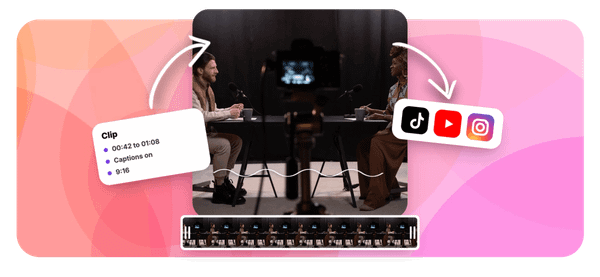
Crayo's clip creator tool makes this process even faster. Instead of spending hours piecing together content, you can use it to build scroll-stopping clips that carry your emotional hook directly to the right audience. Less guesswork, more impact.
Table of Contents
- Why Creators Struggle to Write Hooks That Actually Land
- The Hidden Cost of Writing Hooks That Feel Emotional But Don't Perform
- 7 Emotional Hook Formulas That Actually Get Shared
- The 10-Minute Workflow for Writing an Emotional Hook
- Write Emotional Hooks Faster With Crayo
Summary
- Scroll-stopping emotion and genuine emotion are not the same category. Research consistently shows that high-arousal emotions like awe, anger, and anxiety are the ones that actually stop a thumb mid-swipe, while calm, reflective, or sad openings may produce real feeling but rarely produce the physical reaction needed to interrupt a scroll.
- Virality is driven by physiological arousal, not emotional intensity alone. A 2012 study by Berger and Milkman, analyzing nearly 7,000 New York Times articles, found that high-arousal emotions like awe, anger, and anxiety significantly increased sharing, while sadness, despite generating genuine reactions, actually reduced virality. It is directly contradicted by peer-reviewed data.
- Specificity is the mechanism that converts a formula into an actual emotional trigger. Analysis of 8,426 videos by The Content Labs found that specificity in the opening frame is one of the strongest predictors of completion rate. A hook that says "this spreadsheet formula saved one analyst 11 hours a week" produces a sharper reaction than "this tool saves time" because the precise detail is what creates surprise, not the general claim.
- Only 5% of creators who read hook-writing advice will actually apply it, according to statistics cited in a widely discussed LinkedIn comment thread on Lara Acosta's post. That figure reflects how abstract most hook advice is. Telling someone to "be emotional" without specifying which emotion, and why that emotion triggers attention rather than passive appreciation, is advice that sounds useful and changes nothing in practice.
- The same underlying content can be packaged through different emotional formulas and produce dramatically different results. A tutorial on spreadsheet errors could open with anxiety using a specific risk statistic, anger by naming a suppressed feature, or curiosity by withholding a key detail. The topic does not change. The emotional entry point does, and that match between content and formula is where consistent performance comes from, not the topic itself.
Crayo's clip creator tool addresses this by compressing the editing and formatting work that surrounds the hook, so the focused attention required for emotional targeting is not competing with hours of manual post-production.
Why Creators Struggle to Write Hooks That Actually Land

Most creators treat emotional hooks as a feeling problem. They assume that if a hook triggers something real in a viewer, it has done its job. That assumption is the actual bottleneck, and it quietly explains why so many well-crafted hooks get scrolled past without a second glance.
The Gap Between Feeling Something and Stopping for Something
Real emotion and scroll-stopping emotion are not the same category. A hook can make someone feel nostalgic, reflective, or quietly moved, and still lose to a cat video. The emotions that stop a scroll are specific:
- Surprise
- Awe
- Anxiety about an unseen risk
- Anger at an injustice
- The electric pull of an incoming reveal
Calm, sad, or purely heartfelt openings produce genuine feeling, but they rarely produce the physical reaction of a thumb stopping mid-swipe. Creators who don't know this distinction exists will keep writing hooks that feel right in the draft and underperform in the feed.
The Cost of Guessing Your Hook
The recurring pattern is creators bouncing among a shocking stat, a reflective personal story, a direct question, and a trending format, with no framework connecting those choices to actual audience behavior. According to a LinkedIn post by Lara Acosta that generated 1,166 comments, the hook is almost always where content performance is won or lost, yet most creators treat hook style as interchangeable. Guessing at style produces accidental wins and unexplained losses, which is the most demoralizing kind of inconsistency because there is nothing to fix.
Why Instinct Alone Keeps Failing Short-Form Creators
Most creators handle the hook problem by studying what worked last week and trying to replicate the surface structure. That approach breaks down fast because it copies format without understanding the underlying emotional trigger. A hook that went viral because it opened with a specific, anger-inducing detail gets imitated as a personal story opener, stripped of the one element that actually made it land. The format travels. The emotional mechanics don't.
Simplifying Production to Master Emotional Triggers
Creators producing faceless or voiceover content feel this most acutely. Without on-camera personality or delivery to carry the first two seconds, the written hook has to do everything. A clip creator tool like Crayo removes one layer of that friction by handling the formatting and production side at speed, so creators can focus their limited attention on the one variable that actually decides performance: which specific emotional trigger opens the clip. When the technical side is handled in seconds, the creative decision becomes sharper, not more pressured.
Why Generic Hook Advice Fails
According to Lisa Didenko, citing statistics on advice-following behavior in a LinkedIn comment on Lara Acosta's post, only 5% of creators who read hook-writing advice will actually apply it. That number is not a critique of creators. It reflects how abstract most hook advice is. Telling someone to be emotional without specifying which emotion, and why that emotion triggers attention rather than passive appreciation, is advice that sounds useful and changes nothing.
The creators who grow consistently are not the ones who feel more; they are the ones who understand the specific emotional mechanics that make a viewer's thumb stop. But knowing which emotions stop a scroll is only the first half of the equation, and what happens when you get that part wrong carries a cost most creators never see coming.
Related Reading
- Short Form Content Ideas
- Short Social Media Videos
- How To Make Videos For Social Media
- How To Increase Video Engagement
- Video Storytelling
- Social Media Content Ideas
- Emotional Hooks
- How To Get More Comments On Youtube
- YouTube Average View Duration
- Why Are My Tiktok Videos Not Getting Views
The Hidden Cost of Writing Hooks That Feel Emotional But Don't Perform

Most creators who get this wrong never realize they did. The hook felt emotional. The comments proved it landed. The workflow looked like it was working. But feeling and performing are two different things, and conflating them is exactly where reach quietly stops growing.
When Emotion Connects But Doesn't Travel
The real cost is not a single underperforming video. It's a compounding pattern. Content that earns empathy but not shares stays trapped inside the audience that already found you. It deepens loyalty with existing viewers while doing almost nothing to push your video into new feeds. That gap, between content that resonates and content that travels, is where most creators' growth quietly stalls without a clear explanation.
The Science of High-Arousal Virality
The research behind this is specific and worth understanding. Berger and Milkman's 2012 study in the Journal of Marketing Research, analyzing nearly 7,000 New York Times articles, found that virality is driven by physiological arousal, not emotional intensity alone.
- High-arousal emotions like awe, anger, and anxiety significantly increased sharing.
- Sadness, one of the most emotionally powerful feelings a hook can produce, actually reduced virality despite generating genuine reactions.
The belief that "any strong emotion works" is not just imprecise. It is directly contradicted by peer-reviewed data.
Three Biases Sabotaging Hook Performance
Three specific biases drive creators toward the lower-performing choice.
- Emotional-equivalence bias leads creators to treat all strong feelings as interchangeable for engagement, so a sad hook gets written with the same confidence as an anxiety-driven one despite performing very differently.
- Safety bias pushes creators toward emotionally softer openings because anger or bold provocation feels riskier or more desperate than a quiet, relatable moment.
Feedback-loop confusion seals the pattern: comments saying "this made me cry" feel like proof the hook worked, when they actually measure whether the emotion landed, not whether it drove the share behavior that grows reach.
Accelerating Feedback for Emotional Precision
Most creators handle this by writing hooks that feel authentic and waiting for the numbers to respond. That instinct is not wrong; it just creates a long delay between effort and insight. Crayo is built around shortening exactly that gap, letting creators generate and test formatted short-form clips fast enough to compare emotional angles across videos before a single underperforming hook costs a week of reach. Speed is not a shortcut here. It is the feedback mechanism that makes emotional precision learnable rather than accidental.
According to a 2013 study published in PMC, individuals high in emotional expressivity showed significantly greater benefits from expressive writing, with effect sizes ranging from d = 0.4 to 0.6, suggesting that the creators most naturally drawn to emotional content are also the ones with the most to gain from channeling that expressivity toward the right emotional register.
Strategic Reframing Over Content Overhauls
The fix costs nothing in production time. It is a rewrite of the opening line, not a new shoot day. Reframing the hook's emotional angle toward surprise, anxiety, or anger at an injustice before publishing, rather than after the data comes back flat, is the entire adjustment. The same story, the same point, the same footage. Just a different emotional entry point, one the research shows actually travels. And knowing which emotions travel is only part of what separates a hook that stops the scroll from one that gets shared across feeds you've never reached before.
7 Emotional Hook Formulas That Actually Get Shared

Knowing which emotions drive sharing is the strategic foundation. But strategy without a repeatable system is just good intentions. These seven formulas convert that understanding into specific opening lines you can write today, each one engineered around a distinct high-arousal reaction rather than a vague directive to "make it emotional."
1. The Awe Hook
The awe hook opens with a result so specific it's almost hard to believe. Not this tool saves time, but this spreadsheet formula saved one analyst 11 hours a week. The specificity is the trigger. Vague outcomes produce mild interest; precise outcomes produce the kind of surprise that makes someone pause, rewind, and share. According to The Content Labs, based on 8,426 analyzed videos, specificity in the opening frame is one of the strongest predictors of completion rate, which directly feeds the algorithm's decision to push a video further.
2. The Anger Hook
The anger hook names something unfair that your audience already suspects but hasn't heard said directly. "Your spreadsheet software has had this fix built in for years, and nobody told you" lands harder than "here's a helpful tip" because it validates a quiet frustration the viewer was already carrying. Anger travels because it demands a response. It's the emotional equivalent of someone finally saying out loud what a room full of people were thinking.
3. The Anxiety Hook
The anxiety hook surfaces a specific, plausible risk the viewer didn't know they were exposed to. The key word is specific. "94% of spreadsheets have at least one undetected error" creates a sharper reaction than "spreadsheet errors are common" because the first version makes the threat feel personal and immediate. Anxiety hooks perform particularly well in professional content because the stakes feel real rather than hypothetical.
4. The Curiosity-Gap Hook
The curiosity-gap hook opens with an incomplete piece of information that creates a question the viewer genuinely needs answered. "I found the one setting that was costing me 3 hours a week" works because the viewer's brain immediately asks: which setting? That unresolved question is the pull. The failure mode for this formula is being too vague. "I discovered something interesting" creates no specific question. The gap has to be narrow enough that the viewer can almost see the answer, but not quite reach it.
5. The Contrarian Hook
The contrarian hook opens by stating the opposite of what your audience currently believes. "Copying and pasting your data is the least safe way to combine two spreadsheets" challenges a behavior most people consider harmless, which creates a jolt of cognitive dissonance. That jolt is the high-arousal moment. The viewer has to keep watching to resolve the contradiction between what they believed and what you just claimed. Without the follow-through proof, this formula collapses, so the contrarian opening only works when the content genuinely delivers the reversal it promises.
6. The Excitement-Reveal Hook
The excitement-reveal hook starts at the moment of the result, then rewinds. Open on the dramatic finished outcome, then say "here's how I did it in ten minutes." This structure works because it removes the viewer's biggest uncertainty upfront: is this worth watching? By showing the payoff first, you answer that question before they can scroll away. Most creators bury the result at the end as a reward for watching. This formula flips that logic entirely.
Most creators handle the editing side of this by working backward through their footage manually, hunting for the strongest visual moment to open on. That process can easily consume more time than the shoot itself. A clip creator tool like Crayo identifies high-impact moments automatically and structures the clip around them, so the reveal hook's format is built into the output rather than assembled frame by frame.
7. The High-Arousal Frustration Hook
The high-arousal frustration hook opens with a sharp, specific frustration rather than a soft, reflective one. "I wasted an entire afternoon before I found out this feature existed" carries more urgency than "I've been struggling with this for a while" because the first conveys a concrete cost. Frustration is a high-arousal emotion, but only when it's specific enough to feel real. Generalized frustration reads as complaint. Specific frustration reads as a story the viewer wants resolved.
Why the Formula Matters More Than the Topic
The same underlying content can be packaged through any of these seven formulas and produce dramatically different results. A tutorial on spreadsheet errors could open with:
- Anxiety (the 94% stat)
- Anger (nobody told you this existed)
- Curiosity (the one setting costing you hours)
The topic doesn't change. The emotional entry point does. Rachel Paul's viral content research on LinkedIn identifies seven proven viral content hooks for boosting engagement, each built around triggering a specific reaction rather than hoping a neutral opening finds its audience.
Aligning Content, Formula, and Execution
The practical implication is this: before you write your next hook, identify your strongest specific result, your sharpest injustice, or your most counterintuitive claim. Then choose the formula that fits the emotional register of that material. The match between content and formula is where the real craft lives. And knowing the formula is only half of it. The other half is the ten minutes between deciding which formula to use and having a hook that's actually ready to publish.
The 10-Minute Workflow for Writing an Emotional Hook

Ten minutes is enough time to write a hook that performs, but only if you spend those minutes in the right order. Most creators collapse the process into one step: they sit down, they write, they post. The problem isn't effort. It's sequence.
Minute 0-2: Name the Raw Material
Write one sentence about what the video is actually about. Not the angle, not the emotion, just the fact:
- The result
- The mistake
- The risk
- The reveal
This sentence is your anchor. Every decision after it depends on getting this right, because you cannot choose the correct emotional register for content you haven't clearly defined yet. A vague anchor produces a vague hook. I learned something about productivity is not an anchor. I cut a 30-minute daily task down to under 5 minutes using a single spreadsheet function. The difference between those two sentences is the difference between a hook that drifts and one that lands.
Minutes 2-4: Choose the Formula Before you Write a Single Word
This is the step most creators skip entirely. They write the hook first and then decide, retroactively, what emotion it's supposed to trigger. That's backward. The formula choice should precede the writing, not follow it.
Pick from the seven formulas covered earlier:
- Awe
- Anger
- Anxiety
- Curiosity-Gap
- Contrarian
- Excitement-Reveal
- Frustration
Match the formula to the underlying story, not to your default emotional comfort zone. If the raw material is a hidden risk, Anxiety fits. If it's a suppressed capability most people don't know exists, Anger or Curiosity-Gap fits better. The match is a decision, not a feeling.
Minutes 4-7: Replace Vague Language With the Specific Detail
Vague claims don't trigger arousal. "This changed how I work" produces no measurable effect on the reader's nervous system. "This cut 25 hours of monthly reporting to 3" produces a reaction. The specific number, name, or fact is the mechanism that converts a formula into an actual emotional trigger. The failure point here is usually the word something. When you find it in a draft hook, treat it as a signal that the specific detail hasn't been identified yet. Something that helps with editing becomes the one setting in your editing software that removes dead air automatically. Specificity isn't decoration. It's the load-bearing structure of the hook.
Lead With the Detail, Not the Formula
Most creators handle this step by writing several variations and choosing the one that sounds best. A faster approach:
- Write the specific detail first as a standalone phrase
- Then build the formula around it
The detail drives the hook, not the other way around.
Minutes 7-9: Run the Low-Arousal Check
Read the hook back and ask one question: does this land closer to calm reflection, or closer to surprise, anger, anxiety, or excitement? If it's closer to the first group, the underlying content hasn't changed, but the angle needs to shift toward the second. The same fact can carry two completely different emotional charges depending on framing. "I've been working on my spreadsheet process for a while" and "94% of spreadsheets contain at least one undetected error" are built from the same category of content. One is reflective. One is anxious. The low-arousal check exists to catch the first version before it gets published.
Minutes 9-10: Read it Aloud Once
A hook that sounds flat spoken aloud will underperform on video. This isn't a stylistic preference. Short-form video is an auditory and visual medium, and the hook has to carry emotional weight when spoken, not just when read silently on a screen. If the hook elicits no reaction when you say it aloud, the specific detail probably needs sharpening. The formula is likely correct. The detail is doing less work than it needs to.
Before and After: The Same Content, Two Different Outcomes
Before: "I've been dealing with messy spreadsheets for a while and finally found something that helps." Low-arousal, reflective, vague. The reader feels nothing urgent.
After: "94% of spreadsheets have at least one undetected error. Mine did too, until I found this." Anxiety-driven, specific, and sourced. The improvement doesn't come from adding more emotion. It comes from aiming the same underlying content at a defined, high-arousal reaction instead of a vague, low-arousal one. That distinction is the entire argument of this workflow.
The pattern across both versions is worth naming: the underlying content didn't change. The spreadsheet problem is the same. What changed is the emotional target, the specificity of the claim, and the sequence in which those choices were made.
The Power of Sequential Hook Design
Most creators who struggle with hooks aren't lacking ideas. They're collapsing a five-step process into one unstructured attempt and then wondering why the result feels generic. Separating the emotional angle, the specific detail, and the final wording into their own steps removes the cognitive load of doing all three simultaneously, and that separation is where consistency starts.
The common objection is that ten minutes feels slow when you're producing at volume. But the alternative, writing hooks by instinct and revising after performance data comes back, costs far more time across a week of content. A hook written in sequence takes ten minutes once. A hook revised after underperforming costs ten minutes plus the reach you didn't capture.
Streamlining Workflow for High-Impact Hooks
When creators are producing multiple clips per day, this process can feel like friction. That's where the production environment matters as much as the framework itself. The clip creator tool compresses the editing and formatting work that surrounds the hook, so the ten minutes spent on emotional targeting aren't competing with two hours of manual post-production. The hook gets the focused attention it deserves because the surrounding workflow isn't consuming the same cognitive budget. The ten-minute workflow doesn't make hooks easier to write. It makes them harder to write badly. That's the actual goal: not speed for its own sake, but a structure that catches low-arousal choices before they reach an audience.
Related Reading
- How To Do Text To Speech On Tiktok
- Tiktok Retention Rate
- What Is Brainrot Content
- What Is Italian Brainrot
- How To Make Tiktok Videos More Engaging
- Italian Brainrot Quiz
- How To Make Brainrot Videos
- How To Create Pov Videos
- Long Form Video Content
- Tiktok Content Strategy
- Sludge Content
Write Emotional Hooks Faster With Crayo
Paste your hook's concrete detail into the clip creator tool, generate two or three script variations built around different high-arousal formulas, and compare them before publishing a single frame. Most creators write one hook, publish it, and wait days to find out if the emotional angle was right. That single-test habit is the actual bottleneck, not the writing itself. Crayo removes the time cost of testing more than one formula per video, so the arousal check from the workflow above becomes something you run on real variations, not hypotheticals. The barrier between a strong instinct and a viral clip is rarely talent. It's the friction between having an idea and being able to test it fast enough to matter.
Related Reading
- Viral Hooks For Instagram
- Best Video Format For Tiktok
- Social Media Hooks
- Scroll-Stopping Hooks
- Best Tiktok Hooks
- Brainrot Examples
- YouTube Hooks
- How To Make A Good Hook
- Pov Ideas for TikTok