

Ever scrolled through your feed and noticed how some videos pull you in immediately while others get skipped in seconds? That tension is real, and it sits at the heart of what creators today call TikTok Brain Rot, a pattern in which audiences expect instant payoff or move on without a second thought. This article breaks down exactly how to increase video engagement using hooks in 10 minutes, so your content stops getting skipped and starts getting watched, shared, and remembered.
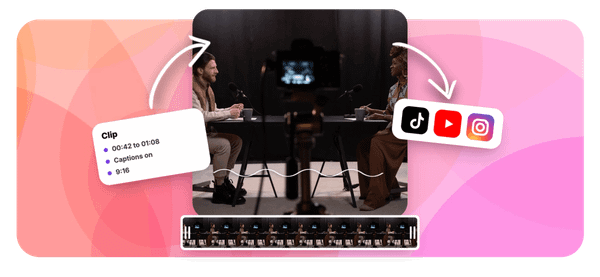
Getting there faster is possible when you have the right tools working with you. Crayo's clip creator tool helps you build sharp, attention-grabbing video hooks quickly, without wrestling with complicated software or spending hours editing. If your goal is stronger watch time, better audience retention, and more shares, Crayo gives you a practical way to get there without the guesswork.
Table of Contents
- Why Creators Struggle to Create Videos That Engage in the First 3 Seconds
- The Hidden Cost of Chasing Longer, More Polished Videos
- 7 Ways to Increase Video Engagement With Better Hooks
- The 10-Minute Workflow for Fixing Video Engagement
- Increase Video Engagement Faster With Crayo
Summary
- Viewer attention on short-form platforms is decided in the first three seconds, not somewhere in the middle where the content gets interesting. Sprout Social data show that 65% of viewers who watch the first 3 seconds stay for at least 10 seconds, and 45% stay for 30 seconds. That chain reaction either starts or stops at the opening frame, making the hook the highest-leverage moment in any video.
- Most creators lose viewers before their content has a chance to prove itself because of a structural mistake, not a creative one. The instinct to open with context, who you are, what the video covers, why it matters, reads as delay from the viewer's side. They leave before the reason to stay ever arrives, which means the problem compounds across every upload without the creator identifying the actual bottleneck.
- Longer and more polished videos do not automatically earn more watch time. Blue Carrot's video marketing statistics show that viewer retention drops significantly after the first 30 seconds, meaning the bulk of production effort is consumed by a fraction of the audience that started watching. Videos under two minutes generate the most engagement, with a steep drop-off beyond that threshold, according to SundaySky's 2025 research.
- The retention graph is more useful than view count for diagnosing where a video actually fails. Platform analytics show exactly where viewers dropped off, down to the second, and comparing those graphs across three to five uploads reveals whether the issue is structural or isolated to a single video.
- Specific drop-off points call for specific fixes rather than broad re-edits. Early drops inside the first three seconds respond to front-loading the payoff and captioning the hook for sound-off viewers. Mid-video dips respond to pattern interrupts every 10 to 20 seconds. Late drops almost always trace back to closing language that signals the video is ending before it actually does, giving viewers permission to leave early.
- Testing two to three hook variations against the same video body is more reliable than rewriting the entire video after a single underperforming upload. The manual version of that process runs roughly 45 minutes per variation, which means three variations cost two hours before any data comes back.
Crayo's clip creator tool fits into this workflow by generating multiple captioned hook variations from the same script in a single pass, keeping the diagnostic process closer to 10 minutes rather than a full re-edit cycle.
Why Creators Struggle to Create Videos That Engage in the First 3 Seconds

Most creators lose viewers before the video even has a chance to prove itself. The decision to keep watching is made in the opening seconds, not somewhere in the middle, where the good content lives. That gap between when a viewer arrives and when a creator finally delivers the point is where engagement quietly dies. According to the Hootsuite Blog's 2025 breakdown of how the YouTube algorithm works, viewers decide whether to keep watching within the first 3 seconds of a video. Three seconds is not a creative window. It is a verdict.
Why the Opening Seconds Carry More Weight Than Creators Expect
The failure point is usually structural rather than creative. Most creators open with context:
- Who they are?
- What the video is about?
- Why it matters?
That sequence feels logical from the creator's side. From the viewer's side, it reads as delay. The viewer has not yet been given a reason to care, so they leave before the reason arrives. Sprout Social reports that 65% of viewers who watch the first 3 seconds will stay for at least 10 seconds, and 45% will stay for 30 seconds. That chain reaction starts or stops in the opening frame. A strong hook does not just retain one viewer; it compounds across every person who lands on the video.
What Hook Fatigue Actually Looks Like in Practice
The same issue arises for both solo creators and full production teams: the more videos you produce, the less time you spend on any single opening. When a creator is scripting, filming, editing, captioning, and publishing across TikTok, Reels, and Shorts simultaneously, the hook becomes the part that gets rushed. Not because it feels unimportant, but because the rest of the workflow is already demanding attention.
That compression shows up directly in watch time metrics. Weaker opening lines lead to lower average view duration, which signals to the platform's algorithm that the content is not worth promoting. The video gets fewer impressions, the creator interprets that as a content quality problem, and the cycle repeats without anyone identifying the real bottleneck.
Automating Retention Hooks in Creator Workflows
Most creators handle this by manually rewriting hooks between each upload, testing variations through trial and error over weeks of publishing. That approach works at low volume. As output scales, the time cost of that iteration grows faster than the results do, and consistency suffers first. Crayo addresses this directly. Rather than treating hook creation as a separate, time-consuming step, Crayo's clip creator tool builds sharp, retention-optimized openings into the production workflow itself, so creators spend less time wrestling with the first three seconds and more time finding the content worth clipping in the first place.
Where Viewer Expectations Have Shifted
Audiences on short-form platforms have recalibrated what it means to earn attention.
- They no longer extend patience to videos that promise value later.
- The expectation now is that the payoff arrives before the setup, not after it.
- A tutorial that opens with a 15-second introduction is not thorough; it asks viewers to spend time they have not yet agreed to spend.
This shift changes what a hook actually needs to accomplish. It is not just about being interesting. It is about matching the viewer's intent so quickly that leaving feels like the wrong choice. That is a specific, learnable skill, and it gets sharper with deliberate practice and faster feedback loops.
Reframing Hooks as Compressed Arguments
The creators who figure this out stop thinking about hooks as introductions and start treating them as the entire argument compressed into a single sentence. That reframe changes everything about how a video gets built from the first word forward. But the real cost of ignoring this is not just lower watch time, and it is not what most creators think it is.
Related Reading
- Tik Tok Brain Rot
- How To Increase Video Engagement
- Viral Content Ideas
- Emotional Hooks
- Short Social Media Videos
- How To Make Videos For Social Media
- How To Get More Comments On Youtube
- YouTube Average View Duration
- Video Storytelling
- Social Media Content Ideas
- Why Are My Tiktok Videos Not Getting Views
The Hidden Cost of Chasing Longer, More Polished Videos

Making videos longer and more polished can silently increase production time while reducing the percentage of people who ever see the payoff. The issue is not video quality. The assumption is that more runtime and more polish automatically earn more watch time.
What the Data Actually Shows
The failure point is usually invisible until you check your retention graph. According to Blue Carrot's Video Marketing Statistics, viewer retention drops significantly after the first 30 seconds of a video, which means the bulk of your production effort- the polished B-roll, the refined pacing, the carefully crafted third act- is being consumed by a fraction of the audience who started watching. The rest left before they ever reached it. Longer runtimes do not create more opportunity to impress viewers. They create more surface area for viewers to exit.
Why Retention Trumps Production Polish
Most creators handle this by doubling down on production value, tightening the color grade, adding a cleaner intro, recording one more take. The familiar logic is that higher quality signals more effort, and more effort should earn more loyalty. But what actually holds viewers is not polish. It is the sense that the next five seconds will be worth staying for, and no amount of post-production can fix a video that fails to create that feeling consistently throughout its runtime.
Streamlining Production to Focus on Core Content
The clip creator tool addresses this friction directly. Rather than requiring creators to manually optimize pacing, captions, and formatting across separate tools, it handles the structural elements that affect retention, including subtitles, speech clarity, and background composition, inside a single workflow. That frees creators to focus on content decisions, specifically what to say and when, instead of getting absorbed in production layers that viewers rarely reward.
The Compounding Cost Most Creators Miss
The real damage is not one underperforming video. According to SundaySky's 2025 Video Marketing Statistics, videos under 2 minutes generate the most engagement, with a steep drop-off beyond that threshold. When creators consistently publish past that point, they are not just losing viewers on individual videos. They are training the algorithm to treat their content as low-retention material, thereby reducing its distribution before a new viewer even has a chance to click. The cost compounds quietly across every upload.
Overcoming Sunk-Cost Bias to Prioritize Viewer Retention
There is also a production trap embedded in this pattern. Once a creator spends four hours editing a video, cutting it feels like destroying the investment. So the length stays. The slow intro stays. The third example, which adds runtime but not value, stays. That sunk-cost reasoning is not a character flaw. It is a predictable response to upfront effort, and it is exactly why retention problems persist even among creators who genuinely care about their audience's time.
The creators who break this pattern share one habit: they stop measuring success by how much work went into a video and start measuring it by how many people stayed. That single shift in accountability changes every subsequent production decision, and what those creators discover next about their hooks tends to surprise even the most experienced among them.
Related Reading
- How To Do Text To Speech On Tiktok
- Tiktok Retention Rate
- What Is Brainrot Content
- What Is Italian Brainrot'
- How To Make Tiktok Videos More Engaging
- Italian Brainrot Quiz
- How To Make Brainrot Videos
- How To Create Pov Videos
- Long Form Video Content
- Tiktok Content Strategy
- Sludge Content
7 Ways to Increase Video Engagement With Better Hooks

Fix the specific drop-off point, not the whole video. That single idea separates creators who improve steadily from those who keep rebuilding from scratch and wondering why the numbers don't move. The tactics below are mapped directly to the friction they remove. Apply the one that matches where your retention curve actually breaks, not where you think it should.
1. Front-Load the Payoff Into the First 3 Seconds
The setup-before-payoff pattern is the most common structural mistake in short-form video. Viewers on scroll-based feeds make a keep-or-skip decision before any context lands, so the opening seconds need to deliver the core value immediately, before branding, before introductions, before anything that serves the creator instead of the viewer. According to Video Creators Agency, creators lose half their viewers in the first 20 seconds, which means the hook isn't just the first impression; it's the entire audition. Content that drops below 60% retention in those opening seconds gets minimal algorithmic promotion. Front-loading the payoff keeps viewers past that threshold before the platform decides whether to push the video further or bury it.
2. Add a Pattern Interrupt Every 10-20 Seconds
The mid-video dip is predictable. It shows up in retention graphs for almost every video that holds a single pace from start to finish, and it appears regardless of how strong the hook was. A visual cut, a graphic, a tonal shift, or even a sudden change in framing resets viewer attention before the drift sets in. This works because attention isn't lost all at once. It erodes gradually, and a well-timed interrupt catches it before the viewer consciously scrolls. For any video running longer than 30 seconds, this is the most reliable tool for sustaining watch time through the middle third.
3. Cut Runtime to Match the Platform, Not the Story
The failure point here is usually editorial sentiment. Creators feel attached to content they worked hard to make, so they leave in sections that serve the narrative but not the viewer's patience. Most viewers on short-form platforms will skip past 60 seconds even when they're genuinely interested in the topic. TargetVideo's 2025 research shows that videos under 2 minutes get the most engagement, with 60% of viewers dropping off after that mark. Trimming to fit platform norms removes the abandonment trigger directly, instead of trying to hold attention through sheer production quality.
4. Study Your Own Retention Graph Before Your Next Edit
Guesswork is expensive. Every edit made without retention data is a bet placed without seeing the cards, and most creators lose that bet repeatedly because they're optimizing based on feel rather than evidence. Platform analytics show exactly when and where a specific video lost viewers, down to the second.
The discipline is simple: before editing the next video, open the retention graph for the last one. Find the steepest drop. Ask what happened at that moment in the video. That question, answered honestly, is worth more than any general advice about hooks or pacing.
5. Trim or Rewrite the Ending Instead of Signaling It's Over
A second, sharper drop-off appears in the closing section of most videos, and it's almost always triggered by the same thing: a phrase that tells viewers the value is finished.
- That wraps things up
- Hope this helped
- Let me know in the comments
All function as exit cues. Viewers hear them and leave before the call to action lands. The fix is structural. End on the last concrete point. Let the final idea be the last thing the viewer hears, without announcing that it's the final idea. Tail retention improves when viewers don't have the option to leave early.
6. Caption the Hook, Not Just the Video Body
Most captioning advice focuses on accessibility across the full video. That's useful, but it misses the higher-leverage opportunity. The opening seconds carry the most weight, and in sound-off mobile environments, an uncaptioned hook loses the 3-second window before it can deliver its value. Text overlays on the opening specifically, not just standard captions throughout, give sound-off viewers a way to process the hook at mobile comprehension speed. The spoken word moves faster than a distracted viewer can follow without visual reinforcement. Captioning the hook closes that gap where retention is most fragile.
7. Test 2-3 Hook Variations Against the Same Video Body
The "one hook, one guess" problem is where most creators plateau. They publish a video, watch the retention graph drop early, and then rebuild the entire video trying to fix it. The issue is almost never the body. It's the opening, and the only way to know which opening works is to test more than one.
Most creators handle hook testing manually:
- Rewrite the opening
- Re-edit the sequence
- Re-caption each version
- Repeat
That process runs roughly 45 minutes per variation, which means testing three hooks costs two hours before a single data point comes back. A clip-creation tool like Crayo generates multiple captioned hook variations from the same script in a single pass, reducing that time to around 10 minutes. The body stays identical, the openings change, and the retention data tells you exactly what the audience responded to, without the manual rebuild cost.
Why This Sequence Matters
The old approach treats every video as a finished product to be published and hoped for. The new approach treats every video as a data point that informs the next one. The difference isn't talent or budget. It's the feedback loop.
Measure What Matters
Less guessing, faster iteration, and consistent measurement of the right metric- completion rate rather than view count- compounds quickly. A creator who fixes one specific drop-off point per video improves faster than one who polishes every element equally and measures nothing precisely.
Let Data Guide Your Workflow
The most underrated part of this entire framework isn't any single tactic. It's the habit of reading your own data before you start editing, and letting that data make the first decision. What happens when you compress this entire process into a single repeatable workflow is something most creators don't expect.
The 10-Minute Workflow for Fixing Video Engagement

Separate diagnosis, fix, and test. That single discipline is what turns a frustrating re-edit cycle into a process you can run in under ten minutes and trust to compound across every future upload.
Pull the Retention Graph Before Touching Anything
The retention graph is your first move, not your last. Before opening your editor, pull the graph for your most recent upload and identify the steepest drop. Note whether it lands in the first three seconds, somewhere in the middle, or at the close. Then compare it against your last three to five uploads using the same format. That comparison tells you whether you have a structural pattern or a one-off issue, and the difference matters because the fix for each is completely different. Most creators skip this step and go straight to re-editing. The result is a revised video that addresses the wrong section, costs two hours of work, and produces no measurable change in the retention curve on the next upload. The frustration that follows is real, and it's entirely avoidable.
Match the Drop-Off Point to the Right Fix
The failure point is usually specific, and the fix should be equally specific.
- Early drops (inside the first three seconds) call for front-loading the payoff
- Adding a captioned hook
- Testing two to three hook variations before assuming the content itself is the problem.
Middle drops signal a pacing issue, suggesting a pattern interrupt or a change in the visual rhythm around the fifteen-second mark. Late drops, the ones that spike just before the video ends, almost always trace back to closing language that signals the video is wrapping up before it actually does. Applying a middle-of-video fix to a hook problem is like adjusting the seasoning on a dish that burned because the heat was too high. The wrong intervention, applied confidently, still produces the wrong result.
Re-Cut Only the Section Tied to the Drop
Once you've matched the drop-off point to the correct tactic, isolate that section and recut it on its own. Do not touch the rest of the video. A targeted edit on a fifteen-second hook takes a fraction of the time required for a full re-edit and keeps the test clean. If the retention curve improves on the next upload, you know exactly what moved it. This is where many creators unknowingly sabotage their own learning.
- They apply three fixes at once
- See a modest improvement
- Have no idea which change drove it
The process becomes non-repeatable because the variable was never isolated.
Consolidating Production Tools to Reclaim Content Focus
Many creators handle production by juggling separate tools for captions, pacing edits, and audio cleanup, which adds friction to every targeted re-cut. A clip creator tool that handles subtitles, speech enhancement, and formatting inside a single workflow removes that overhead, so the ten minutes stay focused on the retention problem rather than the production logistics around it.
Compare Graphs, Not Just View Counts
View count tells you how many people showed up. The retention graph tells you what they did after they arrived. According to the Wistia State of Video Report, videos under 1 minute hold an average engagement rate of 50%, while videos longer than thirty minutes drop to just 17%. That spread exists not because longer videos have worse content, but because the structural conditions for sustained attention are harder to maintain as runtime grows. Comparing retention graphs from two uploads in the same format is the only way to confirm that a fix worked. If the drop-off point you targeted improves by even five percentage points on the next video, the fix is validated and ready to carry forward. If it doesn't move, you have a clean signal to test a different tactic on the same section.
The Before and After in Plain Numbers
The before scenario looks like this: a fifteen-second branded intro, no caption on the hook, a single pacing style from start to finish, and a closing line that signals the video is ending. The expected drop-off for that structure sits around 17% based on published retention curves for that length range, with an additional spike at the close.
The after scenario: moves the payoff into the first three seconds, captions the hook, introduces a pacing shift every fifteen seconds, and cuts the closing language in favor of the last concrete point. The expected drop-off for that structure falls closer to 5% for the same length. The underlying content didn't change. The value didn't change. What changed is the sequence in which the viewer receives it, and whether the video ever gives them a reason to stop watching before it ends.
Building a Scalable Retention Advantage Through Iterative Analysis
That gap, roughly 12 percentage points of retained attention, compounds with every subsequent upload. A creator who closes that gap once and repeats the diagnostic process builds a retention advantage that grows faster than any single viral moment could. The most underestimated part of this workflow isn't the re-cut. It's the habit of comparing graphs across uploads until the pattern becomes readable at a glance, because once you can read the curve quickly, the ten minutes shrink even further. What most creators don't realize is that the tool that handles your production workflow shapes how quickly this entire process can actually move.
Increase Video Engagement Faster With Crayo
The production tool shaping your workflow isn't a minor detail. It determines whether hook testing takes ten minutes or forty-five, and whether you can realistically run three variations per week or just one per month.
Most creators rebuild hooks manually, rewriting scripts, re-recording audio, and re-exporting from scratch each time. That process works, but it compounds into hours that quietly crowd out the diagnostic thinking covered earlier in this post. Crayo handles the voiceover, captions, and export directly from your existing script, so the ten-minute workflow stays ten minutes even when you're testing three hook variations at once.
Pull in the script from your last published video. Generate three captioned hook variations. Publish the strongest one this week and queue the other two. Within a single session, you have a real test running instead of a guess waiting to be proven wrong.
Related Reading
• Viral Hooks For Instagram
• Pov Ideas For Tiktok
• Scroll Stopping Hooks
• Best Video Format For Tiktok
• Best Tiktok Hooks
• Brainrot Examples
• Social Media Hooks
• YouTube Hooks
• How To Make A Good Hook