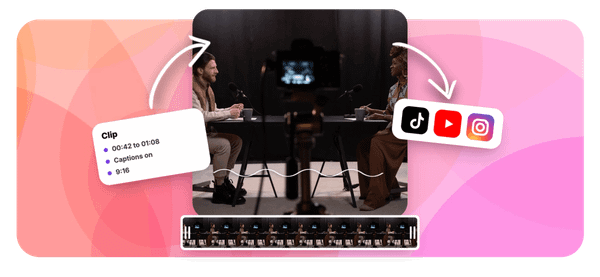


We live in an era of TikTok brain rot, where short clips flood every feed and attention spans shrink by the day. Yet that same culture creates a real opening: people want content that is quick, sharp, and worth watching. If you have ever stared at your phone wondering how to turn a raw idea into a polished social media video in 30 minutes or less, this article walks you through exactly that.
Crayo's clip creator tool is built for this moment. It takes the friction out of video editing, captioning, and formatting so you can move from concept to published content fast, without needing a studio or a film degree. Whether you are chasing views on short-form video platforms or building a loyal audience through consistent content creation, Crayo gives you a straightforward path to professional-looking results without the usual headaches.
Table of Contents
- Why Creators Struggle to Make Videos for Social Media
- The Hidden Cost of Waiting Until You Have the Right Setup
- 7 Ways to Make Engaging Videos for Social Media in Under 30 Minutes
- The 30-Minute Workflow for Making a Social Media Video
- Make Videos for Social Media Faster With Crayo
Summary
- Consistency, not creativity, is the primary bottleneck for video creators. According to Sprout Social, 54% of marketers say producing video content consistently is their biggest challenge, pointing directly at process rather than skill or ideas. When every stage of production competes with every other stage for attention, the creator becomes the bottleneck inside their own workflow.
- Fragmented production quietly kills output over time. Most creators manage video across three or four separate platforms, and every transition between stages costs time and mental energy. The critical difference between creators who post daily and those who post occasionally is whether their process compounds or collapses under repetition, not their motivation or equipment.
- Waiting for the right setup has a compounding cost that rarely gets calculated. One creator spending six hours perfecting a single video gives the algorithm one shot, while another using a repeatable workflow posts five videos in the same window. The gap is not a matter of skill or equipment; it is the decision to treat each video as a production rather than a process, and the compounding reach accrues to whoever made that decision first.
- Short-form video delivers the highest ROI of any social media marketing strategy, with 66% of consumers finding it the most engaging type of content according to Sprout Social. The format itself does significant work, which means a creator using a proven template is not cutting corners; they are letting a high-performing format carry its weight while they focus on content.
- Captions are a structural element, not a finishing touch. Research from Rev shows that 85% of Facebook videos are watched without sound, meaning a video without captions loses most of its audience before the hook even lands. Auto-captioning takes roughly one minute and removes both the time cost and the accessibility gap in a single action.
- The five stages of video production (planning, scripting, filming, captioning, and publishing) each require a different cognitive mode, and switching between them mid-session is where most production time actually disappears. Creators who separated their thinking from their doing consistently produced faster, more focused content because the message was locked in before the camera ever opened.
Crayo's clip creator tool addresses this by collapsing scripting, voiceover, visual matching, and captioning into a single pass, removing the multi-platform tool switching that turns a 30-minute workflow into a 90-minute one.
Why Creators Struggle to Make Videos for Social Media

Producing videos for social media consistently is harder than it looks, and the bottleneck is almost never creativity. The real problem is structural: most creators treat every video as a standalone project rather than as a single output within a repeatable system. When the process resets from scratch each time, speed collapses and output stalls.
The High Cost of Disjointed Video Workflows
The same pattern surfaces across niches, platforms, and experience levels. A creator spends two hours scripting, switches to filming before the script is locked, rewrites the voiceover after recording, then rebuilds captions in a separate tool. By the time the video is ready, the moment it was made for has passed. That is not a talent problem. That is a workflow problem disguised as a content problem. According to Sprout Social, 54% of marketers say producing video content consistently is their biggest challenge. Not ideation. Not audience growth. Consistency. That number points directly at process, not skill. When every stage of production competes with every other stage for attention, the creator becomes the bottleneck inside their own workflow.
Why Fragmented Production Quietly Kills Output
Most creators handle video production the way someone might pack for a trip by pulling items from different rooms at the same time, never finishing one bag before starting another.
- Brainstorming bleeds into scripting
- Scripting bleeds into filming
- Editing bleeds into second-guessing everything that came before it
The result is not one video. It is three half-finished versions of the same idea. Creators who finish each stage before starting the next consistently publish faster, not because they work harder, but because they protect the momentum between steps.
Streamlining Production Workflows
This is where tools like Crayo's clip creator tool change the math. Most creators manage production across three or four separate platforms, which means every transition between stages costs time and mental energy. Crayo combines scripting, editing, captioning, and formatting into a single workflow, so the gap between a finished idea and a published video shrinks from hours to minutes without requiring a technical background or a full production setup.
Process Over Motivation
The critical difference between creators who post daily and those who post occasionally is not motivation or equipment. It is whether their process compounds or collapses under repetition. A system that works once but breaks on the third video is not a system. And that distinction, between a one-time effort and a repeatable process, is exactly where most creators quietly give up without realizing it. But what keeps creators from building that system in the first place often comes down to one belief that sounds completely reasonable, until you look at what it actually costs.
Related Reading
- Tik Tok Brain Rot
- How To Increase Video Engagement
- Viral Content Ideas
- Emotional Hooks
- Short Social Media Videos
- How To Make Videos For Social Media
- How To Get More Comments On Youtube
- YouTube Average View Duration
- Video Storytelling
- Social Media Content Ideas
- Why Are My Tiktok Videos Not Getting Views
The Hidden Cost of Waiting Until You Have the Right Setup
The belief sounds protective. "I'll post when I have the right setup" feels like quality control, not avoidance. But the math underneath that belief tells a different story, and it compounds quietly against you every single day you wait.
What Waiting Actually Costs You
The failure point is usually invisible until you calculate it.
- One creator spends six hours perfecting a single Reel, adjusting color grading, sourcing royalty-free music, and tweaking captions pixel by pixel.
- Another creator follows a fixed, repeatable workflow and posts five videos within the same window, each optimized for its native aspect ratio, captioned, and hooked within the first two seconds.
The first creator has one shot at the algorithm. The second has five. The gap between them is not skill or equipment. It is the decision to treat each video as a production instead of a process.
The Fallacy of Preparation Over Output
Most creators handle this by defaulting to more research:
- More tutorials
- More gear comparisons
- More time spent watching other people post instead of posting themselves
The familiar approach feels productive because it involves effort. But effort spent preparing to create is not the same as effort spent creating, and the algorithm does not reward preparation. It rewards frequency, retention, and native formatting. According to IBM Think Insights, only 23% of companies describe themselves as data-driven, which means the majority of decision-makers, including creators deciding when to post, are operating on instinct and assumption rather than feedback from actual output. You cannot get signal from a video you have not posted yet.
Solving Friction to Drive Consistency and Growth
Crayo exists precisely because this friction is the bottleneck, not the content itself. When a three-step workflow replaces a six-step production process, the variable that changes is not quality. It is volume, and volume creates the feedback loop that improves quality over time.
The Real Price Tag Hiding Inside Not Yet
The cost of waiting is not just time. It is compounding reach that accrues to someone else. Short-form video content requires four functional components:
- A hook
- A script
- Captions
- Correct aspect ratio
None of those require a studio, a professional editor, or a camera that costs more than a phone. What they do require is a system that makes those four steps fast enough to repeat without friction.
The Power of Treating Content as a Repeatable System
Companies with mature data streaming capabilities are 1.8x more likely to exceed their business goals, and the parallel for creators is direct: the ones treating their posting cadence as a repeatable system, not a one-time production, are the ones whose channels compound. The ones still waiting for the right setup are watching those channels grow from the outside.
Turning Real Output Into Irreplaceable Audience Feedback
The uncomfortable truth is that comfort with posting comes from posting, not from preparing to post. Every video you put out teaches you something a tutorial cannot:
- How your specific audience responds to your specific hook
- At your specific posting time
- On your specific platform
That feedback is irreplaceable, and you cannot access it from a waiting room. The next question is not whether you have the right setup. It is whether you have a process fast enough to let you find out.
7 Ways to Make Engaging Videos for Social Media in Under 30 Minutes
Producing a professional-feeling social video has never required:
- A studio
- A hired editor
- Three hours of your afternoon
What it requires is a repeatable sequence in which every step is defined before you start, so nothing is invented mid-session.
1. Shoot Vertical, Phone Only
Filming vertical with your phone removes the most common excuse before it forms. The format that TikTok, Reels, and Shorts reward natively was never designed for cameras on tripods in treated rooms. Available light near a window, a steady hand, and two minutes of setup is the entire production requirement. The equipment cost cited in earlier sections disappears entirely because the platform's preferred format has always been phone-native.
2. Write One Line Before You Film Anything
The failure point in most first drafts is not bad delivery. It is filming without knowing what the video is actually saying. Write your hook and two or three supporting points before you press record, and every clip you shoot becomes usable. That single three-minute step cuts editing time roughly in half because there is no footage graveyard to sort through afterward.
3. Generate Script-to-Video Content Without Filming At All
Most creators treat voiceover, visual sourcing, and caption sync as three separate jobs, each requiring its own tool and its own learning curve. That sequence routinely adds 45 to 60 minutes to a single video. Crayo collapses that into one pass, turning a written script into a finished video with AI voiceover, matched visuals, and auto-captions in roughly 5 to 10 minutes. The 80% reduction in production time is not an estimate; it is what happens when three sequential manual steps become a single automated step.
4. Use Platform-Native Templates for Recurring Formats
When you design pacing from scratch every time, you are solving the same problem repeatedly. A proven structure, whether that is a listicle, a before-and-after, or a quick-tip format, handles the architecture so you only supply the content. The two-minute setup cost is paid once per format type, not once per video. Short-form video delivers the highest ROI of any social media marketing strategy, with 66% of consumers finding it the most engaging type of social media content. That number matters here because it confirms that the format itself is doing significant work. A creator using a proven template is not cutting corners; they are letting a high-performing format carry its weight.
5. Auto-Generate Captions in One Step
Manual captioning is one of the slowest parts of a basic edit and one of the most skipped. The skip is costly. Rev's research on social media video best practices reports that 85% of Facebook videos are watched without sound, which means a video without captions loses most of its audience before the hook lands. Auto-captioning takes roughly one minute and removes both the time cost and the accessibility gap in a single action.
6. Batch-Produce Several Videos in One Sitting
The setup cost for any single video session is real:
- Finding your frame
- Checking your lighting
- Loading your tools
- Getting mentally into production mode
Paying that cost once per video makes daily posting feel like running a marathon in segments. Paying it once per batch of three to five videos changes the math entirely. One session, multiple finished pieces, consistent posting schedule.
7. Repurpose One Video Across Platforms
The critical difference between creators who post on three platforms and those who produce three separate videos for three platforms is a reformatting step, not a production step. Adjusting aspect ratio, trimming length, and confirming captions for each platform takes roughly two minutes per destination. One finished video becomes a multi-platform asset without a second production session.
The 30-Minute Streamlined Video Workflow
The 30-minute math holds across all seven steps.
- Script in three minutes
- Generate or film in five to ten
- Apply a template in two
- Add captions in one
- Reformat in two minutes per platform
That is a finished, multi-platform-ready video with no editor fee and no specialized equipment. Consistently making videos for social media is not about acquiring new skills. It is about removing the manual steps that make each video take longer than it should. The part most creators never get to is not the workflow itself, but what the workflow reveals about why some videos perform, and others disappear.
The 30-Minute Workflow for Making a Social Media Video

The workflow described in the previous section is a framework, but frameworks only work when you understand the logic behind each constraint. The rule is not arbitrary: you do not start filming before the script and hook are written because filming without a script is just expensive improvisation. Every unscripted take you record is time you will spend recovering in the edit.
Why the Sequence Matters More Than the Speed
The five stages, plan, script, film, caption, and publish, are separated for one reason: each stage has a different cognitive mode.
- Planning is strategic.
- Scripting is creative.
- Filming is physical.
- Editing is critical.
- Publishing is mechanical.
When you run all five simultaneously, you switch cognitive modes every few minutes, and that switching is where most of the production time disappears. It is not the filming that takes long. It is the mental re-entry cost every time you interrupt one stage to handle another.
Minute 0 to 5: Define Before You Create
The first five minutes are not creative work. They are decision work. You define:
- The target audience
- The video's objective
- The key message
- The desired action before a single word of script is written
The 4-Line Video Brief
The example worth holding onto is this: instead of opening your editor, you write four lines.
- Audience: small business owners.
- Goal: teach one AI productivity tip.
- Message: save two hours a day.
- Action: link in bio.
That is the entire planning stage.
Eliminating Mid-Production Friction
Without those four lines, every subsequent decision in the video becomes a negotiation.
- Should this scene stay in? It depends on what the video is trying to do.
- Does this line support the message? Unknown, because the message was never defined.
The planning stage does not add time to the process. It removes ambiguity from every stage that follows.
Minutes 5 to 10: Write the Hook Before Anything Else
The script stage is where most creators skip straight to the main content and bury the hook somewhere in the middle. That is the wrong order. The hook is the first line a viewer hears, and on short-form platforms, it is the only line that decides whether the rest of the video gets watched. A structured hook does not need to be clever. It needs to create a gap between what the viewer knows and what they want to know. Most people waste hours every week doing tasks AI can finish in minutes; it works not because it is dramatic, but because it identifies a problem the viewer already feels and promises a resolution they have not heard yet.
- Write the hook first
- Then write the main points
- Then write the call to action
That order is not stylistic preference. It is what makes the script function as a retention tool rather than just a content outline.
Minutes 10 to 20: Film or Generate to Match the Script
This is the stage that used to consume 30 to 60 minutes per finished minute of content under unstructured workflows. Scripting first is what compresses it. When the script exists before filming begins, every shot has a purpose. There is no wandering footage to sort through in post.
- For faceless or voiceover content, the script becomes the direct input for video generation.
- For on-camera content, it becomes the guide that makes each take intentional rather than exploratory.
Most creators assume the filming stage is where quality is made. The actual quality decision happens five minutes earlier, when the hook was written. Filming is execution, not creation, and execution is fast when the creative decisions are already made.
Collapsing Filming and Editing
Most teams handle this stage by filming multiple takes and selecting the best one in editing, because that feels like quality control. What it actually creates is a downstream editing problem:
- More footage
- More decisions
- More time spent recovering from an undefined script
Clip creator tool addresses this directly by generating video from a written script, collapsing the filming and initial editing stages into a single step and removing the footage-sorting problem entirely.
Minutes 20 to 25: Captions and One Watch-Through
Auto-generated captions are not a finishing touch. They are a structural element on every short-form platform where a significant portion of viewers watch without sound. The one watch-through at this stage is not a full editing pass. It is a single check against the script to catch any drift before export. If the video says something the script did not intend, this is where you catch it. If it matches, you move on. The failure point is treating this stage as a creative revision window. It is not. Revisions happen at the script stage. This stage is verification, and it should take five minutes, not fifty.
Minutes 25 to 30: Format Once, Publish Everywhere
Social Realtr's 30-Minute Video Workflow guide outlines a 4-step process that creates a month of real estate videos in under one hour, and the underlying principle applies across every content category: you format once at export, then reformat the same file for each additional platform. You do not build a separate video per platform from scratch. The time savings in this stage are not marginal. Creators who rebuild per platform are multiplying their production time by the number of platforms they post to. Reformatting at export, adjusting aspect ratio and caption placement from a single master file, is what makes a multi-platform presence operationally sustainable rather than a second job.
The Before and After That Actually Matters
Before this workflow: no script, filming and hoping the message comes together in post, manual captioning, one video rebuilt per platform from scratch, 30 to 60 minutes of editing per finished minute of content.
After: script written first, video generated or filmed to match it, captions added automatically, one file reformatted per platform, total time under 30 minutes.
The time savings do not come from cutting corners. They come from removing manual steps that were never actually required to produce a native, platform-ready result. The structure is the shortcut. What nobody tells you is that once you run this workflow consistently, the data it generates changes how you make every video after it.
Related Reading
- How To Do Text To Speech On Tiktok
- Tiktok Retention Rate
- What Is Brainrot Content
- What Is Italian Brainrot
- How To Make Tiktok Videos More Engaging
- Italian Brainrot Quiz
- How To Make Brainrot Videos
- How To Create Pov Videos
- Long Form Video Content
- Tiktok Content Strategy
- Sludge Content
Make Videos for Social Media Faster With Crayo
The slowest part of making videos for social media was never the idea. It was rebuilding the same production chain from scratch, every single time. Once you have a repeatable workflow, the only remaining friction is execution time, and that is where the right tool either earns its place or doesn't.
Creators who post consistently aren't more disciplined. They've removed the steps that used to eat the clock. Paste your script into the clip creator tool, generate the voiceover, visuals, and captions in one pass, export per platform, and publish. That sequence replaces what used to cost $100 to $600 and an hour or more of manual work, with no camera, no editing software, and no prior production experience required. The creators who win on short-form video aren't the ones with the best equipment. They're the ones who stopped rebuilding their process every time they had an idea worth sharing.
Related Reading
• Brainrot Examples
• Scroll Stopping Hooks
• Viral Hooks For Instagram
• YouTube Hooks
• How To Make A Good Hook
• Social Media Hooks
• Best Video Format For Tiktok
• Best Tiktok Hooks
• Pov Ideas For Tiktok