

In a world shaped by TikTok brain rot, where short clips compete for shrinking attention spans, emotional hooks are what separate videos people skip from ones they actually finish and respond to. The pull of a strong emotional trigger, whether it is curiosity, surprise, or a moment of real connection, is what makes viewers stop scrolling and start typing in the comments. This article breaks down 7 YouTube video tips that can help you get more comments in 60 minutes by using emotional hooks the right way.
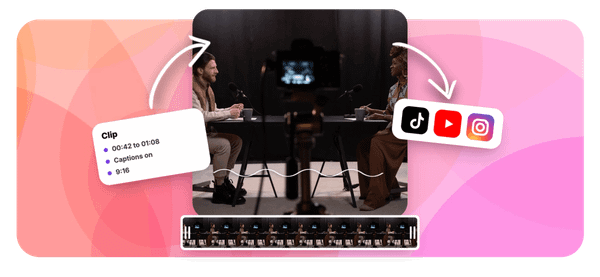
Getting more comments is not just about asking people to engage. It is about making them feel something worth responding to, and that is where Crayo's clip creator tool becomes genuinely useful. It helps you build videos that lead with emotional resonance, not guesswork, so you can craft content that triggers the kind of viewer response that actually shows up in your comment section fast.
Table of Contents
- Why Creators Struggle to Get More Comments on YouTube
- The Hidden Cost of Asking for Comments Instead of Earning Them
- 7 Ways to Get More Comments on YouTube
- The First-Hour Workflow to Maximize YouTube Comments
- Write Comment-Worthy Video Scripts Faster With Crayo
Summary
- Comment sections stay quiet not because viewers are disengaged, but because most closing prompts give them nothing specific to react to. Generic phrases like "let me know what you think" ask for a response without creating the cognitive tension that would otherwise produce one. A specific, debatable closing statement or a forced-choice question gives viewers a concrete position to agree with, argue against, or build on, and that specificity is what converts passive viewers into people who actually type.
- The first hour after publishing carries disproportionate weight in YouTube's ranking system. Comments are one of the key engagement signals the algorithm uses to rank and recommend videos, alongside likes, shares, and watch time. Creators who reply to the first 10 to 15 comments within that window are not just building community.
- Specificity is the mechanism behind every tactic that reliably generates comments. Timestamping a rewatchable moment, addressing a common objection directly, pinning a comment that extends the debate, and posting community polls before a video goes live all work through the same principle. They reduce the cognitive load of responding by giving viewers a starting point rather than asking them to generate one from nothing.
- Over 800 million videos are currently on YouTube, and 500 hours of new content are uploaded every minute. In that environment, the comment section is not a vanity metric. It is a feedback loop and a ranking input. Ten on-topic comments that extend a video's central argument carry more algorithmic value than fifty generic replies, and they also function as a creative brief for what the audience wants next.
- Most creators spend the bulk of their time on production and almost none on the conversational architecture of their videos. The closing line, the pinned comment, the first-hour reply strategy, these decisions determine whether a comment section builds momentum or stalls, yet they are consistently treated as afterthoughts rather than structural elements of the content itself.
Crayo's clip creator tool addresses this directly by compressing the production phase so creators arrive at publish time with enough time and attention left to execute the first-hour engagement workflow that actually moves the needle.
Why Creators Struggle to Get More Comments on YouTube
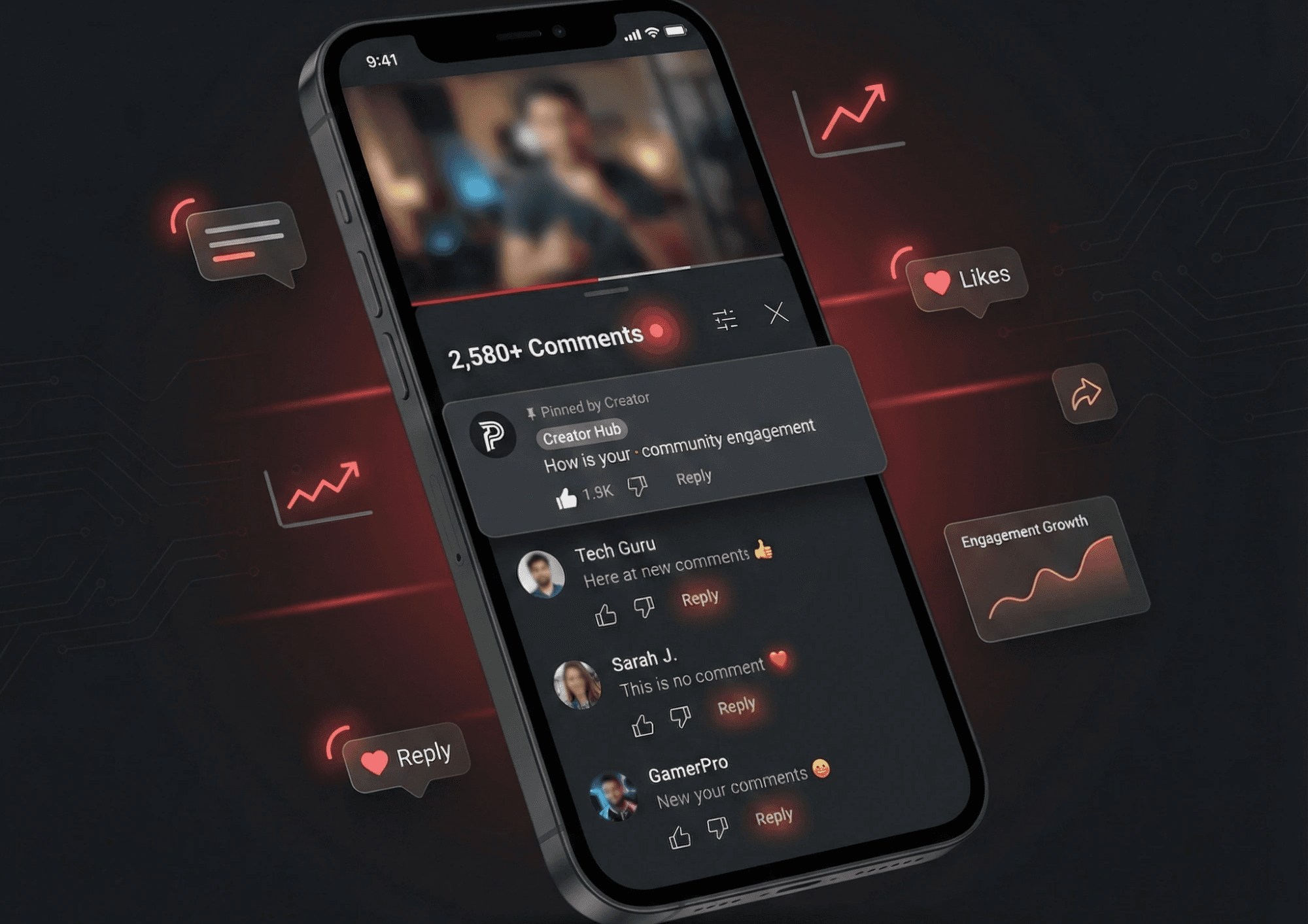
Most creators treat comment count as a popularity metric. It is not. It is a behavior metric, and behavior follows structure, not luck. The failure point is almost always the same: a video ends with "let me know what you think," and the creator moves on. That phrase asks for nothing specific, which means it triggers nothing specific. A viewer who just watched eight minutes of content needs a precise emotional or intellectual foothold to type a response. Without one, the impulse to comment dissolves before it ever reaches the keyboard. Generic prompts produce silence, not conversation.
The Power of Specificity in a Crowded Market
According to Charle Agency's Top 32 YouTube Insights and Statistics of 2025, there are over 800 million videos on YouTube. Every single one of those videos is competing for the same finite pool of viewer attention and emotional energy. In that environment:
- A video that gives someone a specific position to push back on
- A specific question with a real answer
- A specific feeling with nowhere else to go has a structural advantage
The comment section fills because the content created the conditions for it, not because the creator remembered to ask.
Maximizing the Critical First Hour
The pattern that separates high-comment videos from low-comment ones is specificity paired with timing. A creator who states a clear, debatable opinion at the end of a video gives viewers something concrete to react to. That same creator who then replies to the first ten or fifteen comments within the first hour turns a monologue into a thread. YouTube's ranking signals reward that early discussion activity, which means the first sixty minutes after publishing carry disproportionate weight. Most creators are scripting their next video during that window instead of watching the one they just released.
Preventing Engagement Decay With Post-Launch Bandwidth
Most creators handle this by publishing and checking back the next day, which feels efficient. The hidden friction is that the comment section cools fast. Early viewers who might have replied to a creator response never get one, the thread stays flat, and the algorithm reads low engagement velocity as a signal to slow distribution. Crayo's clip creator tool address a related part of this problem: when formatting and editing no longer consume the hours after publishing, creators have the bandwidth to actually be present in the comment section during the window that matters most.
Connecting Content Hooks to Post-Publish Execution
The emotional hook inside the video and the creator's behavior immediately after publishing are not separate strategies. They are the same strategy at two different timestamps. A video built around a specific tension, a surprising claim, or a question with a genuinely interesting answer sets the stage. The creator who shows up in the first hour closes the loop. Both have to happen, or the comment section will stay just as quiet as it would have been with a generic prompt and a day's absence. But what happens when creators do ask the right questions and still watch their comment sections stay quiet? That gap points to something most people never think to examine.
Related Reading
- Short Form Content Ideas
- Short Social Media Videos
- How To Make Videos For Social Media
- How To Increase Video Engagement
- Video Storytelling
- Social Media Content Ideas
- Emotional Hooks
- How To Get More Comments On Youtube
- YouTube Average View Duration
- Why Are My Tiktok Videos Not Getting Views
The Hidden Cost of Asking for Comments Instead of Earning Them

Generic comment prompts don't just underperform. They actively train your audience to ignore you. When viewers see the same "let me know what you think below" closing line on every video, their brain files it in the same category as a cookie consent banner: technically present, functionally invisible. The failure point is usually invisible to the creator because it hides behind partial success. A generic ask produces two or three comments, which reads as confirmation the tactic works. But that small return is the ceiling, not the floor. A specific, debatable closing prompt, one that creates genuine cognitive tension in the viewer's mind, doesn't just invite a response. It makes not responding feel like leaving a conversation unfinished. That's a fundamentally different psychological mechanism, and the difference in comment volume between the two approaches reflects that.
Eliminating Attention Debt Through Creative Focus
Most creators handle the comment problem by layering more asks onto the same weak structure.
- They add a pinned comment
- Repeat the ask mid-video
- Maybe drop a question in the description
The hidden cost of that approach is attention debt. Every extra ask that doesn't land trains the audience to register your prompts as noise. The more you ask without earning the response, the harder the next ask has to work. Crayo exists precisely because the creative leverage points, the hook, the clip selection, the emotional framing, deserve more of a creator's mental energy than format logistics do. When the production layer runs itself, the prompt becomes the product.
Why Emotional Framing Changes Comment Behavior
The pattern surfaces consistently across content types: videos that provoke a feeling before asking for a response generate more comments than videos that ask first and hope feeling follows. This isn't abstract. A closing line that states something slightly controversial, something a viewer either strongly agrees or strongly disagrees with, creates what psychologists call an open loop. The viewer's brain wants to close it. Typing a comment is the fastest way to do that.
Justifying the Energy Cost of Engagement
According to the Allen Institute for Artificial Intelligence, via UW-Madison College of Letters & Science, a single AI chatbot query consumes the electrical equivalent of powering a lightbulb for 20 minutes, more than ten times the energy cost of a standard Google search. That comparison matters here because it illustrates a principle creators often miss: the cost of a behavior scales with its cognitive weight. A comment requires real mental engagement. The prompt has to justify that cost before the viewer will pay it.
What Earning a Comment Actually Looks Like
Earning a comment means giving the viewer something worth reacting to before you ask them to react. That's a sequence, not a simultaneous event. The emotional hook has to land first: a surprising claim, a counterintuitive position, a tension that doesn't resolve cleanly. Then the ask functions as permission to respond, not a cold request from a stranger.
Research from the International Energy Agency found that data centers, AI, and cryptocurrency consumed an estimated 460 terawatt-hours in 2022, more than a tenth of overall U.S. electrical consumption that year. The relevance here is the same principle at work: systems only output what they're fed. A comment section fed a generic prompt outputs generic (or absent) engagement. Feed it a specific emotional trigger, and the output changes proportionally.
Related Reading
- How To Do Text To Speech On Tiktok
- Tiktok Retention Rate
- What Is Brainrot Content
- What Is Italian Brainrot
- How To Make Tiktok Videos More Engaging
- Italian Brainrot Quiz
- How To Make Brainrot Videos
- How To Create Pov Videos
- Long Form Video Content
- Tiktok Content Strategy
- Sludge Content
7 Ways to Get More Comments on YouTube

Closing that gap requires more than awareness. It requires a system of specific moves, each one designed to replace a vague ask with a prompt that gives viewers something real to respond to.
1. State a Specific, Debatable Position
The fastest way to collapse the silence is to say something your audience might push back on. Instead of let me know what you think, try I think [tool X] is genuinely overrated for beginners, and here's why. That framing creates psychological friction, the kind that makes someone type a response before they've consciously decided to. Silence is easy. Disagreement is harder to sit with.
2. Ask a Question With a Forced Choice
A forced-choice question removes the blank-page problem for your viewer. Would you rather save time or save money on this? Tell me which one. Both options are valid, both feel personal, and neither requires more than five words to answer. The specificity does the heavy lifting, not the volume of your ask. The pattern holds across formats. Forced choices work in polls, in pinned comments, in the video itself. What they share is a structure that makes responding feel low-effort but still specific, which is exactly the combination that converts passive viewers into active participants.
3. Reply to the First 10-15 Comments Within an Hour
According to the Agicent Blog, videos with more comments tend to rank higher in YouTube's algorithm, with engagement signals accounting for a significant portion of the ranking factors. That makes your behavior in the first hour after publishing a direct input into distribution, not just community-building. Blocking 15-20 minutes post-publish to reply to early comments is less a social gesture and more a technical lever. Most creators treat comment replies as something to do when time allows. That's the wrong frame. Early replies signal to the algorithm that the comment section is active, which extends the video's reach window before it cools.
4. Pin a Comment That Extends the Debate
A pinned comment gives every viewer who arrives after the first wave something specific to react to, not just the video itself. Pin your own reply that adds a follow-up question or introduces a counterpoint to your first commenter. You're essentially seeding the conversation for people who show up late and need a reason to join. The pinned comment is also where you can model the kind of response you want. If you write something thoughtful and specific, you raise the floor for what feels like an appropriate reply.
5. Timestamp a Specific, Rewatchable Moment
What did you think of the point at 3:42? is a different question than let me know your thoughts. One anchors the viewer to a concrete moment they can return to. The other floats in the abstract. Specific timestamps create a shared reference point, which makes commenting feel less like broadcasting an opinion into the void and more like joining a focused discussion. This tactic also rewards attentive viewers. The person who made it to 3:42 and paid attention feels seen when you reference that exact moment. That recognition is itself an emotional hook, and it produces replies that are more on-topic and more substantive than anything a generic prompt generates.
6. Address a Common Objection Directly in the Video
When you name the pushback yourself, you give both agreement and disagreement somewhere to land. Some of you will say this doesn't work for X. Here's why I think it still does. That sentence alone invites two distinct response types: viewers who agree with your defense and viewers who want to prove you wrong. Both groups comment. Was neither group going to respond to thoughts? Most creators treat objections as threats to their credibility. The more useful frame is that objections are tools for audience activation. Name the tension, and the tension does the work of generating replies.
Conversation-Driven Engagement
Most creators spend hours on production and almost no time on the conversational architecture of their videos. That's where the real leverage sits. Crayo exists precisely to streamline the production side, so creators can redirect the time they recover toward the strategic decisions that actually drive engagement, like building the kind of comment prompts described here, rather than wrestling with timelines and subtitle formatting.
7. Use Community Posts and Polls Between Uploads
The first-hour window matters enormously, but it's not the only window you have. Community posts and polls extend the conversation beyond any single video's release cycle. Post a poll about your next video's topic before it goes live, then reference the results in the video itself. That loop gives subscribers a reason to engage before the video exists and a reason to comment once it does. According to Buffer, 500 hours of video are uploaded to YouTube every minute, which means the default state for any video is invisibility. Community posts break that pattern by warming up your audience before the algorithm even has a chance to weigh in.
Why Specificity Is the Real Mechanism
Each of these seven tactics works through the same underlying principle: specificity creates a smaller, more actionable target for your viewer's attention. A generic prompt asks someone to generate a response from nothing. A specific prompt gives them a starting point and asks them to respond. The cognitive load drops, and the comment appears. The failure mode for most creators isn't laziness. It's the belief that a good video automatically earns comments. It doesn't. The video earns views. The comment section earns comments through structure, not hope.
From Volume to Quality
The old model measured success by raw comment count. The better model measures whether the prompt produced on-topic discussion. Ten comments that extend the argument you made in the video are worth more than fifty comments that say great video. The former signals to the algorithm that your content creates conversation. The latter signals almost nothing useful.
From Comments to Content Strategy
When you shift from asking for volume to designing for quality, something else shifts too. The comment section stops feeling like a vanity metric and starts functioning as a feedback loop. Viewers tell you what landed, what confused them, and what they want next. That's not just engagement data. It's the creative brief for your next video. And that's where the real question starts: knowing what to do is one thing, but knowing precisely when and how to execute it in the minutes after publishing is what separates creators who build momentum from those who watch it evaporate.
The First-Hour Workflow to Maximize YouTube Comments
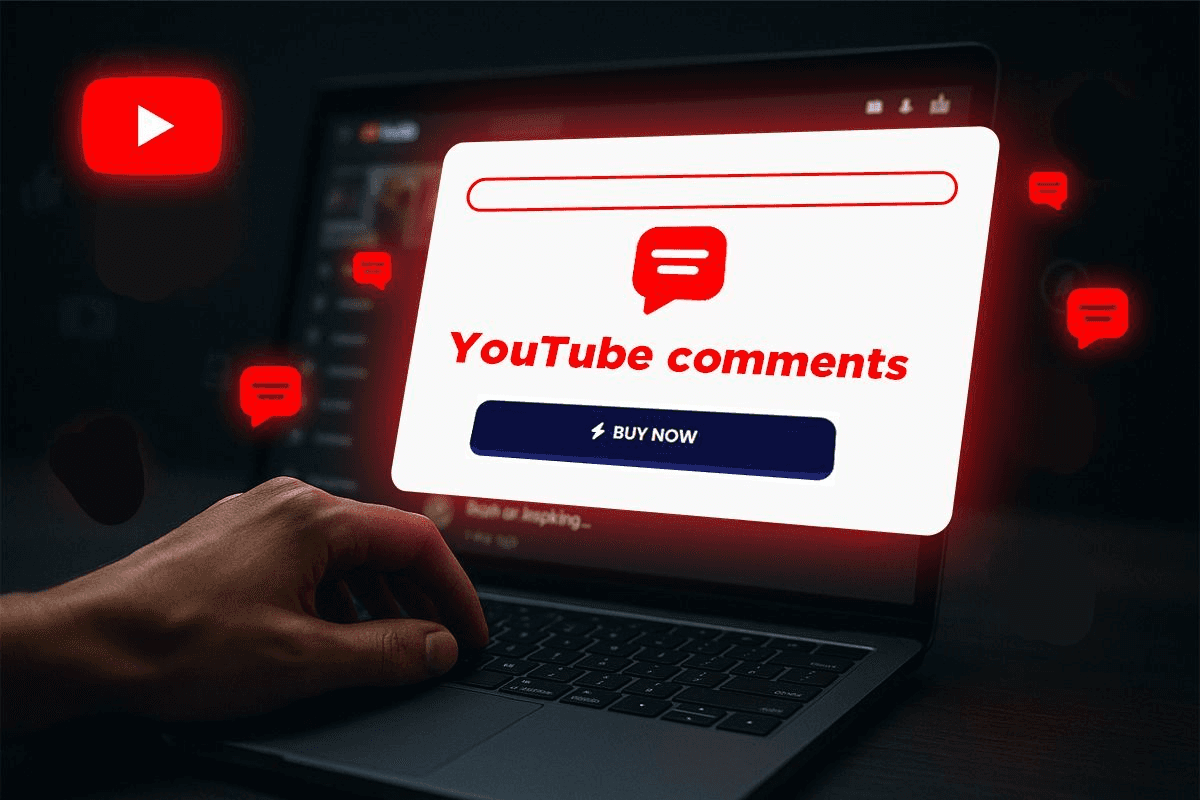
The minutes right after publishing are not downtime. They are the highest-leverage window you have, and most creators spend them refreshing their analytics dashboard instead of working the comment section they just opened. The workflow is simpler than it sounds, but the sequencing matters. Before you hit publish, your closing line needs to be written and locked. Let me know your thoughts. Something specific, something that forces a position. A debatable statement or a forced-choice question that gives viewers a clear lane to respond in. That single decision determines whether the comment section has anything to work with at all.
The First 15 Minutes After Publishing
If you have access to the Community tab, post a poll tied to the video's topic the moment you publish. This extends the conversation surface beyond the video itself, giving subscribers something to engage with even before they finish watching. According to the Hootsuite Blog's breakdown of how the YouTube algorithm works in 2025, comments are one of the key engagement signals YouTube uses to rank and recommend videos, alongside likes, shares, and watch time. The poll does not replace that signal. It amplifies the conditions that produce it.
Own the First Hour
Most creators handle the first hour passively, checking back every twenty minutes to see if comments have arrived. What that approach misses is that the first 10 to 15 replies you post in that window are not just courtesy responses. They are the scaffolding that shapes how every later viewer reads the comment section. When you reply directly to early comments and reference the specific prompt from your closing line, you are modeling the kind of response the video is designed to generate. Later viewers see a live debate, not a silent thread, and the psychological pull to join is measurably different.
Save Energy for Engagement
Creators who spend hours wrestling with editing timelines and subtitle formatting often find that by the time the video is published, they have nothing left for the engagement window that actually moves the needle. A clip creator tool like Crayo addresses that upstream problem directly. Its three-step workflow, upload, select subtitle style, generate, compresses the production phase so creators arrive at publish time with energy and attention intact, not depleted.
Pinning the Right Comment
Between minutes 45 and 60, review what has come in and pin the reply that extended the debate furthest. Not the most enthusiastic comment. Not the one that says great video.
- The one that added a new angle
- Pushed back on your closing statement
- Gave later viewers a reason to respond
That pinned comment becomes the first thing new viewers see, reframing the comment section from a passive scroll into an active conversation they can join. The difference between a comment count that climbs and one that stalls is rarely the video itself. It is whether the section looks alive when the next viewer arrives. The gap between knowing this workflow and executing it consistently is where most creators quietly lose ground, and it turns out the answer to closing that gap is less about discipline than about where your time actually goes before you hit publish.
Write Comment-Worthy Video Scripts Faster With Crayo
The gap between knowing what works and doing it consistently is a production problem, not a creativity one. Most creators script their closing lines last, under pressure, which is exactly when generic prompts slip through. Crayo solves this at the source: paste your video's core point, and it generates a script with a specific, debatable closing line already built in, so the weak ask never makes it to publish in the first place. That shift matters because the emotional trigger in a closing line is what converts a passive viewer into someone who types. When the prompt is specific and creates real tension, the response feels involuntary. Crayo handles the scripting so your energy goes toward finding the right clip and the right moment, which is where comment momentum actually starts.
Related Reading
- Viral Hooks For Instagram
- Best Video Format For Tiktok
- Social Media Hooks
- Scroll-Stopping Hooks
- Best Tiktok Hooks
- Brainrot Examples
- YouTube Hooks
- How To Make A Good Hook
- Pov Ideas for TikTok