
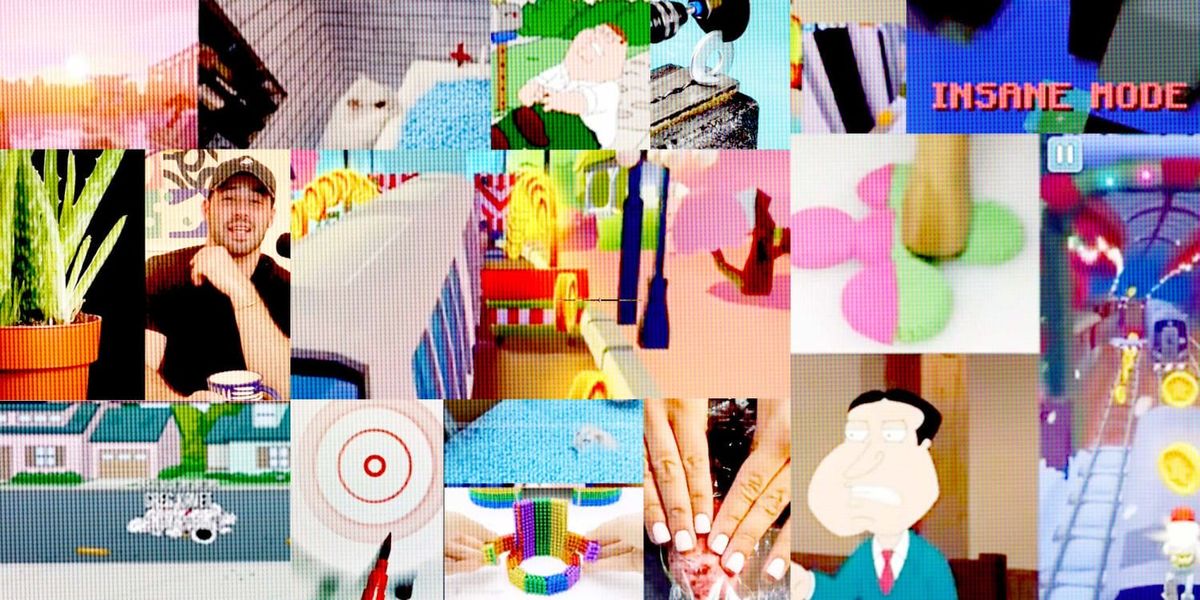
Have you ever caught yourself watching a video where someone plays a mobile game while a subway surfers clip runs underneath, all while a voiceover reads Reddit stories out loud? That is sludge content, and it is quietly reshaping how creators think about attention, dopamine loops, and TikTok brain rot in ways worth understanding. This article breaks down what sludge content actually is, why it works, and seven things every creator should know before deciding whether to use it or avoid it.
If you want to test these ideas and start creating short form videos faster, Crayo's clip creator tool gives you a direct path from raw footage to finished content without the usual friction. It is built for creators who want to move quickly and experiment with formats like this one, so you can learn what lands with your audience before spending hours on production.
Table of Contents
- Why Creators Struggle to Understand Sludge Content
- The Hidden Cost of Dismissing Sludge Content as Meaningless Filler
- 7 Sludge Content Techniques to Boost Retention in 30 Minutes
- The 30-Minute Workflow to Create Split-Screen Retention Content
- Create Split-Screen Content Faster With Crayo
Summary
- Sludge content, defined as split-screen videos that layer a secondary clip beneath primary content, has proven itself at scale rather than remaining a niche format. TikTok videos using split-screen gameplay backgrounds have received billions of views, and SYBO Games publicly credited the format for a measurable resurgence in Subway Surfers downloads and engagement.
- The secondary clip in sludge content is not filler. It exists to occupy idle attention during the exact moment primary content risks losing a viewer to a scroll. Low-stakes, repetitive footage such as endless runner gameplay or kinetic sand patterns works because it asks nothing of a viewer's active cognition while still giving distracted attention somewhere to rest.
- Sludge content appears built to keep people watching rather than to improve what they remember. Research from CSUSB ScholarWorks found no statistically significant differences in recall scores between sludge content and other formats, with sludge content accounting for approximately 0.2% of variance in recall scores. That distinction clarifies exactly where the format belongs: as a retention tool during a video's weakest stretch, not as a default style for information-dense content where comprehension is the goal.
- The average sludge video runs 222 seconds, nearly four minutes of split-attention viewing. That duration is not accidental. It reflects a format engineered to defend every second of a video as a potential drop-off point, not just the opening hook. Creators who apply the split-screen technique only to a confirmed retention dip, and then return to full-screen, use the contrast itself as a signal that something specific is happening in that section.
- Retention differences between high- and low-performing channels show up at the section level, not just in total watch time. According to the Retention Rabbit 2025 State of YouTube Audience Retention benchmark report, which analyzed over 150 million minutes of video data, top 25% retention channels see 3.5 times higher subscriber growth than average performers.
- Sludge content and brainrot formats solve different problems and should not be applied interchangeably. Brainrot maintains momentum in already-engaging content by cycling through rapid novelty within a single channel. Sludge covers a slow stretch by running a second channel that occupies idle attention without adding narrative complexity.
Crayo's clip creator tool addresses the production bottleneck directly by handling gameplay overlays, subtitle timing, and split-screen formatting so the creative decision of where and why to apply the technique stays with the creator rather than getting buried in manual editing time.
Why Creators Struggle to Understand Sludge Content
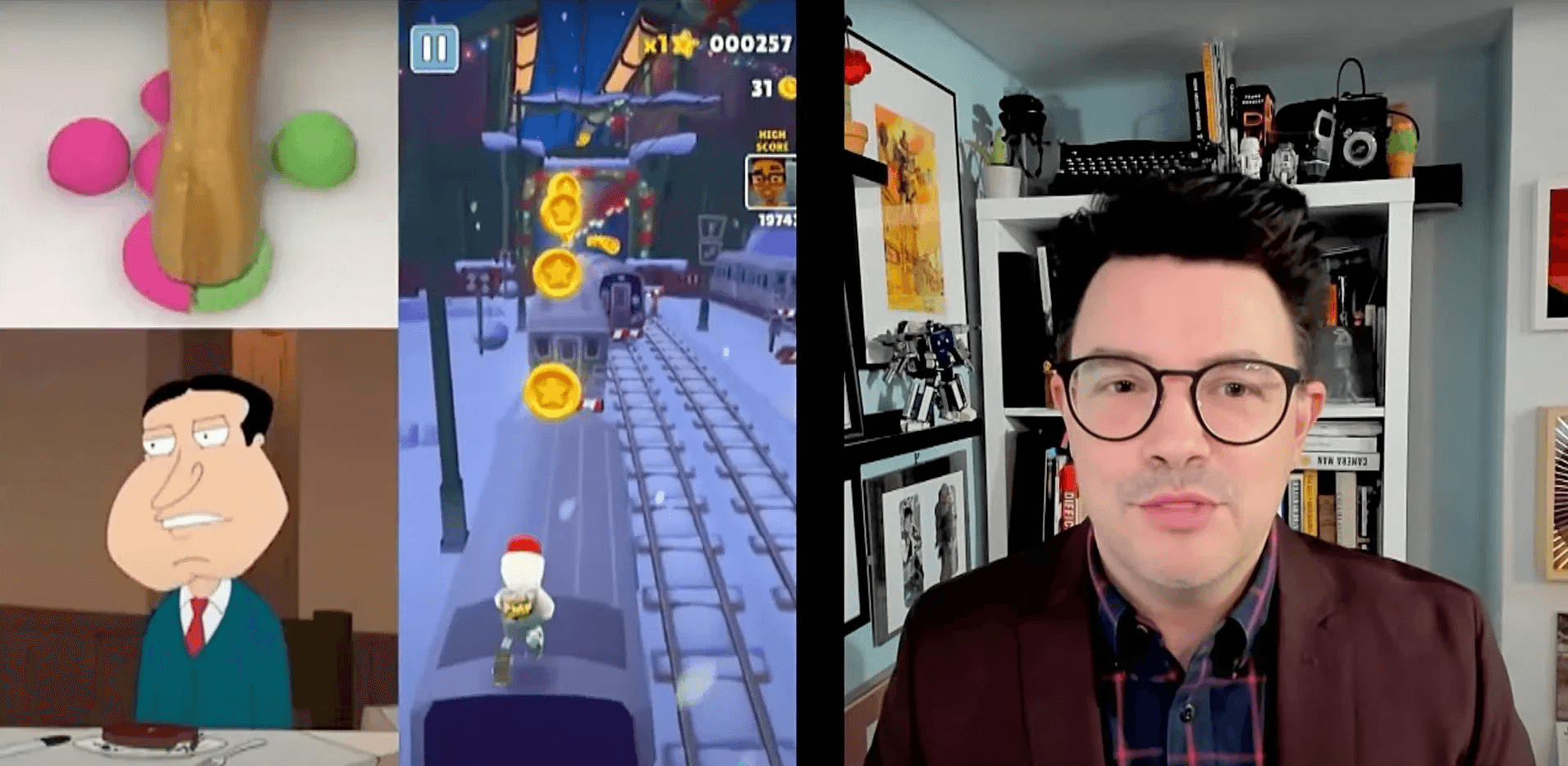
Most creators look at a sludge video and see two unrelated clips sharing a screen. What they miss is that the split-screen format is not a design accident. It is a documented attention-retention mechanic, and the bottom half is doing specific, deliberate work.
The confusion runs deeper than aesthetics. According to ChatterBlast, TikTok videos with split-screen gameplay in the background have received billions of views, which tells you this is not a niche quirk. It is a format that has proven itself at scale. Yet most creators still treat the secondary clip as filler, something to paste in because the main content feels thin, rather than recognizing it as a secondary visual channel that gives a distracted viewer's attention somewhere to rest without leaving the video entirely.
Why the Bottom Half Gets Misread
The failure point is usually the absence of narrative connection between the two clips. Because a Family Guy cutaway has no story relationship to Subway Surfers gameplay, the brain files the bottom clip as irrelevant. That categorization is wrong. The secondary clip is not there to relate to the main content. It is there precisely because it does not compete with it.
Low-stakes, repetitive motion like an endless runner game occupies just enough peripheral attention to prevent a scroll without pulling focus away from the primary message. Most creators who copy the format without understanding this mechanic end up choosing secondary clips that are too visually loud, which splits attention rather than anchoring it.
Streamlining Production for Intentional Execution
Most creators handle format research by watching examples and reverse-engineering the look. That works for surface aesthetics, but it misses the functional layer underneath. Crayo are built for creators who want to move past imitation and into deliberate execution, offering optimized gameplay footage, AI voiceovers, and subtitle tools that let you construct the split-screen mechanic with intention rather than guesswork.
The Format Confusion That Costs Creators the Most
The same misidentification surfaces when creators conflate sludge content with brainrot or corecore. These formats look similar from a distance, all fast, all high-stimulation, but they solve completely different problems. Brainrot delivers constant novelty within a single channel through rapid cuts and absurdist combinations. Sludge runs a second channel specifically to cover a slow stretch in the first.
According to CBC News, some sludge videos feature up to three clips playing simultaneously on the same screen, which signals that the format is about managing attention across channels, not simply increasing the pace of a single one. Blending the mechanics of both formats without understanding what each one is solving produces content that is chaotic without being functional.
Recognizing the Strategic Value of Retention Formats
The real cost of this confusion is not aesthetic. It is strategic. When you dismiss the secondary clip as noise, you lose access to a specific, teachable technique that has a documented business outcome behind it. SYBO Games, the developer of Subway Surfers, credited the sludge content trend directly for the game's resurgence in downloads and engagement, which means a real company traced a real business result back to a format many creators still write off as mindless.
That is not a small detail. It is the difference between seeing sludge content as a passing internet joke and recognizing it as a retention system worth understanding. What happens when creators keep writing that system off as meaningless filler is more costly than most expect.
Related Reading
- Short Form Content Ideas
- Short Social Media Videos
- How To Make Videos For Social Media
- How To Increase Video Engagement
- Video Storytelling
- Social Media Content Ideas
- Emotional Hooks
- How To Get More Comments On Youtube
- YouTube Average View Duration
- Why Are My Tiktok Videos Not Getting Views
The Hidden Cost of Dismissing Sludge Content as Meaningless Filler
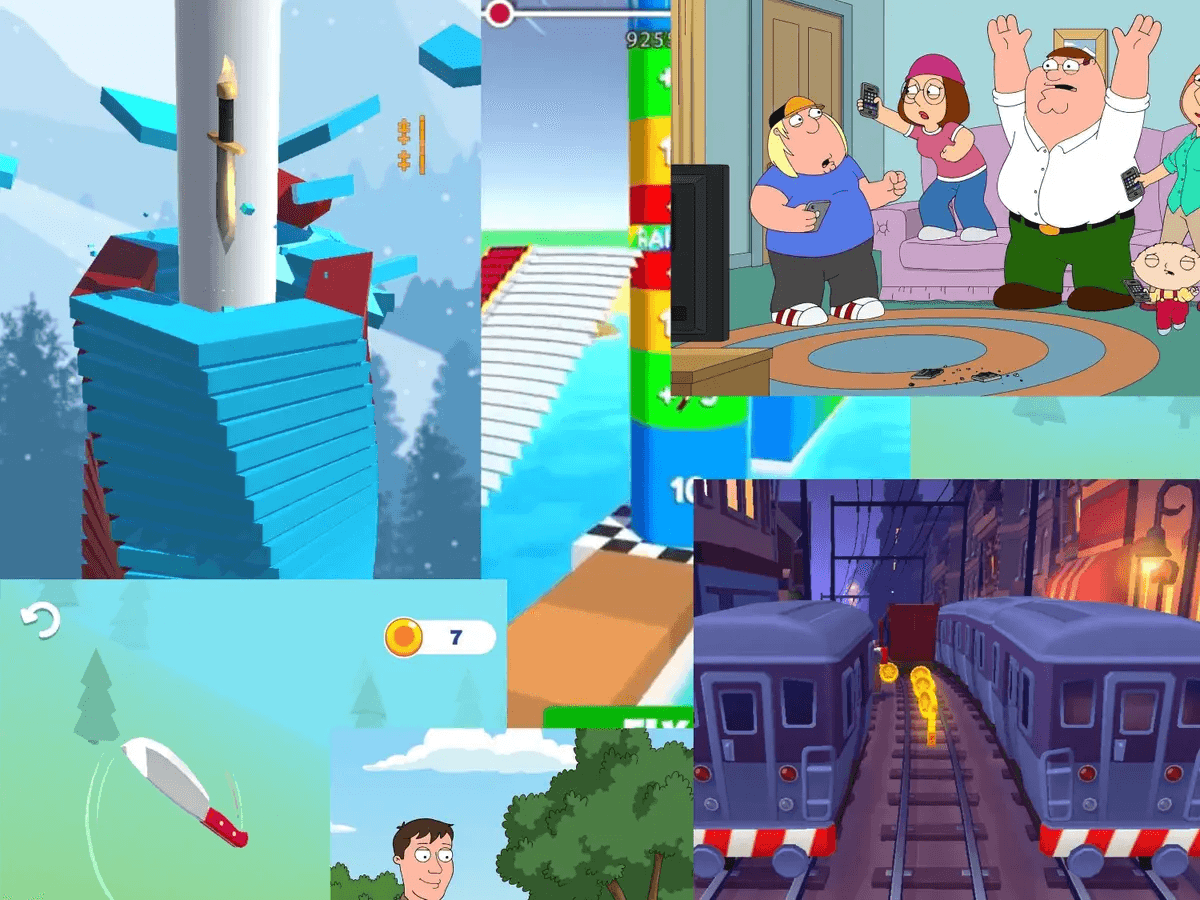
Treating sludge content as noise is a business decision, even when creators don't realize they're making one. The format has a documented retention function, a traceable origin, and at least one named company that publicly credited it for a measurable commercial outcome. Dismissing it anyway doesn't make you discerning. It makes you unavailable to a technique your competitors are already using.
Why the Purposeless Assumption is the Most Expensive One
The failure point is usually a surface read. Two unrelated clips playing simultaneously look chaotic, so creators conclude there's no underlying logic. But the secondary clip was never meant to share a narrative with the primary content. It exists to hold a viewer's peripheral attention during the exact moment the main content risks losing them to a scroll. That's a specific retention job, not decoration. The average sludge video runs 222 seconds, which is nearly four minutes of split-attention viewing. That duration doesn't happen by accident. It happens because the format is engineered to keep people watching longer than they otherwise would.
Defending Retention Across Every Second
The same issue surfaces in traditional video editing and short-form content strategy alike: creators optimize for the opening hook and let the middle carry itself. Sludge content challenges that assumption directly. It treats every second of a video as a potential drop-off point worth defending, not just the first three. That's a fundamentally different philosophy about where retention is won or lost.
Turning Split-Screen Content Into a System
Most creators who want to apply this mechanic deliberately still build their split-screen content the slow way:
- Sourcing secondary footage manually
- Cutting timing by hand
- Guessing which section of their video actually needs retention support
Crayo addresses that friction directly, giving creators access to optimized gameplay footage and AI-assisted editing so the format becomes a repeatable system rather than a one-off experiment.
What the Data Actually Complicates
The picture gets more nuanced when you look at recall. Research from Rahaf G. Fares at CSUSB ScholarWorks found no statistically significant differences in recall scores across sludge content, audio-plus-subtitles, and visual-plus-subtitles formats, with sludge content accounting for approximately 0.2% of variance in recall scores.
That finding matters because it separates two things creators often conflate: retention and comprehension. Sludge content appears built to keep people watching, not to help them remember what they watched. Understanding that distinction tells you exactly where to deploy the format and where not to. Use it to survive your content's weakest stretch. Don't use it when information transfer is the primary goal.
Targeting Drop-Offs With Precision Retention
The creators who get the most out of this format are the ones who treat it as a targeted intervention, not a default aesthetic. They check their retention graphs, find the specific timestamp where viewers drop, and add the secondary channel only there. That precision is what separates a retention strategy from a visual gimmick, and it's the difference between a technique that compounds over time and one that just looks like everyone else's content. And once you know exactly where your retention breaks down, the next question becomes harder than it looks.
7 Sludge Content Techniques to Boost Retention in 30 Minutes

Knowing where your retention breaks is only half the equation. The other half is knowing exactly what to do about it, in the right order, without wasting a single edit on a section that didn't need fixing. Each of the seven techniques below applies sludge content's secondary-channel mechanic as a targeted intervention, not a default style choice. The sequence matters. Skip step one, and every step after it is guesswork.
1. Identify Your Content's Actual Dull Stretch First
The failure point is almost always the same: a creator sees the split-screen format performing well, adds a secondary clip to their next video without checking their retention graph, and then wonders why engagement didn't move. The technique only works when there's a real dip to cover. Pull your analytics, find the specific timestamp where viewers leave, and confirm it's a mid-content pacing problem rather than a weak hook or a poor ending, since those require completely different fixes. If the dip isn't there, the technique has nothing to do. Applying it anyway turns a precision tool into decoration.
2. Choose a Secondary Clip That Competes for Nothing
The critical difference between a secondary clip that retains attention and one that steals it comes down to cognitive load. Footage like repetitive gameplay, slow kinetic sand patterns, or simple satisfying visuals occupies the idle part of a viewer's attention without asking them to follow a new story. The moment your secondary clip has its own dialogue, narrative arc, or sudden visual changes, it stops being a retention anchor and starts being a distraction.
Test this simply: play your main content with the secondary clip running and ask whether you can still follow the main point. If the answer is no, the clip is too demanding.
3. Apply the Technique Surgically, Not Permanently
Start and end your video in full-screen format. Introduce the secondary channel only during the identified weak section, then return to full-screen once the content picks back up. This contrast is what makes the technique feel intentional rather than aesthetic. A video that runs split-screen from start to finish removes the very contrast that signals to viewers that something is happening in that specific section. The pattern that works is targeted use tied to a documented retention problem, not a permanent visual style applied regardless of need.
4. Match Secondary Content to Your Specific Audience's Attention Patterns
Generic secondary footage, meaning whatever's trending on TikTok this week, may hold a general audience's attention without doing much for your specific niche. A gaming audience responds differently to repetitive gameplay than a productivity audience does. Test two or three secondary clip types across similar videos, compare retention specifically within the covered timestamp range, and keep whichever type measurably improves that section's performance. Top 25% retention channels see 3.5X higher subscriber growth than average performers. That gap doesn't come from guessing what audiences want. It comes from testing and confirming it.
5. Keep the Secondary Channel Visually Predictable
The documented examples of this format share one quality:
- Slow
- Repetitive
- Low-complexity motion
Kinetic sand, simple platformer gameplay, satisfying sorting visuals. These work because they're predictable enough to occupy attention without demanding active processing. A secondary clip with rapid cuts, flashing colors, or unexpected audio spikes creates overstimulation rather than retention, which is the opposite of the mechanic's function. Most creators underestimate how much the visual rhythm of the secondary clip matters. Calm and repetitive isn't boring in this context. It's the point.
6. Measure Retention Through the Covered Section Specifically
Most teams handle this by checking overall video performance after publishing, then drawing conclusions about whether the technique worked. The problem is that a strong hook or a compelling ending can mask a still-broken middle section in the aggregate numbers. The only measurement that tells you whether the split-screen mechanic actually fixed the dull stretch is retention through that specific timestamp range, compared against a similar video where you didn't apply the technique. The Retention Rabbit benchmark report, which analyzed over 150 million minutes of YouTube video data, makes the case clearly: retention differences between top and average performers show up at the section level, not just in total watch time. Judge the technique by the section it was meant to fix.
Eliminating Bottlenecks With Automated Formatting Tools
When it comes to actually building this at volume, the manual process of sourcing secondary clips, timing the split-screen to the exact retention dip, and testing across multiple videos creates a real production bottleneck. Creators who scale this consistently tend to use tools built for it. A clip creator tool like Crayo handles the structural work, including gameplay overlays, subtitle timing, and format output, so the creative decision of which clip to use and where to place it stays with the creator rather than getting buried in editing time.
7. Distinguish This Technique From Fast-Cut Brainrot Formats
The two formats solve different problems, and blending them without a clear reason undermines both. Sludge content's secondary-channel mechanic covers a dull stretch by occupying idle attention. Brainrot's rapid-novelty cadence maintains momentum in content that's already engaging by cycling through stimuli quickly. Using both in the same section doesn't double the effect. It creates conflicting signals about what the viewer is supposed to be doing with their attention.
Pick the technique that matches your content's actual weakness. If the content is too slow in one section, use the split-screen approach. If the content lacks novelty throughout, the fast-cut format is the right tool. Choosing between them is a diagnostic decision, not a stylistic one.
What Changes When You Apply These in Sequence
Before: split-screen added by default, secondary clips chosen for their own entertainment value, the technique running throughout an entire video, and success judged by total views.
After: a confirmed retention dip identified first, a low-stakes non-competing clip chosen deliberately, the technique applied only to that section, and performance measured at the exact timestamp that needed fixing. The difference isn't making content more chaotic or more stimulating. It's applying a documented retention mechanic exactly where your own data shows it's needed, and measuring whether it worked at the only level that matters.
Related Reading
- How To Do Text To Speech On Tiktok
- Tiktok Retention Rate
- What Is Brainrot Content
- How To Make Tiktok Videos More Engaging
- Italian Brainrot Quiz
- How To Make Brainrot Videos
- How To Create Pov Videos
- Long Form Video Content
- Tiktok Content Strategy
- Sludge Content
The 30-Minute Workflow to Create Split-Screen Retention Content
The workflow separates into four distinct phases because the failure point is almost never the editing itself. It's the order of operations. Creators who add split-screen content without first confirming where their retention actually breaks are solving a problem they haven't diagnosed yet.
Minute 0-10: Pull Your Retention Graph First
Start with the data, not the timeline. Open your analytics and find the specific timestamp range where viewers consistently exit, not just where the curve dips slightly, but where it drops with enough regularity across multiple videos to confirm a pattern. A hook problem looks different from a mid-content pacing problem, and treating them the same way produces the same result: a technique applied in the wrong place, measuring nothing useful. The failure pattern here is familiar. Creators often skip this step because pulling analytics feels like overhead when the editing window is already open. But applying a split-screen without a confirmed weak section is like patching a wall without knowing where the leak is. The fix looks complete until the next rain.
Minutes 10-15: Choose Footage That Occupies Without Competing
The secondary clip is not decoration. Its job is to hold idle attention during a stretch where your primary content is dense, slow, or low on visual stimulus. That means the footage needs to be predictable, repetitive, and low-narrative. Simple gameplay loops, kinetic sand, or satisfying sorting tasks work precisely because they ask nothing of the viewer's cognitive attention. A fast-cut trending clip does the opposite: it competes. Muting the secondary clip is not optional. The moment it carries its own audio, it pulls focus from your narration and splits comprehension instead of anchoring it. The goal is parallel processing, not divided attention.
Minutes 15-25: Apply it Surgically, Not Globally
Edit the secondary channel into only the identified weak section. The rest of the video stays full-screen. This is the step most creators skip, and it's the step that determines whether the technique functions or just decorates. A split-screen applied throughout an entire video stops being a retention tool and becomes an aesthetic choice, one that viewers habituate to within the first thirty seconds.
Preserving Signal Through Structured Workflows
Most creators handle this by adding the secondary clip across the full video during a single editing pass because it's faster and feels more consistent. The hidden cost is that it dilutes the technique's signal. When everything is stimulating, nothing is. According to Social Realtr, a structured workflow can take a video from idea to published in 30 minutes, but that speed only pays off when each step is assigned to the right phase. Crayo is built around exactly this kind of structured, phase-based production, with pre-optimized gameplay footage, AI voiceovers, and subtitle tools that remove the sourcing friction so the editing decision stays deliberate rather than rushed.
Minutes 25-30: Measure the Section, Not the Video
After publishing, wait for enough data to check retention specifically through the timestamp range you covered. Not overall watch time. Not average view duration. The specific window. Compare it against a similar video without the technique applied during that same stretch. This is where most measurement breaks down. Creators check overall performance, see a modest improvement, and assume the technique worked. But overall performance is too noisy to confirm anything about a targeted edit. A strong hook or a compelling ending can mask a section that still lost viewers at the same rate it always did. The only confirmation that matters is retention through the exact range you treated.
Why the Order Matters More Than the Technique
The sequence is the system. Diagnosis before sourcing, sourcing before editing, editing before measurement. Each phase produces an input the next phase needs. Skip one and the downstream steps lose their precision. The technique itself is simple. The discipline to run it in order is what separates creators who get a result they can replicate from those who get a result they can't explain. That replicability is the real asset.
- A technique you can measure is a technique you can improve.
- A technique you can improve is one you can build into every video you make, not as a habit, but as a scalable, data-confirmed system.
And the gap between knowing this workflow and actually running it at volume is smaller than most creators expect.
Create Split-Screen Content Faster With Crayo
The workflow is clear. The data tells you where to act. The only variable left is how fast you can close the gap between identifying the weak section and publishing a fixed version. Most creators handle that gap by sourcing secondary footage manually, syncing a split-screen edit by hand, and spending more time on production than on the decision that made it necessary. Open Crayo, upload your content, paste in the timestamp range from your retention graph, and generate a matched split-screen version with a secondary channel selected for that section. No manual syncing, no footage hunting. The technique stays surgical because the tool makes it practical. Pull your retention graph, find the section, and let Crayo handle the edit. That is the whole system.
Related Reading
• Best Tiktok Hooks
• How To Make A Good Hook
• Scroll Stopping Hooks
• YouTube Hooks
• Best Video Format For Tiktok
• Brainrot Examples
• Social Media Hooks
• Pov Ideas For Tiktok
• Viral Hooks For Instagram