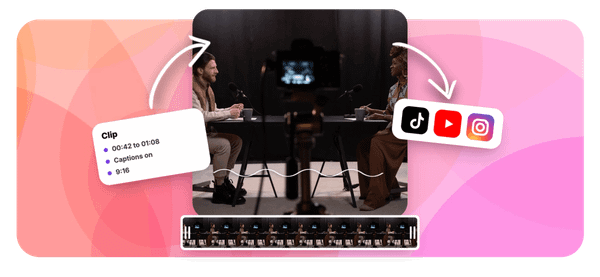


If you've noticed that TikTok brain rot is shortening people's attention spans, you already understand why YouTube average view duration has become such a critical metric for creators. Viewers are harder to hold than ever, and if your watch time is dropping, your video retention rate is likely suffering too. This article breaks down 7 practical ways to increase your YouTube average view duration in 30 minutes, giving you a clear path to better audience engagement and stronger video performance.
One tool worth knowing about is Crayo's clip creator, which helps you build sharp, attention-grabbing content that keeps viewers watching longer. Instead of guessing what holds an audience, you get a smarter starting point for improving your average watch percentage and overall video completion rate. If your goal is to move that needle on viewer retention without spending hours on edits, Crayo gives you a real advantage.
Table of Contents
- Why Creators Struggle to Improve Average View Duration
- The Hidden Cost of Making Videos Longer to Boost Watch Time
- 7 Ways to Increase YouTube Average View Duration in 30 Minutes
- The 30-Minute Workflow to Improve Average View Duration
- Diagnose and Fix Retention Faster With Crayo
Summary
- YouTube videos lose 50% of their viewers within the first 30 seconds, according to research from Gyre Blog. This means most retention damage happens before creators even think to investigate. Extending video length to boost average view duration does nothing to fix an opening that already lost half the audience before the content begins.
- The retention graph inside YouTube Studio is a precise diagnostic tool, not a performance scorecard. Virvid AI research found that videos with an average view duration above 50% are significantly more likely to be recommended by the YouTube algorithm, meaning a consistent retention gap quietly suppresses an entire channel's distribution over time.
- Retention Rabbit's 2025 benchmark report, analyzing over 10,000 videos, found that the average video retains just 23.7% of viewers, with more than 55% dropping off before the first minute ends. This data makes the math clear: a 6-minute video at 80% retention outperforms a 20-minute video at 30% retention in algorithmic recommendations, even though the longer video logged more raw watch time. The algorithm reads satisfaction, not duration.
- Videos that retain viewers past the first 30 seconds receive up to 2x as many recommendations from YouTube's algorithm, according to CapCut's guide on average view duration. This reframes the hook from an entertainment decision to a distribution decision. Opening with a surprising fact, a bold claim, or the end result shown first is not just about keeping one viewer watching; it signals to the algorithm that the video deserves a wider audience.
- Soundstripe reports that YouTube recommends aiming for at least 40% average view duration as a healthy retention benchmark. If analytics show a consistent drop at the 45-second mark, that is a specific structural problem at that timestamp, not a content-overhaul situation. A targeted 10-minute editing fix applied to that one section will increase average view duration more than producing three new videos with longer runtimes.
- First-minute retention above 65% correlates with an average view duration 58% higher overall, according to Retention Rabbit's research. That is a channel-level shift, not a single-video improvement. The compounding effect comes from consistently applying the same drop-off point across uploads, then locking that lesson into every future script template so the improvement becomes a production default rather than a one-time correction.
Crayo's clip creator tool fits into this workflow at the production stage, where formatting decisions such as dynamic subtitles, pacing cues, and visual hooks are built into the video before it ever reaches analytics review.
Why Creators Struggle to Improve Average View Duration

Average view duration improves when you fix what viewers actually experience, not when you extend what creators actually produce. The metric measures how much of your video gets watched, not how much you made. Those two things pull in completely different directions, and confusing them is where most creators quietly lose ground.
Misinterpreting Retention Data
The failure point is usually a misread of the data. A creator checks their analytics, sees a low average view duration, and assumes the video was too short. So the next video runs longer. But length didn't cause the drop. A weak hook, a slow middle section, or a poorly paced opening did. According to the Gyre Blog, YouTube videos lose 50% of viewers in the first 30 seconds, which means the damage is almost always done before most creators even think to look. Adding five minutes to a video that loses half its audience in the first half-minute doesn't move the retention curve. It just gives fewer people a longer video to abandon.
What the Retention Curve is Actually Telling You
The retention graph inside YouTube Studio is one of the most underused tools in a creator's workflow. It doesn't just show you that people left. It shows you exactly where they left, which is a completely different kind of information. A sharp drop at 0:45 indicates something specific went wrong at that point, whether it was a slow transition, a drop in energy level, or a segment that didn't earn its place. Creators who treat that graph as a diagnostic tool, rather than a scorecard, start making targeted fixes instead of guessing.
The Cost of Unrecognized Retention Patterns
Most creators handle this by watching their own videos once before publishing, trusting their gut, and moving on. That instinct isn't wrong; it's just incomplete. The problem surfaces when the same drop-off pattern repeats across five or six videos, and nobody connects the dots because no one has pulled the retention graphs side by side. Virvid AI's research shows that videos with an average view duration above 50% are significantly more likely to be recommended by the YouTube algorithm, which means a consistent retention gap doesn't just hurt individual videos. It quietly suppresses an entire channel's distribution over time.
Optimizing Structural Elements Pre-Release
Crayo addresses a different part of this problem: the editing decisions that shape retention before a video ever gets published. Subtitles, pacing, visual formatting, and audio hooks all influence how long someone stays, and building those elements well takes time most creators don't have. Crayo's clip creator tool handles that production layer quickly, so the video going into your analytics already has the structural elements that support a stronger watch percentage from the first second.
Prioritizing Retention Precision Over Content Volume
The core issue isn't effort or output volume. It's that average view duration responds to precision, not scale. Fixing a specific 15-second drop-off in an existing video will do more for your watch time metrics than producing three new videos with longer runtimes. That's a different mental model from the one most creators work from, and it changes what improving actually looks like in practice. But the real cost of chasing length over retention goes deeper than a lower percentage watched, and it compounds in ways most creators never see coming.
Related Reading
- Short Form Content Ideas
- Short Social Media Videos
- How To Make Videos For Social Media
- How To Increase Video Engagement
- Video Storytelling
- Social Media Content Ideas
- Emotional Hooks
- How To Get More Comments On Youtube
- YouTube Average View Duration
- Why Are My Tiktok Videos Not Getting Views
The Hidden Cost of Making Videos Longer to Boost Watch Time
Making longer videos to lift average view duration is one of those ideas that feels logical right up until the data proves otherwise. Length adds minutes to the clock, but retention percentage determines whether those minutes ever get watched. A 20-minute video where 70% of viewers leave in the first 60 seconds doesn't accumulate watch time; it bleeds it.
Why the Math Works Against You
The failure point is usually invisible to creators who never open their retention curve. Retention Rabbit's 2025 benchmark report, analyzing over 10,000 videos, found that the average video retains just 23.7% of its viewers, with more than 55% dropping off before the first minute ends. That means most added runtime lands in a video that's already lost the majority of its audience before the content even gets going. Padding a video that loses viewers at the 45-second mark doesn't fix the 45-second problem; it just makes the problem more expensive to produce.
Biases Driving the Pursuit of Video Length
Three specific behaviors push creators toward length anyway. Metric-literalism bias makes adding more time feel like the obvious lever because average view duration is reported in minutes, even though the percentage-viewed side of the equation is where the real signal lives. Retention-graph avoidance keeps creators from ever seeing the specific drop-off point they could fix. And sunk-length bias makes cutting a scripted segment feel like a loss, even when that segment is the exact moment viewers are already leaving.
Addressing First-Minute Retention at the Source
Most creators handle this by producing more content at greater length, hoping volume compensates for retention. The hidden cost isn't just one underperforming video; it's a channel-wide pattern where the first-minute retention problem never gets addressed because the diagnostic step never happens. Crayo approaches this differently, building formatting decisions like subtitles, pacing cues, and visual hooks directly into the editing workflow, so the structural elements that hold first-minute retention aren't an afterthought but a starting condition.
Where the Compounding Actually Happens
Retention Rabbit's research found that first-minute retention above 65% correlates with an average view duration 58% higher overall. That's not a one-video improvement; it's a channel-level shift. Dataslayer's 2025 YouTube algorithm analysis confirmed the same logic from a different angle: a 6-minute video with 80% retention outperforms a 20-minute video with 30% retention in algorithmic recommendations, even though the longer video logged more raw watch time. The algorithm reads satisfaction, not duration.
The Trap of Unfixed Early Drop-Offs
The real cost of chasing length over retention is that the actual lever, those first 60 seconds, never gets fixed. Every upload resets the same drop-off pattern, and the channel's average view duration stays flat, not because the content is bad, but because the diagnostic step keeps getting skipped in favor of producing the next video. And knowing all of this still leaves one question unanswered: what do you actually do about it in the time you have?
Related Reading
- How To Do Text To Speech On Tiktok
- Tiktok Retention Rate
- What Is Brainrot Content
- What Is Italian Brainrot
- How To Make Tiktok Videos More Engaging
- Italian Brainrot Quiz
- How To Make Brainrot Videos
- How To Create Pov Videos
- Long Form Video Content
- Tiktok Content Strategy
- Sludge Content
7 Ways to Increase YouTube Average View Duration in 30 Minutes
Improving average view duration is not a content problem. It is an editing and structure problem, and that distinction changes everything about where you spend your time. Most creators already have strong ideas. The gap is in execution:
- The first hook lands flat
- The pacing slows in the middle
- The visual variety disappears just as viewer attention starts to drift
Each of those is a fixable editing decision, not a reason to rebuild your entire content strategy from scratch.
1. Start With a Strong Hook
The opening seconds are not an introduction. They are an audition. Viewers decide within the first 15 to 30 seconds whether your video earns more of their time, and according to CapCut's Complete Guide to Average View Duration, videos that retain viewers past the first 30 seconds see up to 2x more recommendations from YouTube's algorithm. That number reframes the hook entirely. You are not just trying to be entertaining. You are triggering a distribution multiplier. Open with a surprising fact, a bold claim, or the end result shown first, and you are not just keeping one viewer watching. You are signaling to the algorithm that this video deserves a wider audience.
2. Remove Slow Introductions
The failure point is usually the same: a creator spends 20 seconds explaining who they are and what the video will cover before delivering any value. By the time the actual content begins, a significant portion of the audience has already left. Start teaching or entertaining immediately. Move channel logos, greetings, and setup explanations to after you have captured attention, not before. Viewers who stay past the hook will tolerate context. Viewers who never get past the intro never will.
3. Create Curiosity Gaps Throughout
Most creators front-load their best content and then wonder why retention collapses in the second half. Once viewers receive the answer they came for, the incentive to stay disappears. The fix is to treat each section of your video as a door that opens onto the next one.
- Tease an important insight coming later.
- Mention a surprising result you will explain in two minutes.
- Preview the biggest mistake near the end.
Curiosity gaps are not manipulation; they are the same storytelling structure that keeps people reading novels past midnight.
4. Use Faster Pacing
Slow scene changes and repeated explanations are retention killers. The moment a viewer feels like you are covering ground you already covered, they reach for the scroll. Keep introducing new visuals, new examples, and new questions at a consistent pace. The goal is not speed for its own sake; it is momentum. Every new element signals to the viewer that staying is still worth it.
5. Improve Visual Variety
Static visuals make a video feel like a lecture.
- B-roll
- Captions
- Animations
- Zoom effects
- Screen recordings
All serve the same function: they give the eye something new to track while the ear keeps listening. Most creators underestimate how much visual monotony costs them. A viewer watching a talking-head video with no visual changes is doing cognitive work to stay engaged. Reduce that friction, and watch time follows.
Streamlining Post-Production for Higher Retention
Most creators handle this by editing manually, spending hours cutting footage, adding captions, and adjusting pacing in post-production. That process works, but it compresses the time available to focus on structure and storytelling. Crayo addresses this directly by generating polished short-form clips with AI voiceovers, dynamic subtitles, and optimized formatting in a fraction of that time, so the editing decisions that drive retention are made faster and more consistently across every upload.
6. End Every Section With a Reason to Continue
Disconnected tips feel like a listicle. Connected sections feel like a story. The difference in viewer behavior between the two is measurable in your retention curve. Link every section to the next with a transition that creates forward tension. "But that's only part of the problem" or "The next strategy is where most creators make their biggest mistake" are not filler lines. They are structural bridges that keep the watch session alive.
7. Analyze Your Retention Reports
Guessing at what is wrong is the most expensive habit a creator can have. YouTube Analytics shows you exactly where viewers leave, where retention drops, and where people rewatch sections. That data is a direct map to your next improvement. Soundstripe reports that YouTube recommends aiming for at least 40% average view duration as a healthy retention rate. If your analytics show a consistent drop at the 45-second mark, that is not a content problem. It is a specific structural problem at a specific timestamp, and fixing it is a 10-minute editing decision, not a full video overhaul.
What Actually Changes When You Apply These Seven Strategies
The before-and-after here is not dramatic in a single video. It is cumulative. Each upload with a stronger hook, tighter pacing, and better visual variety builds a channel-wide pattern that the algorithm learns to reward. Viewers who stay longer generate stronger engagement signals. Stronger engagement signals push videos into more recommendations. More recommendations bring in new viewers who, if the retention holds, extend that pattern further. The compounding effect of consistent improvements in average view duration is not just better individual video performance. It is a channel that grows with less friction over time.
The 30-Minute Workflow to Improve Average View Duration

Knowing how to improve average view duration matters. Knowing exactly where to start is what separates creators who move fast from those who spend weeks guessing.
Minute 0-5: Read the Retention Graph First
Open YouTube Studio, go to Analytics, then Engagement, and pull up your most recent video. You are looking for four things:
- The audience retention graph
- Average view duration
- Average percentage viewed
- The first major drop-off point
Do not form a hypothesis before you look. Let the data tell you where the problem is. The retention graph is not decorative. It is a precise, second-by-second record of viewer behavior, removing the need to guess. Most creators skip this step and jump straight to changing thumbnails or upload schedules, which is like treating a headache by buying new shoes.
Minutes 5-10: Find the Cause, Not Just the Moment
Once you locate the largest drop on the graph, watch that section of the video. Ask whether the introduction ran too long, whether pacing slowed, whether visuals stopped changing, or whether you revealed the payoff too early. The drop is the symptom. The content decision that caused it is the actual problem. The first 30 seconds of a video account for the steepest drop-off, with many channels losing 30 to 40 percent of viewers in that window. If your graph shows a cliff at the 45-second mark, the fix is not a new thumbnail. It is a tighter opening.
Minutes 10-20: Fix the One Section That Broke
Edit the specific moment where viewers left, not the whole video. Depending on the cause, that might mean shortening the introduction, cutting a repeated explanation, adding B-roll to break up a static shot, or improving a transition that killed momentum. One targeted fix applied cleanly will move your average view duration more than a full rebuild.
The failure point is usually specific.
- A five-second pause where nothing happens.
- A sentence that restates what you just said.
- A visual that stays on screen 20 seconds too long.
These are not catastrophic problems. They are precise, fixable decisions.
Accelerating Iteration Through Automated Editing
Most creators handle this stage by re-editing entire videos from scratch, which takes hours and makes it impossible to isolate what actually changed. As that process repeats across multiple uploads, the feedback loop becomes too noisy to learn from. Crayo is built around a different model, where creators can move from raw footage to a polished, retention-optimized short in minutes, using AI voiceovers, dynamic subtitles, and pacing tools that keep viewers engaged without requiring a full manual edit each time.
Minutes 20-25: Lock the Lesson Into Your Next Script
The moment you identify a fix, update your script template before you do anything else.
- If moving the hook to the first five seconds worked, make that the default.
- If shortening explanations reduced mid-video drop-off, build that constraint into every outline going forward.
One insight applied once is a lucky break. The same insight applied to every future video is a production system. This is where most creators leave value on the table. They fix one video, see improvement, and then revert to old habits on the next upload. The goal is not a better video. The goal is a better process that automatically improves every video.
Minutes 25-30: Measure One Variable, Not Everything
After publishing the next video, compare it directly against the previous one. Look at average view duration, average percentage viewed, first-minute retention, and the completion rate. If shortening your introduction moved average view duration from 3:12 to 4:01, you have found a repeatable strategy. If nothing changed, test a different element on the next video. Videos with an audience retention above 50% are more likely to be recommended by the YouTube algorithm. That threshold is not reached by accident. It is reached by creators who test one variable, measure the result, and build on what works rather than changing everything at once.
Why the Workflow Holds Up at Scale
The pattern here is not complicated:
- Review
- Diagnose
- Fix
- Systematize
- Measure
What makes it work is the discipline to change one thing at a time and trust the data to confirm whether it helped. Creators who skip steps, who fix and publish without measuring, or who measure without updating their templates, break the feedback loop and stall their own growth.
Compounding Growth Through Smarter Content Iteration
Consistent improvement in watch time, completion rate, and audience retention percentage does not come from producing more content. It comes from producing smarter content, where each upload is slightly more informed than the last. That compounding effect is what turns a channel from a collection of individual videos into a machine that learns. But the real question is not whether this workflow works. It is how fast you can run it without the process becoming the bottleneck.
Diagnose and Fix Retention Faster With Crayo
The bottleneck was never identifying the problem. It was closing the gap between diagnosis and the next upload. You can read a retention graph in five minutes, spot the first-minute drop-off, and still spend hours rewriting a hook that may or may not land. That lag is where momentum dies. Open Crayo, paste the hook from your lowest-retention video, and generate two or three front-loaded rewrites in minutes. No re-recording, no full restructure. You test a sharper opening in your next similar video, measure the shift in completion rate, and carry that signal forward. That is the repeatable system that compounds, not luck, not volume, but faster iteration between what the retention curve tells you and what you publish next.
Related Reading
- Viral Hooks For Instagram
- Best Video Format For Tiktok
- Social Media Hooks
- Scroll-Stopping Hooks
- Best Tiktok Hooks
- Brainrot Examples
- YouTube Hooks
- How To Make A Good Hook
- Pov Ideas for TikTok