

Have you ever scrolled through TikTok and wondered why some videos rack up millions of views while others disappear into the void? TikTok brain rot content, those short, addictive clips that keep people watching for hours, has cracked the code on what makes people stop, watch, and share. This article breaks down 11 viral content ideas that real creators are using right now to earn $1,000 in just two weeks, so you can stop guessing and start posting with purpose.
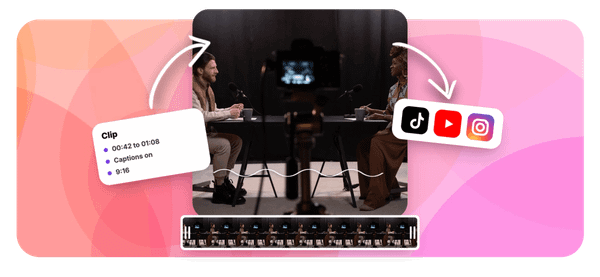
The right tools make that goal much easier to reach, and that is where Crayo's clip creator tool comes in. It helps you turn raw ideas into polished, shareable content fast, cutting down the time between your idea and your first viral post. Less time editing means more time creating, and more content means a better shot at hitting that $1,000 mark.
Summary
- Viral content success rarely comes from copying what already works. Most creators replicate trending formats without understanding the emotional need those formats served for a specific audience at a specific moment. This mismatch is a core reason why 96% of content creators never reach 1,000 subscribers or followers, according to LinkedIn Pulse's 2025 analysis of why creators fail.
- Format choice is a revenue decision, not just a creative one. Creators who choose formats based on audience intent, such as product comparison videos or AI tool tutorials, consistently outperform those who choose formats based on what feels exciting to make. Comparison videos in particular attract viewers who are already in a buying mindset, which aligns the creator's monetization strategy with the viewer's intent before the video even starts.
- Evergreen formats generate income long after the initial post date. AI tool tutorials, step-by-step guides, and beginner resources attract search traffic continuously because the underlying questions they answer do not expire with a trending sound or a viral challenge. Saves are a key signal here, since a saved tutorial keeps generating algorithm-rewarded engagement every time a viewer returns to apply what they learned.
- Consistency of output matters more than the quality of any single post. According to LinkedIn Pulse's 2025 creator research, only 4% of creators successfully monetize their content, largely because reactive, trend-chasing strategies cannot sustain the publishing frequency that algorithms reward.
- Batch production removes the cognitive friction that quietly kills publishing consistency. Writing all scripts before recording, and recording all voiceovers before editing, reduces the switching cost that devours hours across a content session. This approach is increasingly standard, with 80% of content creators now using AI in their workflow according to Wondercraft via Digiday, reflecting broad recognition that the production bottleneck is a structural problem rather than a personal one.
Crayo's clip creator tool fits into this workflow by consolidating script generation, AI voiceovers, captions, and video export into a single session, which shortens the gap between a finished idea and a publishable clip.
Why Most Creators Struggle to Create Viral Content

Copying a viral video is not the same as understanding why it went viral. Most beginners treat viral content as a template to replicate rather than a signal to decode, and that single misunderstanding is what separates creators who grow from creators who stall.
The Content Container Fallacy
The failure point is usually invisible at first. A creator sees a video with 10 million views, rebuilds it almost identically, and posts it with confidence. The result? Flat numbers. What they missed is that the original worked because it solved a specific emotional need for a specific audience at a specific moment. The format was just the container. The value was inside.
According to LinkedIn Pulse's 2025 analysis of why creators fail, 96% of content creators never reach 1,000 subscribers or followers, and trend-chasing without audience clarity is one of the core reasons why.
Cultivating Content Identity Over Algorithmic Novelty
The same pattern surfaces across TikTok, Instagram Reels, and YouTube Shorts: creators who jump between viral challenges, trending sounds, and competitor formats never build a content identity their audience can recognize. Every post feels like a first impression because the creator keeps restarting. Audience loyalty does not grow from novelty alone. It grows from consistency of value, where viewers know what they will get and keep coming back because it delivers.
Overcoming Reactive Planning with Streamlined Tools
Most creators handle content planning by scrolling their feed until something inspires them, then recreating it quickly. That approach works once, maybe twice, before the momentum dies. As output pressure builds and trends cycle faster, the creative process fragments. Time spent searching for the next trend outpaces time spent actually publishing.
Noting that only 4% of creators successfully monetize their content, largely because reactive strategies cannot sustain the publishing frequency that algorithms reward. Crayo's clip creator tool addresses this directly by compressing the gap between idea and finished video, so creators spend less time in production and more time building audience understanding.
Prioritizing Core Audience Needs Over Trends
The creators who break through are not necessarily more creative. They are more systematic. They identify one audience, understand what that audience needs to feel entertained, educated, or surprised, and then use trending formats only when those formats serve that need. The content idea comes first. The trend is just the delivery mechanism.
What most people miss is that chasing virality is not a content strategy. It is the absence of one, and the cost of that absence compounds quietly over time.
Related Reading
- Short Form Content Ideas
- Short Social Media Videos
- How To Make Videos For Social Media
- How To Increase Video Engagement
- Video Storytelling
- Social Media Content Ideas
- Emotional Hooks
- How To Get More Comments On Youtube
- YouTube Average View Duration
- Why Are My Tiktok Videos Not Getting Views
The Hidden Cost of Chasing Viral Content Without a Strategy

Building a content system beats chasing trends, but knowing that intellectually and feeling the actual cost are two different things. The cost shows up quietly, in the gap between the effort you put in and the audience you actually build. Most creators never measure that gap because they're too busy preparing the next post.
The failure point is usually not the content itself. It's the decision-making process that produces the content. When every upload begins with what's trending right now, you're essentially handing your editorial calendar to an algorithm that has no interest in your long-term growth. The algorithm rewards what's popular today. It has no memory of what you built yesterday and no stake in what you're trying to build tomorrow. That asymmetry is where the real cost hides.
The Cost of Systemless Creation
The same pattern surfaces in content creation and in manufacturing: when you optimize for output without a repeatable system, quality becomes random, and speed becomes exhausting. A creator who rebuilds their entire production process with each upload, hunting for the next viral content idea from scratch, is spending creative energy on logistics instead of storytelling
That energy compounds in the wrong direction. After six months, the creator with a framework has a library of interconnected content and a recognizable voice. The trend-chaser has a feed that looks like it belongs to five different people.
The Workflow Bottleneck
Most creators handle this by keeping a running list of trending sounds and popular formats, treating it like a content strategy. The familiar approach feels productive because the list is always growing. But as Crayo was built to address, the bottleneck is rarely ideation or even production quality.
It's the absence of a repeatable workflow that connects a content idea to a finished, shareable clip without burning three hours in the process. When production is slow and painful, creators default to copying what already worked for someone else because it feels like the path of least resistance.
Specificity and Audience Compounding
The truth is that short-form content rewards specificity over volume, and consistency over novelty. A creator who publishes three videos per week around one clear audience signal will outperform a creator who posts daily across five different topics, not because the algorithm prefers consistency (though it does), but because a focused audience compounds.
- Each new viewer arrives in a context that makes them more likely to stay.
- Each returning viewer signals to the platform that this content is worth distributing further.
Trending formats can accelerate that process when they fit the audience naturally. When they don't fit, they dilute it.
Earned Content vs. Borrowed Content
What nobody tells you is that the most effective viral content ideas are rarely the most novel ones. They're the ones that match a creator's existing audience signal so precisely that the content feels inevitable rather than opportunistic. That distinction, between content that feels earned and content that feels borrowed, is exactly what separates creators who build sustainable income from those who celebrate a spike and then wonder why the next video underperforms.
What comes next might be the most practical thing you read this year.
11 Viral Content Ideas to Earn $1,000 in 2 Weeks

Creators who consistently earn from viral content share one trait: they stopped waiting for a lucky break and started building a system. The 11 ideas listed here are not random inspiration. Each one is a format with a built-in reason to share, a built-in reason to return, and a clear path to revenue.
The failure point is usually invisible. A creator picks a content idea because it feels exciting, not because it matches what their audience actually searches for, saves, or acts on. That gap, between what feels good to make and what the audience is already hungry for, is where most monetization efforts collapse. Choosing the right format from the start closes that gap before the first frame is recorded.
1. AI Tool Tutorials: The Format That Pays Twice
AI tool tutorials work because they attract two audiences simultaneously:
- People who want to learn faster
- People who are already close to purchasing
That dual pull is rare in short-form content. Most formats attract one or the other. Tutorials that demonstrate AI writing tools, video generators, or automation software attract viewers with intent, and many of the featured platforms offer affiliate commissions on top of the views.
The compounding effect matters here. A tutorial posted today keeps earning search traffic and affiliate clicks for months, sometimes years, because the underlying question (how does this tool work?) does not expire the way a trending sound does. That is evergreen content strategy in its simplest, most executable form.
2. Before-and-After Transformations: Credibility You Can See
Transformation content solves a problem that most short-form creators cannot solve with words alone: proof. Telling someone your editing workflow is efficient is forgettable. Showing a raw clip transform into a polished, captioned, color-graded short in under 60 seconds is not. The visual contrast does the persuasion work that a script never could.
Watch time data consistently shows that transformation videos hold viewers longer than talking-head content in the same niche. The reason is structural: the viewer knows a reveal is coming, and that anticipation keeps them watching. Higher watch time signals quality to the algorithm, which expands reach, which compounds the original investment of effort.
3. Common Mistakes Videos: The Format That Filters for Buyers
The same issue surfaces across creator niches and business categories: content that attracts everyone ends up converting no one. Common mistakes videos solve this by self-selecting the audience. A viewer who watches 5 mistakes new content creators make is not casually scrolling. They are actively trying to improve, which means they are far more likely to click a recommended tool, join a course, or follow for the next video.
This format also builds authority faster than almost any other. Identifying what goes wrong and explaining why signals expertise in a way that purely positive content cannot. The audience learns to trust your judgment, not just your output.
4. Product Comparison Videos: Built for Buying Intent
When someone searches "best AI video editor" or "which subtitle tool is worth it," they are not browsing. They are deciding. Product comparison videos intercept that decision moment and position your channel as the trusted guide. That is a fundamentally different audience relationship than the one built by entertainment content.
The affiliate conversion potential here is the highest of any format on this list. According to Tapstitch Blog, earning $1,000 per week through online selling and affiliate strategies is achievable when the content consistently attracts buyers rather than browsers. Comparison videos are one of the most direct routes to that outcome because the viewer's intent and the creator's monetization strategy are already aligned before the video even starts.
5. The Production Bottleneck Most Creators Ignore
Most creators who understand these formats still struggle to publish consistently. Not because they lack ideas, but because finishing a video takes too long. They spend hours on captions, voiceovers, and background cleanup, and by the time the video is done, the energy that sparked the idea has faded. The result is inconsistent publishing, which breaks the audience signal that makes any of these formats work over time.
Crayo addresses this directly.
- The tool generates AI voiceovers
- Applies subtitle styles
- Removes backgrounds
- Enhances speech quality inside a single workflow, compressing what used to take hours into minutes
For creators working with formats like tutorials, comparisons, or transformation videos, that speed difference is not a convenience. It is what makes the system repeatable rather than occasional.
6. Storytelling Videos: The Retention Engine
Storytelling is the only format that converts passive viewers into emotionally invested followers. Facts inform. Stories change behavior. A creator who shares a real account of going from zero views to a consistent publishing rhythm, with specific numbers and honest setbacks, creates a connection that a tips video never will. That connection is what drives follows, saves, and shares, not just views.
The structure matters as much as the content. A story without stakes is just a sequence of events. The formats that perform best introduce a problem early, delay the resolution, and deliver a payoff that feels earned. That arc is not accidental. It is a repeatable framework that works across niches, from fitness to finance to content creation itself.
7. Myth vs. Fact Videos: The Format That Spreads Through Disagreement
Correction is one of the most underused triggers in content strategy. When a creator challenges a belief that the audience holds, two things happen:
- The people who agree share it to validate their position
- The people who disagree share it to argue
Both behaviors expand reach. Neither requires the video to be trending or boosted.
The key is choosing myths that are genuinely widespread and genuinely wrong. Surface-level misconceptions produce surface-level engagement. The myths that drive real discussion are the ones that feel counterintuitive, where the audience's instinct and the evidence point in opposite directions. That tension is what makes the format shareable rather than just informative.
8. Step-by-Step Tutorials: The Save Magnet
Saves are the most undervalued metric in short-form content.
- A view is passive.
- A save is a commitment.
When someone saves a tutorial, they are signaling that the content has practical value they intend to return to, and that signal tells every major platform algorithm that the content deserves broader distribution.
Step-by-step tutorials earn saves because they function as reference material. A viewer who saves a workflow tutorial is not done with that content after one watch. They come back when they are ready to apply it, which means the video keeps generating engagement long after the initial post date. That extended engagement window is what separates saved content from scrolled-past content.
9. List Videos and Beginner Guides: The Search Traffic Engine
The same pattern appears in search behavior across YouTube, TikTok, and Instagram: list-format queries and beginner questions generate consistent, high-volume traffic that does not depend on what is trending that week. "Top 10 AI tools for creators" and "how to start a YouTube channel" are searched every day, not just when an algorithm decides to surface them.
Beginner guides compound this advantage because the audience never runs out. Every niche produces new beginners continuously. A guide that teaches first steps, setup processes, or foundational skills keeps attracting new viewers who are at the exact starting point the content addresses. That is a renewable audience source, not a one-time spike.
10. Challenge Videos and Industry Predictions: The Return Visit Builders
The formats that drive the most consistent subscriber growth are not the ones that perform best on a single post. They are the ones that give the audience a reason to come back.
- Challenge videos do this structurally: a 30-day experiment creates 30 days of return visits, each one building on the last.
- Industry predictions do it conversationally: a bold call about where AI or the creator economy is heading invites ongoing discussion every time a new data point confirms or challenges the original claim.
Fitxfearless creator Bismarck Ebiweh reports earning $1,000 or more every two weeks through a consistent Instagram content strategy, and the underlying principle is the same one that makes challenge and prediction formats work: consistency of output, not perfection of any single post, is what builds income over time.
11. Content Repurposing and Frameworks: The Multiplier Formats
When a creator teaches a content framework, something interesting happens. The audience does not just watch the video.
- They apply the framework
- Return to reference it
- Share it with others who are facing the same problem
The creator becomes the source of a system, not just the source of a video. That positioning is far more durable than any trending format.
Content repurposing videos work for the same reason, but from the production side. Showing how one long-form video becomes five Shorts, three Instagram clips, and a blog post is not just useful content. It is a demonstration of leverage that every creator wants, but few know how to execute. The audience saves it, applies it, and credits the creator every time the strategy works.
The 11 Ideas as a Connected System
Taken individually, each of these 11 formats is a strong content idea. Taken together, they form something more useful: a menu of formats that can be rotated, combined, and sequenced to serve different audience needs at different stages of awareness.
- A beginner guide attracts new viewers.
- A case study builds credibility with mid-level followers.
- A product comparison converts engaged followers into revenue.
The sequence is deliberate, not accidental. The creators who earn consistently are the ones who understand that sequence. They are not publishing randomly across formats and hoping something lands. They are choosing formats that serve a specific function in their audience's journey, and they are publishing consistently enough for that system to compound.
But knowing which format to use is only half the equation. What separates the creators who earn from the ones who stall is what happens in the two weeks between idea and income.
Related Reading
- How To Do Text To Speech On Tiktok
- Tiktok Retention Rate
- What Is Brainrot Content
- What Is Italian Brainrot
- How To Make Tiktok Videos More Engaging
- Italian Brainrot Quiz
- How To Make Brainrot Videos
- How To Create Pov Videos
- Long Form Video Content
- Tiktok Content Strategy
- Sludge Content
The 2-Week Workflow Creators Use to Turn Viral Content Into Revenue

Viral content ideas are only valuable when they move through a system. The two weeks between concept and cash flow are where most creators either build something real or burn out trying to do everything at once.
Days 1-2: Lock In Your Strategy Before You Film Anything
The failure point is almost always at the beginning, not the middle. Creators skip strategy because it feels slower than just posting, but without defining your audience, niche, monetization method, and content pillars upfront, every video you make is a standalone bet.
A small business owner targeting AI productivity with affiliate revenue and four clear content pillars, for example, can evaluate every idea against a single question: does this serve that audience? That filter alone eliminates hours of wasted production.
Days 3-5: Build a Content Library, Not Just a Content Calendar
The same problem surfaces in kitchens and in content studios: running out of ingredients mid-service. A creator who spends each morning searching for something to post is cooking from an empty fridge. Building 25 viral content ideas in advance, with hook variations and script outlines for each, means production days are spent making, not deciding. A content library also gives you the flexibility to respond to a trending topic without depending on one to survive.
Days 6-9: Batch Production Like a Factory, Not a Freelancer
Write all your scripts before you record a single word. Record all your voiceovers before you open an editing timeline. This kind of task batching cuts the cognitive switching cost that quietly devours hours. According to Wondercraft via Digiday, 80% of content creators are now using AI in their workflow, which signals that the production bottleneck is a recognized problem, not a personal one. The creators gaining ground are the ones who treat production like a repeatable process, not a creative sprint.
Most creators handle video production tool by tool, stitching together separate apps for voiceovers, captions, and editing. That friction compounds across every video in a batch. Crayo consolidates those steps, generating AI voiceovers, subtitle styles, and finished short-form clips inside a single workflow, which cuts the gap between a script and a publishable video from hours to minutes.
Days 10-12: Every Video Needs One Clear Next Step
Publishing without a monetization connection is like opening a store with no checkout counter. Each video should point viewers toward one specific action:
- An affiliate product
- A downloadable template
- A newsletter
- A course
A viral AI tools video that recommends a featured platform through an affiliate link earns while it accumulates views. A productivity video that links to a paid template guide converts attention into revenue without requiring any additional content.
Days 13-14: Measure What Earns, Not Just What Pops
The goal of this final stage is not to celebrate what went viral. It is to identify which content formats consistently generate both engagement and revenue, then produce more of those. If software comparison videos drive more affiliate clicks than trend reaction videos, the data tells you where your audience's buying intent lies. Chasing unrelated viral topics after that signal is just an expensive distraction.
Why Separation Is the Whole Point
The real reason this workflow functions is not because it adds more steps. It is because it removes the cognitive collision of researching, creating, publishing, and analyzing simultaneously. Each stage has a single job. That clarity is what allows a creator to publish consistently, respond to trends without being controlled by them, and build a monetization system that compounds rather than resets every week.
The part most creators never reach is what happens when that system is running and the bottleneck shifts from workflow to speed.
Turn Viral Content Into Revenue Faster With Crayo
When the system is running and the bottleneck shifts to speed, the question stops being "what should I create?" and starts being "how fast can I get it out?" That shift is where most creators stall, not from lack of ideas, but from the friction between a finished script and a published video.
Most creators handle that gap by assembling tools manually:
- A script here
- A voiceover generator there
- A separate editor for captions and cuts
It works until a trend moves faster than the assembly line.
Streamlined Creation With Crayo
Crayo collapses that gap into a single workflow:
- Pick an idea from your content library
- Generate the script
- Add an AI voiceover
- Apply captions
- Export a publish-ready short-form video without switching between platforms or touching editing software
The bottleneck shrinks from hours to minutes.
Open Crayo, pick three to five ideas from your list of 11 that fit your niche, and generate your first script-to-video in one sitting.
- No filming setup
- No editing experience
- No prior production knowledge required
Related Reading
- Viral Hooks For Instagram
- Best Video Format For Tiktok
- Social Media Hooks
- Scroll-Stopping Hooks
- Best Tiktok Hooks
- Brainrot Examples
- YouTube Hooks
- How To Make A Good Hook
- Pov Ideas for TikTok