


Leading Instagram accounts demonstrate that success does not require a website. Observers often ask how to sell products on Instagram without a website; practical methods include shoppable posts, product tags, direct messages, and strategic use of bio links. These techniques help transform casual views into measurable engagement.
Effective social commerce uses engaging reels and targeted captions to drive conversion. Creators optimize content with thoughtful calls to action and creative storytelling to naturally reach their audience. Crayo’s clip creator tool streamlines this process by converting raw footage into polished, attention-grabbing promotional content.
Summary
- Instagram's scale makes discovery viable: with 2 billion users reported in 2025, algorithmic placements and Explore exposure can put products in front of thousands beyond your follower base.
- Product research is happening on-platform, with 70% of shoppers looking to Instagram for their next purchase in 2025, meaning shoppable content must answer buyer questions visually rather than relying on long copy.
- Keeping checkout native shortens the purchase path and improves outcomes, as Instagram Shops saw a 30% increase in sales after optimizing product listings.
- Manual creative workflows are a bottleneck at scale, and automated pipelines that compress turnaround from days to minutes are necessary to run the volume of short-form tests that reveal what actually converts.
- Micro-influencers proved most cost-effective in tests, with creators in the 10,000-100,000 follower range delivering the highest engagement per dollar during a six-week push.
- Engagement and intent signals are strong: 130 million users tap on shopping posts every month, and 81% use Instagram to research products and services. Optimized tags, metadata, and UGC capture active buyers.
- This is where Crayo's clip creator tool fits in: it addresses creative volume constraints by converting product footage into short, captioned reels and TikToks in minutes, enabling teams to iterate on more variants and link shoppable moments to DMs or payment pages.
Benefits of Selling on Instagram
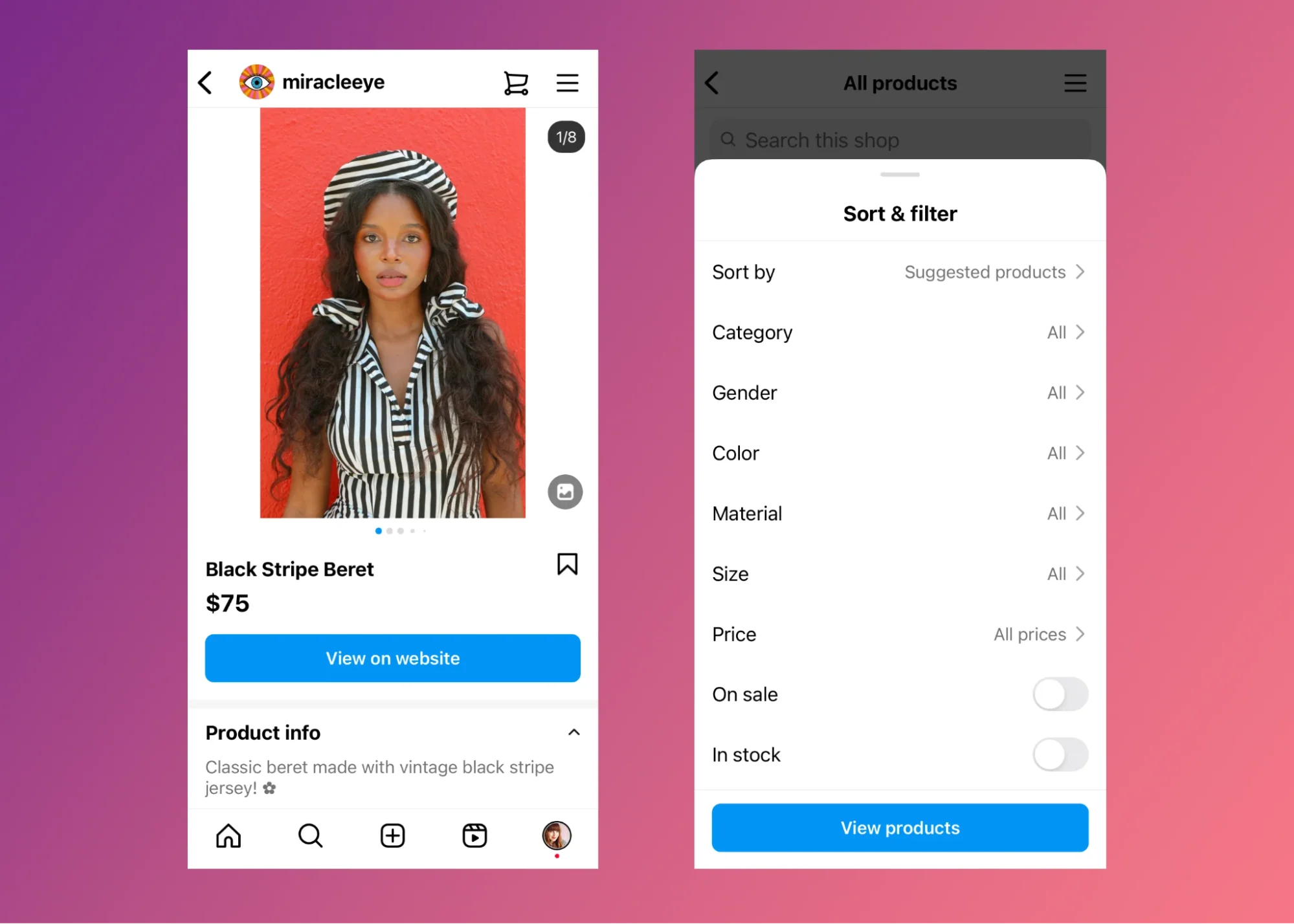
An Instagram Shop turns your profile into a direct sales channel and discovery engine. This allows you to show products to people who are already paying attention and making purchases.It works because Instagram combines visual storytelling, built-in shopping features, and ways to find new things. This lets you sell without a separate website; our clip creator tool can further.
1. Why is reaching your target audience critical?
Reach your target audience. Instagram profiles put products in front of built-in audiences and algorithmic discovery, not just followers. With Instagram projected to have 2 billion users in 2025, the platform’s scale explains why carving out a niche audience here actually moves the needle.In practice, that means targeted tags, saved collections, and Explore placements can expose a single product to thousands beyond your follower list. Visual ads or boosted shoppable posts convert attention into clicks faster than generic feed links. Additionally, using a clip creator tool can enhance your content, making it more engaging for your target audience.
How do visuals contribute to product fit?
Product fit is crucial because visuals can significantly boost conversion rates. Product photography and short videos are the lingua franca of Instagram. High-contrast hero shots, lifestyle reels, and quick demo clips fit seamlessly into feeds and stories, allowing brands to showcase their value without lengthy descriptions.This change happens when product mockups and staged photos no longer seem like just marketing tricks; they start to stand for discovery. Viewers can quickly see the texture, size, and uses, reducing hesitation and increasing intent.
2. What are the benefits of using Instagram as a revenue stream?
You can turn Instagram into another revenue stream. By building a catalog on Instagram, you can tag products right in your posts and reels. This keeps the checkout process inside the app for many sellers. This method makes it easier for people to buy: fewer redirects mean fewer abandoned carts and simpler sales tracking.For brands without a complete eCommerce setup, this means you can start selling within days using catalog uploads, product tagging, and shopping-enabled checkout.
3. Why do customers use Instagram for research and discovery?
Customers research and discover on the platform. This is not just browsing; it is active product research, and the platform makes this easier. Because 70% of shoppers look to Instagram for their next purchase, as reported by Sprout Social in 2025, being on Instagram means being part of the modern buyer’s journey. Across retail categories, the pattern is clear: shoppers use saved posts, product tags, and creator recommendations to narrow their choices. Therefore, your shoppable assets must respond to questions visually and socially, not just list specifications.
4. What practical advantages does Instagram offer?
Practical advantages of Instagram include visibility, speed, and conversion. When comparing channels, Instagram makes it quicker to go from discovering a product to buying it because product context, social proof, and checkout are all in one place. This setup reduces the need for a separate online store, enabling a faster feedback loop. Users can test different images, captions, or prices and see results within days rather than weeks.However, the downside is a loss of control: relying solely on in-platform commerce means adhering to the platform's rules and fee structures in exchange for quick access and easier operations.
How do teams manage product feeds efficiently?
Most teams start by managing product feeds manually. They export spreadsheets and match tags by hand, which seems straightforward. However, this method doesn’t work well as feeds drift, tags get mixed up, and new posts can’t be shopped while teams fix SKUs.Platforms like Crayo effectively centralize catalog exports, automate tag mapping, and push shoppable posts with consistent metadata. This process reduces the time to list products from days to hours while ensuring product data remains accurate as SKUs change.
Why is it essential to create a discovery asset?
When setting up a shop with clear product images, searchable titles, and thoughtful pricing, you are not just listing items. Instead, you are creating a discovery asset that captures intent, reduces friction, and turns social momentum into sales, all without needing to build a storefront first. This change highlights the difference between ad hoc selling and a repeatable revenue channel.
How can Instagram help you gauge product demand?
Building a separate site can be time-consuming, especially before you know whether a product interests your audience.Why not let visual discovery show demand first?This method helps you grow in places where the market shows interest.
What fundamental shift occurs when selling on Instagram?
This simple insight changes how we think about selling on Instagram. It only gets more interesting from here.
Related Reading
- Best AI Instagram Accounts
- Can You Sell On Instagram
- How Much Money Can You Make On Instagram
- What To Sell On Instagram
- Is It Legal To Sell On Instagram
- How To Promote A Book On Instagram
- How To Do Collaboration On Instagram
- How To Sell Directly On Instagram
- How To Get Clients On Instagram
- How To Get Approved For Instagram Shopping
- How To Sell Earrings On Instagram
How To Sell Things On Instagram Without A Website in 14 Ways

You can sell directly on Instagram without a website by turning content into shoppable moments. This means using short videos, engaging creators to spread your message, and leveraging built-in tags and ads to drive in-app purchases. You can also use chat and live formats for the final sale. These strategies make it easier to find products in a single session.This helps you quickly test and improve how well your products meet customer needs, while keeping the buying process simple. If you want to create engaging video content, our clip creator tool simplifies the process.
1. What is Crayo AI, and how does it help?
Crayo AI speeds up the creation of short content. It allows users to quickly create polished clips without a large production team. Users can simply write a prompt or outline, select a background video, and choose a narrator and music from free templates. They can export unlimited shorts with auto-generated captions, effects, and sound.This simple process cuts the time from idea to clip down from hours to minutes. This is very important because testing different creative options is the quickest way to determine what works. Try Crayo’s free clip creator tool by clicking the Try Now button on their homepage; you don't need an account.
2. Why partner with influencers and affiliates?
Partnering with influencers and affiliates can significantly improve your marketing strategy. Influencer partnerships remain preferable to ad spend when trust and focused reach are essential. For instance, during a six-week campaign for a DTC brand, micro-influencers with 10,000 to 100,000 followers generated the highest engagement per dollar spent. Many of these influencers accepted product exchanges or small fees rather than demanding high celebrity rates.
Using Instagram’s affiliate features allows creators to tag items directly, helping them earn commissions.This setup aligns ambassadors' interests, encouraging them to make real sales rather than just getting likes.
3. How can Instagram ads expand your reach?
Run Instagram ads to create targeted paid placements and reach more people beyond just organic viewers. Build campaigns in Ads Manager, use product feeds for carousels and videos, and test lookalike and custom audiences to drive successful strategies. Boosted posts can also help find partnership opportunities. Higher engagement attracts other businesses and creators who might suggest collaborations you might not find otherwise.
4. How to place product tags strategically?
Use product tags wisely—place product tags where people pay the most attention, not just at the end. Tag items in posts, Reels, Stories, and Lives to turn missed interest into chances for immediate purchases. Place tags naturally; match each tag to what the viewer is already looking at.Also, organize posts with multiple items so each tag sits neatly over its item. If you use a clip creator tool, consider how it can enhance your tagging strategy for better engagement.
5. What makes shoppable Reels effective?
Creating effective shoppable Reels means making content that teaches, compares, or solves problems, while adding product tags as the item appears on screen. Most Reels should be short and use text overlays for viewers who watch without sound.Clear, time-sensitive CTAs in the captions encourage purchases. It's essential to limit the number of tagged moments to avoid overwhelming viewers.
6. How can user-generated content boost your brand?
Curate user-generated content to enhance authenticity. Capture and reuse customer posts by inviting buyers to share clips or images. Then, feature the best ones in your feed and Stories, giving clear credit. This strategy not only lowers production costs but also boosts trust among potential buyers.They can see real people using your product, not just staged models.
7. What's the role of hashtags in product discovery?
Using the right hashtags is critical for finding products quickly. Combine general tags that most people use with specific tags that match buyers' preferences.General tags help more people discover your content, while specific tags help place it in smaller groups that are more likely to generate sales. It’s a good idea to adjust the tags you use based on the type of content and to test which combinations are most effective at placing your posts in the right micro-communities.
8. How can you effectively show products with video?
Use video to show off your products effectively. Short demonstrations are more effective than lengthy descriptions. Show a clear before and after, or make a focused 6-to-10-second loop that shows one specific benefit.Make sure the design is mobile-friendly, with strong visuals and readable captions. Also, pin video highlights underneath your bio so new visitors can see product stories right away.
9. How do Stories create urgency for sales?
Use Instagram Stories to boost sales. Stories create a sense of urgency and intimacy because they seem temporary. You can use link or product stickers for immediate purchases, add polls to gauge interest, and include countdowns for limited-time offers to encourage viewers to act quickly. For smaller accounts, Stories usually reach more of their current followers than regular feed posts.
10. Why is engagement critical for sellers?
Engaging with your audience is very important. Responding to comments and direct messages promptly and personally can help foster a sense of connection. Highlight top contributors or include them in broadcasts to show appreciation.Use Q&A sessions and polls to collect customer feedback and involve them in the product's development. This type of reciprocity effectively turns followers into repeat buyers.
11. What are live shopping events and their benefits?
Host live shopping events by scheduling streams around product launches or limited drops. Inviting a creator or staff member to showcase products in real time makes the experience more engaging. Live commerce creates social pressure to buy, enabling quick responses to questions. Using pinned product links during the stream makes checkout just one or two taps away.
12. How to optimize your Instagram business profile?
To improve your Instagram business profile, use a transparent logo and a short bio that explains what you sell and why it matters. Include a link tool that takes visitors to your best-selling collections or a payment page.Make sure your highlight covers are easy to read and neat, so people can quickly see product categories and social proof. Additionally, consider using a clip creator tool to enhance your content and engage your audience more effectively.
13. What role does a chatbot play in sales?
Set up an Instagram chatbot. This will help automate common purchase questions in DMs so you never miss a hot lead. Ensure the chatbot can suggest products, remember sizes and preferences, and connect easily with a human if needed. Teams that use automated DM routing can significantly reduce response time and keep opportunities alive that might otherwise fade.
14. How does a broadcast channel enhance customer communication?
Start an Instagram broadcast channel to connect directly with your most interested customers. A broadcast channel lets businesses share special offers, flash coupons, and quick surveys.Members receive a notification when you post, making this a great way to send time-sensitive deals without fighting the algorithm.
15. What issues arise from manual clip creation?
Status quo disruption occurs when manual clip creation does not scale well. Many teams still create short clips the old way, which pulls designers into long editing queues while managing assets in different apps.This method may seem manageable, but it becomes problematic as the volume of creative work increases. Then, bottlenecks in output stop effective testing of many hooks and audiences.
Platforms like Crayo bring together prompt-to-export workflows with template libraries, auto captions, and asset matching.This reduces time from days to minutes, allowing teams to test creative ideas while maintaining consistent branding quickly.
What insights have been gained from micro-influencer outreach?
A practical insight into creators and costs is clear from a focus on micro-influencer outreach across three product drops over 45 days. Smaller creators had higher engagement rates at a reasonable price, with many accepting products instead of full payment.This method offers a scalable strategy for influencer spending: start with barter and micro-deals to validate messaging, then reinvest profits into larger partnerships that build on proven creatives.
Why is testing product-market fit essential?
Context on scale and why reach matters: With over 1 billion people using Instagram every month and 90% of Instagram users following at least one business, the platform is a place where attention and intent come together.This makes it easier to test product-market fit without first building a complete e-commerce site.
How can an analogy help in understanding Instagram's role?
A simple analogy can help keep execution focused. Think of Instagram as a busy market street instead of just one shop. Your content serves as the window display, while creators are the street vendors, encouraging customers to step inside. Tools such as automated video creators and chatbots work like cash wraps, allowing you to complete the sale before the passerby moves on.
What is the best strategy for sellers?
What most sellers miss is that they often focus on one tactic, like ads or a single influencer, while treating the rest as optional.A better approach is to use a layered funnel: start with automated short videos for discovery, use creator credibility to build trust, utilize native tags and chat to make it easier for people, and use live or broadcast pushes to create urgency.Each layer has a different job, and if one doesn't work, there are still other options to try.
What does the scaling problem entail?
That solution sounds good until one encounters the scaling problem that is often overlooked.
10 Tips to Sell on Instagram

Selling on Instagram means making buying feel quick, safe, and social. Let customers try the product, build trust, and then tap to buy. Use automated messages to ensure nothing is missed.Focus your efforts on experiential hooks, authentic voices, and a smooth checkout process. Lastly, identify which creative elements drive sales so you can grow what works.
1. What is augmented reality for virtual try-ons?
Embrace augmented reality for virtual try-ons. Treat AR as a practical purchase tool, not a gimmick. Build simple Instagram filters that show color, fit, or scale, allowing buyers to see the product on themselves in real time. This reduces uncertainty at the point of intent.Think of AR as a mirror in the feed, a tiny try-on booth people can use between posts. Design the experience to answer the two questions every buyer has: will this fit, and will this look like me? When brands provide that clarity, hesitation decreases, and return inquiries also drop, especially for accessories and cosmetics. Additionally, our clip creator tool can enhance customer engagement with the AR experience.
2. How to collaborate with influencers effectively?
Collaborate with influencers in real ambassador roles. Go beyond one-time sponsored posts and build long-lasting relationships in which creators demonstrate how they use the product over time. Set up agreements based on how well the content performs and how long it stays relevant; for instance, a short series of tutorials, day-in-the-life clips, and pinned posts that can help future buyers.Testing ambassador-style programs for several product launches showed that consistent content made decision-making quicker. Followers preferred seeing the product used in real-world situations rather than just in a one-time paid advertisement. Utilizing our clip creator tool can make it easier to produce engaging content that resonates with your audience.
3. What are shoppable livestreams and how do they work?
Implement shoppable livestreams that convert in real time. Make Lives your conversion engine, not just a demo channel. Host timed product reveals, bundle drops, and exclusive Live-only discounts—pin product cards so viewers can tap and complete checkout during the stream.In 2025, Sprout Social reported that 130 million Instagram users tap on shopping posts every month. This underscores the importance of creating clickable, time-limited Live moments to capture active shoppers when they are ready to buy.
4. How to personalize shopping recommendations?
Personalize shopping recommendations with behavioral cues. Make your messaging and direct messages more personal by suggesting items based on viewed posts, saved collections, and prior purchases, rather than a general "you might like" list. Use different follow-ups for different groups, such as cart abandoners and catalog browsers, and assess how much conversion improves by group.The platform’s built-in signals enable you to provide the proper follow-up without a complex data system.
5. How to create urgency in sales?
Use limited-time offers and flash sales to create a sense of urgency. Run short, well-defined campaigns with visible countdowns and a single, precise benefit, such as free shipping or a bundled gift.
Make inventory and eligibility obvious to ensure that the fear of missing out (FOMO) feels fair rather than manipulative. The psychology is simple: a short, transparent deadline encourages those who are already interested to act. Additionally, it provides a clear test to measure responsiveness across audience segments and creative approaches, where our clip creator tool can be instrumental in crafting targeted campaigns.
6. Why prioritize social responsibility and sustainability?
Prioritize social responsibility and sustainability in your product story. Start with one explicit action instead of vague statements: for example, show a line made with recycled materials, share stories about where your materials come from, or mention a donation for each purchase. Use Reels and Guides to share small stories about your processes, materials, and impact.Shoppers usually support tangible commitments with loyalty. This approach is not just for show; it also helps customers decide what to buy. Customers will ignore brands that can't explain why they are pursuing sustainability.
7. How to use user-generated content as social proof?
Integrate user-generated content as ongoing social proof. Encourage customers to create short clips using a branded hashtag, and reward the best submissions with discounts or features. When Crayo converted customer clips into pin-ready Reels, those posts received more comments and shares than studio-made videos.Viewers usually trust their peers more than staged ads. Make it easy for buyers to share content, and then turn successful UGC into evergreen, shoppable assets.
8. How to gamify the shopping experience?
Gamify shopping with interactive content. Adding quizzes, polls, and choice-driven stories can help guide users to a recommended product. Putting a product sticker at the payoff moment makes the experience even better.Gamified flows reduce decision fatigue by turning browsing into a small, fun task with a clear outcome. Adding light incentives, such as early access or small bundles, can effectively move players to purchase.
9. How to optimize product tags and hashtags?
Optimize product tags and hashtags for intent-based discovery. Use product tags when your visual shows its value. Combine tags with a mix of broad-reach and narrow-intent hashtags. This helps ensure your content reaches both casual viewers and buyers conducting research.Track which tag locations in Reels or posts drive taps, and optimize their placement. Even a slight change in timing or position can significantly affect conversion probability.
10. How to automate customer support?
Automate customer support inside DMs while keeping a human hand ready. Map common pre-purchase questions into Quick Replies and chatbot flows to ensure instant responses. Then route complex or high-value leads to a human agent.This mixed approach keeps conversion momentum without losing the empathy buyers need for sizing, returns, or fit questions. By automating routine inquiries, your team can focus on the detailed conversations that close larger orders.
What is the challenge in scaling short-form creative?
Most teams handle short-form creative as if it were a production studio, because this approach seems manageable and helps maintain brand consistency. However, this standard approach fails as work volume increases: review queues grow, creative options get stuck, and the opportunity to test different hooks each week is lost.Tools like the clip creator tool make workflows easier, automatically generate captions and effects, and speed up creative processes from days to minutes. This helps teams scale their experiments without hiring more people.
What workflow tip can reduce guesswork?
A practical workflow tip to reduce guesswork is to batch one hypothesis per week and test it across three formats: a quick demo Reels clip, a creator-run testimonial, and a UGC compilation.Track taps, saves, and direct purchase events separately.
The pattern is simple: when the same creative wins across formats, scale distribution. If it succeeds in only a single format, iterate on that format until it generalizes across formats.
Why optimize research moments on Instagram?
In 2025, research shows that 81% of people use Instagram to research products and services, according to Sprout Social. This fact makes it very important to improve the research moments on your profile and shoppable posts if you want Instagram to act as your main storefront.
How can Crayo AI help with video creation?
Crayo AI is the fastest way to create unlimited short videos. It automatically generates captions, effects, backgrounds, and music. This helps users go from an outline to viral clips in minutes.Try Crayo's free clip creator tool today! Just click the Try Now button on our homepage to get started, and you don't need an account.
What discovery might enhance customer loyalty?
This approach works well until companies discover the key optimization that changes casual browsers into repeat buyers.
Related Reading
- How To Sell Merch On Instagram
- How To Sell Jewelry On Instagram
- How To Sell Products On Instagram
- What Are Instagram Badges
- Does Instagram Pay Creators
- What Is Exclusive Content On Instagram
- Affiliate Programs For Instagram
- Affiliate Marketing On Instagram For Beginners
- How Does Instagram Live Work
- How To Make Money As A Photographer On Instagram
- Instagram Dropshipping
How to Optimize an Instagram Shop in 10 Steps

Optimizing an Instagram Shop means making sure that every step leads from discovery to making a choice, and from choosing to completing the purchase. Below is a practical, numbered playbook that refines each section with actions you can implement this week. Our clip creator tool can streamline the process by creating engaging content that drives sales.
1. How should you optimize your profile bio and link?
Optimize your profile bio and link like a conversion funnel. Make the bio a one-line value statement that clearly explains who you help and what benefits they get. Convert the single clickable URL into a campaign hub using a link tool to direct visitors to a specific product collection or checkout. Label that URL with UTM parameters for better tracking.Also, pin product-focused Highlights that answer the three most common questions people have before buying, doing so in just 10 seconds.
2. How can you treat your grid as a product catalog?
Treat your grid as a product catalog with consistent anchors. Instead of just matching filters, create three visual pillars: hero shots, use-in-context images, and social proof. Rotate these elements in a way that new visitors can understand your offer in just one scroll.Furthermore, standardize the aspect ratio, color anchor, and typography across the design template. Batch-export a week's worth of posts to ensure the grid remains cohesive even when the team is busy.
3. How should you use carousels as micro-conversion funnels?
Use carousels as micro-conversion funnels. Structure each carousel to guide users toward a small decision: slide one should hook viewers with a compelling benefit. Slides two through four present key features and scale, while slide five showcases social proof. The final slide includes a direct CTA with a product tag.Adding short captions to each image caters to sound-off viewers. It's also beneficial to test the placement of the product tag by trying it on slide two versus slide five to determine which location prompts the most taps.
4. What can you do to harden your product data and tag placement?
Harden your product data and tag placement to reduce missed purchases. Ensure product metadata is complete and in sync so tags always link to an active SKU and the correct price. Conduct a weekly review of your catalog to identify out-of-stock items and image quality issues, as even small mistakes can cause problems.Treat tag placement as part of user experience (UX) design by moving overlays away from faces and closer to the main area of focus, making tapping feel more natural.
5. How should you optimize hashtags for buyer intent?
Optimize hashtags for buyer intent, not vanity reach. Run paired tag sets that include three high-reach tags, four niche intent tags, and one branded tag. It's helpful to save multiple tag sets and rotate them by category—measure which sets drive profile visits and product taps, rather than just counting likes.Finally, retire tags that only increase vanity metrics. For your content needs, consider using our clip creator tool to enhance your posts effectively.
6. How can you scale user-generated content effectively?
Scale user-generated content with rights-first workflows. Create a simple DM form or hashtag submission that captures permission and makes it easy to reuse content. Offering small rewards, such as discount codes or in-Story features, encourages people to participate.Also, index each approved clip with metadata (product, size, angle, date) so the creative and ads teams can reuse UGC without legal risk or excessive time spent searching through DMs.
7. How should you design Stories for qualification?
Design Stories as qualification paths, not just promotions. Layer quick quizzes, polls, and a single product sticker within a 3–5 story sequence to move viewers from curiosity to a click.Use reply prompts to capture contact details for high-intent viewers. Convert those replies into an automated DM flow that offers sizing help or checkout links.
8. How can short and long videos work together?
Short and long videos can work effectively together when given clear roles. Use short reels to create hooks and build awareness. On the other hand, longer IGTV or guide videos can be used as lasting resources for detailed demos, tutorials, and comparison content.Make sure to prioritize captions and easy-to-read on-screen text. Also, record natural-sounding voice-overs that explain the benefits within the first 1.5 seconds.
9. How should you run ads with patience?
Run ads with patience and make sure tracking is correct. This is a pattern problem: many teams discontinue test campaigns within a few days, preventing them from achieving statistical significance. Tracking can also fail when the Facebook pixel is set up incorrectly. It's essential to test groups for at least 14 days, review pixel and server-side events, and avoid relying on a single automated targeting option.Instead, add custom audiences, exclusions, and creative variations.
10. How should you structure influencer deals?
Structure influencer deals with measurable outcomes and reusable assets. Change from single posts to short ambassador agreements that include performance clauses.For example, consider a series of three posts, an evergreen Reel license, and an affiliate link. Ask creators to submit raw cuts for cross-channel reuse, and offer a mix of upfront payments and commissions to ensure incentives align with sales rather than impressions.
What pitfall should you avoid in copy?
Most teams manage creative work and approvals by sharing files informally because it feels easy and doesn't require new tools. This method may be suitable for very small-scale work. However, as the workload increases, this familiar approach begins to break down. Feedback can get lost in lengthy discussions, brand rules might weaken, and creative work piles up, making it hard to keep testing the ideas that truly work.Tools like Crayo help organize creative production with templates, auto-captioning, and ready-to-use exports. This shortens the process from days to hours, helping keep the brand consistent. For instance, utilizing our clip creator tool can streamline video editing and enhance your creative workflow.
Why is product detail important?
A practical mistake to avoid is having messy product detail descriptions. Product pages that answer specific buyer questions help reduce hesitation. Clear descriptions can also drive more clicks, as over 50% of users are more likely to purchase from an Instagram Shop with detailed product descriptions. — Stack Influence. Treat the product description like a short FAQ, and test different versions covering size, materials, and usage. Using our clip creator tool can help streamline this process.
What should you optimize together for the best results?
Finally, optimize your catalog metadata and content cadence together, because improvements build on each other. Better listings, along with feed reminders, result in a noticeable increase in sales.For instance, Instagram Shops have seen a 30% increase in sales after optimizing their product listings.: Stack Influence.
What is the biggest obstacle to speed?
Speed is where most shops get stuck. The solution to this problem is more surprising than it looks.
Create Viral Shorts In Seconds With Crayo
Selling on Instagram without a website can be tough. Often, creators produce too few Reels and short videos to determine what really works for sales.Crayo acts as a small production assistant, allowing users to try more ideas while keeping their discovery and shopping experiences clear on their profile.
By giving it a quick try, users can see whether their Reels, shoppable posts, and DMs drive more direct sales. This way, they can keep only the formats that attract repeat buyers. Check out the clip creator tool!
Related Reading
- How To Make Money As A Content Creator On Instagram
- How To Do Affiliate Marketing On Instagram
- How To Sell Art On Instagram
- How To Earn Money From Instagram By Posting
- How To Drive Traffic From Instagram
- How To Sell Digital Products On Instagram
- How To Sell Clothes On Instagram
- How To Set Up Instagram Shop
- Best Instagram Accounts To Follow