


Imagine earning $1,000 in two weeks without ever showing your face on camera. Sounds too good to be true? It is not. Anonymous video content is one of the fastest-growing spaces on the internet right now, and the top faceless YouTube niches prove that you do not need a personal brand to build real income online. This article breaks down 25 faceless content ideas that can help you get there, giving you a clear starting point no matter your skill level or budget.
Getting those ideas off the ground is where most creators get stuck, and that is exactly where Crayo's clip creator tool comes in. It takes the heavy lifting out of video production, helping you turn raw concepts into polished, shareable content fast. Whether you are exploring AI-generated videos, screen-recorded tutorials, or narrated listicles, Crayo helps you move from idea to published video without wasting time or money.
Table of Contents
- Why Most Creators Struggle to Find Profitable Faceless Content Ideas
- The Hidden Cost of Creating Faceless Content Without a Monetization Strategy
- 25 Faceless Content Ideas to Help You Earn $1,000
- The Workflow Creators Use to Turn Content Ideas Into Income
- Turn Faceless Content Ideas Into Revenue Faster With Crayo
Summary
- Faceless content channels succeed not because of production quality or posting frequency, but because of niche specificity. Creators who define a precise audience with a clear problem attract viewers who are already motivated to act, while broad, interest-based channels accumulate views without converting them. Niche selection functions as a monetization filter, not a creative limitation.
- Ad revenue alone is a structurally weak foundation for income from faceless content. Channels relying solely on AdSense earn an average RPM of $2 to $5 in low-value niches, which means they require 2 to 5 million monthly views just to reach $10,000. By contrast, channels that combine AdSense with affiliate marketing and sponsorships earn 3 to 5 times more per view because the content and revenue model are aligned from the start.
- Over 500 hours of video are uploaded to YouTube every minute, which means generic content gets buried regardless of production quality. Creators who chase trending formats and publish without a defined audience end up with scattered results because each pivot resets the trust they had started to build. Compounding works in reverse when the inputs keep changing.
- Content format selection matters as much as topic selection. Different formats (product comparisons, FAQ videos, step-by-step frameworks, and checklist content) each target a different moment in the viewer's decision-making process. Matching the format to both the audience's current problem and the monetization strategy is what determines whether a content library earns or simply accumulates.
- Creators who diversify across multiple income streams earn up to 3 times more than those relying on a single platform, according to Zencastr. The gap exists because diversified creators treat every piece of content as a bridge to a single clear action, whether a link, a product, or a service offer. Without that connective structure, views accumulate, and revenue does not follow.
The execution gap between an idea and a published video is where most creator momentum dies, and Crayo's clip creator tool addresses this by handling ideation, hook generation, AI voiceovers, subtitles, and short-form formatting in one place, reducing the time from a profitable content idea to a published video from hours to minutes.
Why Most Creators Struggle to Find Profitable Faceless Content Ideas

Profitable faceless content ideas are not rare. The real problem is that most creators treat content as the product when content is actually the vehicle. The moment you separate those two things, everything changes about how you plan, publish, and earn. According to the Frameloop AI Blog's Faceless YouTube Statistics 2026, 90% of YouTube channels never reach 1,000 subscribers. That number is not a talent problem. It reflects what happens when creators post without a system connecting their content to a specific audience, a specific problem, and a specific way to earn. Views accumulate. Revenue does not follow. The gap between the two is strategy, not effort.
Choose a Buyer-Focused Niche
The failure point is usually this: creators pick ideas based on what feels interesting rather than on what solves a problem for someone willing to act on it. A faceless video about top AI tools sounds smart until you realize it attracts curious browsers rather than buyers. Compare that to a faceless channel built around the best AI tools for freelance writers for under $20 a month, and suddenly the audience is self-selecting, the affiliate links are contextually relevant, and every video compounds the last. Niche specificity is not a creative constraint. It is a monetization accelerator.
Stop Chasing Viral Trends
Most creators handle the idea-generation problem by chasing what just went viral. They watch a trending video, reverse-engineer the format, and publish something similar two weeks later. By then, the algorithm has already moved on, and the creator is left with content that fits no clear audience and supports no clear revenue path. Over 500 hours of video are uploaded to YouTube every minute, which means generic content, no matter how well produced, gets buried fast. Niche selection is not optional. It is the filter that determines whether your content finds the right people or disappears into the feed.
Scale Content Production
When creators do commit to a niche, the next bottleneck is production speed. Building a content system around a specific audience requires consistent output, and manually editing, formatting, and captioning every video slows that momentum to a crawl. Crayo's clip creator tool addresses that friction directly by handling the voiceovers, subtitles, and formatting, so creators can focus on the decisions that actually drive growth:
- Which topics to cover
- Which problems to solve
- Which monetization paths to build toward
Build a Monetization System
The critical difference between creators who grow and those who stall is not creativity or camera confidence. It is whether their content ideas are connected to a system with a beginning (audience), a middle (content that solves a problem), and an end (a clear path to revenue). Without that structure, even the best ideas yield inconsistent results and leave creators exhausted. But knowing the structure exists is only half the equation, and what most creators discover next is the part nobody warns them about.
Related Reading
- Top Faceless YouTube Niches
- Faceless Digital Marketing
- Top Faceless YouTube Niches
- What is Voice Dubbing
- How to Do Affiliate Marketing Without Showing Your Face
- Does YouTube Monetize Ai Videos
- Turn Blog Post Into Video
- How To Create a Faceless YouTube Channel
- How To Make Faceless Content Using Ai
- How to Voice Over a Video
The Hidden Cost of Creating Faceless Content Without a Monetization Strategy
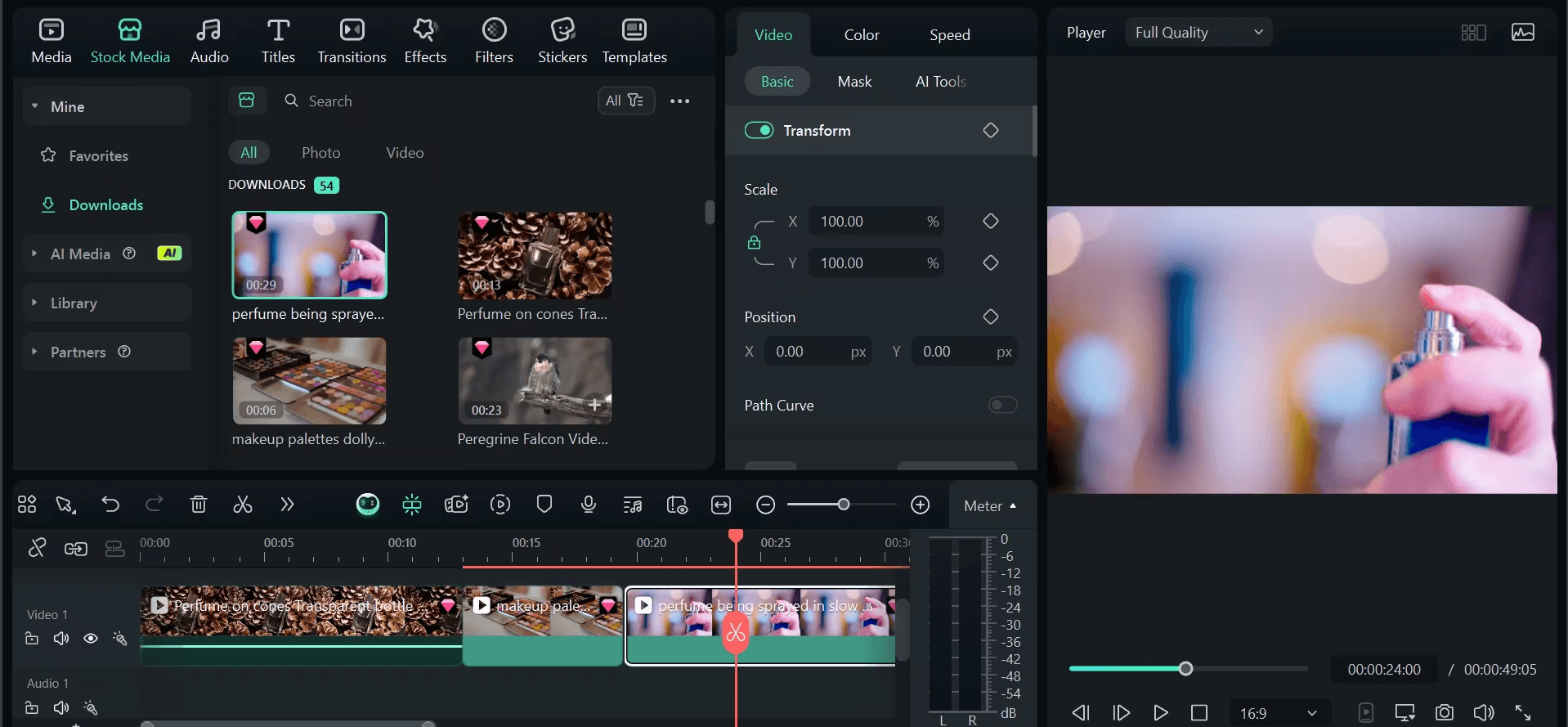
Publishing more videos without a monetization plan is not a growth strategy. It is a content treadmill. Creators who treat output as the goal often end up with growing view counts and flat bank accounts, because attention without direction does not convert.
The View Count Trap
The failure point is usually a misaligned belief about how revenue actually works on video platforms. According to Unkoa Marketing's 2026 analysis of faceless YouTube channel earnings, creators who rely solely on AdSense earn an average RPM of $2 to $5 in low-value niches, meaning a channel needs 2 to 5 million views per month just to reach $10,000. That is not a monetization strategy. That is a lottery ticket with extra steps. A creator chasing viral short-form content in entertainment or reaction niches can spend two years building an audience and still not clear rent, because the content was never designed to move anyone toward a purchase.
Monetization Starts With Alignment
The same report found that channels combining AdSense with affiliate marketing and sponsorships can earn 3 to 5 times more per view than ad-only channels. The difference is not production quality or posting frequency. It is whether the content was built around a revenue mechanism from the start. A faceless channel covering personal finance tools, software reviews, or niche product comparisons earns from every view because the content and monetization are aligned.
Create for Revenue First
Most creators handle this by posting first and monetizing later. The familiar approach is to build an audience, then figure out what to sell them. That logic feels reasonable until you realize the audience you built around trending audio clips or viral reaction content has no reason to buy anything specific. Crayo addresses a different part of this problem: they remove the production bottleneck entirely, handling voiceovers, subtitles, and formatting so creators can spend their limited time on the decisions that actually drive income:
- Which niche to serve
- Which product to recommend
- Which content format earns clicks on affiliate links
Why Content Without a Business Goal Compounds the Wrong Way
The deeper cost of unstructured content creation is directional drift. Without a clear monetization objective, creators make small decisions every week that feel harmless in isolation but add up to a channel with no clear identity.
- They follow a trending topic here
- Copy a competitor format there
- Switch niches after a slow month
Each pivot resets the audience's trust that they had started to build. Compounding works in reverse when the inputs keep changing.
Align Content With Revenue
The creators who break out of inconsistent earnings are not the ones who come up with a better idea. They are the ones who stop treating content strategy and monetization strategy as two separate conversations. When the content idea, the audience problem, and the revenue path are designed together from the beginning, every video published does three jobs at once: it attracts the right viewer, solves a specific problem, and creates a natural reason to click, subscribe, or buy. What nobody warns you about is that the right idea, in the wrong niche, aimed at the wrong audience, earns almost nothing, and the numbers that reveal this only become visible after months of work.
25 Faceless Content Ideas to Help You Earn $1,000

Creators who earn consistently from faceless content are not seeking a single breakthrough idea. They build a library of content formats tied to specific audience problems and clear revenue paths, then repeat that system until the income compounds. The 25 ideas below are organized around that logic. Each one is a content format with a defined purpose, not a random topic suggestion.
1. AI Tool Tutorials
People searching for AI writing tools, image generators, or productivity apps are not browsing casually. They are looking for a reason to buy or a reason to avoid buying. That intent makes AI tool tutorials one of the strongest formats for affiliate revenue because viewers arrive already motivated. Your job is to demonstrate the tool clearly and let the recommendation feel earned.
2. Product Comparison Videos
The failure point in most faceless channels is attracting viewers who will never spend money. Comparison content solves this by targeting people mid-decision, someone already weighing two software options or two platforms, not someone passively watching for entertainment. That audience converts at a higher rate because the purchase decision is already in motion.
3. Educational Content
Trust is slow to build and fast to lose. Educational content, covering business concepts, finance, marketing, or technology, builds trust incrementally across every video in your library. When a viewer has watched 10 of your videos and learned something real from each, your product recommendation does not feel like an ad. It feels like advice from someone who has already helped them.
4. Problem-and-Solution Videos
A common pattern surfaces across creators who struggle to monetize: their content is interesting but not useful. Problem-and-solution videos close that gap by answering the specific questions people type into search bars at 11 pm when they are stuck. Answer the question fully, then introduce the tool or resource that makes the solution easier to implement. That sequence feels natural because it is.
5. List-Based Content
List formats work because they set a clear expectation before the video starts. The viewer knows they will get 10 things, and that structure keeps them watching to see if the last item is worth the wait. Higher watch time signals to the algorithm that your content holds attention, which increases distribution. More distribution means more of the right viewers finding your channel.
Most creators handle the production side of list videos manually, scripting each item, recording voiceovers separately, and editing subtitles frame by frame. That process works, but it consumes the time you need to research better ideas and refine your monetization approach. A clip creator tool like Crayo handles the formatting layer automatically, so the effort shifts from production to strategy.
6. Industry News Updates
Timely content attracts a different kind of viewer than evergreen content does. Someone watching an AI news update or a tech launch breakdown is building a habit of returning to your channel for information, not just searching for a one-time answer. That repeated behavior is what steadily grows subscriber counts rather than causing unpredictable spikes.
7. Beginner Guides
The beginner audience is consistently underestimated. New creators assume that beginner content is low-value because it covers basic territory. The opposite is true. Beginners search constantly, they follow recommendations more readily, and they are more likely to subscribe because they want a guide they can trust as they learn. Beginner guides generate search-driven traffic for months after publishing.
8. Myth vs. Fact Videos
Curiosity is a stronger hook than information. When a video title promises to correct a widely held misconception, the viewer watches to find out if they were wrong. That emotional investment drives up watch time and down drop-off rates. Higher watch time is one of the clearest signals the algorithm uses to push content to new audiences.
9. Before-and-After Transformations
Transformation content works because it removes abstraction. Instead of explaining what a tool or strategy can do, you show what it actually did. A before-and-after video comparing a raw workflow to an optimized one, or a basic design to a polished one, communicates value faster than any description can. Viewers can see the gap and immediately understand why it matters.
10. Product Reviews
According to the Imagine.Art Blog, faceless YouTube channels can earn over $1,000 per month through ad revenue and sponsorships, but the channels that reach that number fastest are usually the ones publishing product reviews. Review content reaches viewers who are one step away from a purchase, making affiliate commissions more predictable than for channels relying entirely on ad CPM.
11. Frequently Asked Questions
FAQ videos are underrated because they look simple. A single FAQ video answering three common beginner questions in a specific niche can generate search traffic for years without any updates. The key is choosing questions with consistent search volume rather than questions that trend briefly and disappear. Evergreen search demand is the closest thing to a guaranteed audience.
12. Tips and Tricks
The shareable content category is worth building deliberately. Tips and tricks videos, especially ones covering shortcuts, hidden features, or time-saving workflows, get saved and shared because viewers want to return to them later. A saved video is a stronger signal than a like, and a shared video reaches an audience you did not have to earn through the algorithm.
13. Case Studies
Breaking down a successful business, a marketing campaign, or a product launch gives your content an authority that opinion-based videos cannot match. You are not speculating about what works. You are showing what already worked, with evidence. That specificity is what separates educational content that builds trust from educational content that simply fills time.
14. Mistakes to Avoid
The failure mode this format targets is one that most creators recognize immediately. People search for "mistakes to avoid" because they are about to start something, and they do not want to waste effort going in the wrong direction. That search intent means your viewer is motivated, attentive, and actively looking for guidance they can act on right away.
15. Resource Roundups
Roundup content creates natural affiliate opportunities without the pressure of a single product review. When you recommend fifteen resources across a video, some viewers will click one link, others will click five. The diversification of recommendations mirrors the diversification of your revenue, meaning one weak affiliate relationship does not sink the entire video's earning potential.
16. Productivity Hacks
Professionals and creators searching for automation tips or time-saving workflows are a high-value audience. They are already invested in improving their output, which means they are predisposed to spending money on tools that deliver results. Productivity content consistently attracts that audience, and the tool recommendations embedded in each video align naturally with what those viewers are already looking to buy.
17. Tool Alternatives
Comparison content targeting people searching for alternatives to popular software sits at the intersection of high search volume and high purchase intent. Someone searching for "free alternative to paid tool" or "tool replacement" has already decided to switch. Your video just needs to help them choose where to land, and a well-placed affiliate link does the rest.
18. Templates and Frameworks
High-value educational content does not just explain a concept. It gives the viewer something they can use immediately. Templates and frameworks, whether for content planning, business systems, or marketing processes, deliver that immediate utility. Viewers who download or save your framework remember where they got it, which strengthens the relationship and increases the likelihood they will act on future recommendations.
19. Trend Predictions
Thought leadership content attracts a different kind of subscriber than tutorial content does. Someone who watches your trend predictions is not just looking for instructions. They are looking for perspective. That relationship positions you as a source of insight rather than just information, which creates stronger loyalty and higher engagement over time.
20. Success Stories
Creator journeys and business wins work as content because they are both inspiring and instructional. A well-structured success story answers two questions at once: what happened, and how. That dual value keeps viewers engaged longer and gives you natural points to introduce the tools, platforms, or strategies that made the outcome possible.
21. Behind-the-Scenes Workflows
Showing your content creation process, your automation systems, or your editing workflow builds a different kind of trust than tutorial content does. It signals that you are a practitioner, not just a commentator. That practitioner credibility makes every recommendation you give feel more grounded because the viewer has already seen you doing the work.
22. Tool Tutorials
The evergreen value of tool tutorials compounds over time in a way that trend-based content cannot. A tutorial explaining how to set up a specific software integration or automate a workflow will attract the same search traffic in 18 months as it did in week 1, as long as the tool remains relevant. That compounding reach is what separates a content library from a content archive.
23. Checklists
Checklist content earns savings at a higher rate than almost any other format. A launch checklist, a marketing checklist, or a business setup checklist is the kind of content viewers bookmark and return to repeatedly. Each return visit reinforces your channel as a practical resource, not just an entertainment option, which is exactly the positioning that supports monetization.
24. Challenge Videos
According to Beatoven.ai, top faceless YouTube channels generate over $10,000 per month, and a consistent pattern among those channels is content that creates a reason to come back. Challenge videos, whether a 30-day productivity experiment or an AI tool test, build that return habit by giving viewers a series to follow rather than a single video to watch once.
25. Step-by-Step Frameworks
The most durable content ideas are the ones that simplify something people find genuinely difficult. Step-by-step frameworks do this by breaking complex workflows, business systems, or creator strategies into a sequence anyone can follow. The viewer leaves with a clear path forward, and the creator earns the kind of trust that makes future recommendations feel like a natural next step rather than a sales pitch.
What Separates a Content Library From a Content Lottery
The 25 formats above are not interchangeable. Each one targets a different moment in the viewer's decision-making process, from the beginner searching for their first tutorial to the professional evaluating a software switch. Choosing formats that align with both your audience's current problem and your monetization strategy determines whether your library earns or simply accumulates. A common pattern among creators who plateau early is treating content ideas as independent units rather than as a coordinated system.
- One comparison video
- One beginner's guide
- One FAQ video
Each published without a connecting thread produces scattered results. The same formats, organized around a single niche and a single revenue path, produce compounding ones. The difference between chasing views and building income is not the volume of content you publish. It is whether each piece of content you publish is doing a job, attracting the right viewer, solving a specific problem, and creating a natural reason to act. That clarity is what turns a channel into a business.
Related Reading
- How To Make Money On Instagram Without Showing Your Face
- How To Add AI Voice To Tiktok
- How To Make Money On Tiktok Without Showing Your Face
- How To Make Character AI Voice
- Faceless YouTube Channel Content Ideas
The Workflow Creators Use to Turn Content Ideas Into Income

Separating the research phase from the creation phase is the move most creators never make. They treat content production as one continuous blur, and that blur is exactly where momentum dies. The workflow below breaks that cycle by giving each stage a single job.
Choose One Idea With a Built-In Revenue Path
Start with one content idea that connects a specific audience to a specific problem and one monetization method.
- Not three ideas.
- Not a broad niche.
- One.
A channel built around "AI productivity tools for small business owners" with a clear affiliate program attached has a revenue path from day one. A channel built around "interesting tech stuff" does not. That specificity is not a constraint; it is the engine.
Build the Library Before You Publish
Prepare ten related content ideas:
- Five hooks
- Five outlines
- One publishing schedule before you record a single video
This is the step most creators skip because it feels like a delay. It is actually the opposite. A creator with ten planned pieces can publish consistently for weeks without stopping to search for the next idea. Consistency compounds. Interruption resets the clock. Most creators handle scripting, recording, editing, and thumbnail design all at once, and the overlap slows everything down. When the production process itself becomes the bottleneck, consistency suffers before the content even reaches an audience. Crayo removes that bottleneck by handling the hardest formatting work, including voiceovers, subtitles, and video assembly, so creators can stay focused on ideas and strategy rather than getting buried in post-production.
Connect Every Piece of Content to One Next Step
According to the Zencastr Blog, creators who diversify across multiple income streams earn up to 3x as much as those relying on a single platform. That gap exists because diversified creators treat every piece of content as a bridge, not a destination. Each video should guide viewers toward one clear action:
- A link
- A product
- A newsletter
- A service offer
Without that bridge, views accumulate, and revenue does not.
Review What Works, Then Repeat it Deliberately
After publishing, track views, watch time, clicks, and conversions together, not separately. If AI tool tutorials consistently generate affiliate clicks and motivational content generates saves but no revenue action, the data is telling you something directly. Produce more of what converts. Craftify AI Academy reports that 46% of creators use multiple revenue streams, but the ones who scale are the ones who identify which content type feeds which stream and double down on that pattern rather than spreading effort evenly across everything.
Review, Repeat, and Scale
The failure point is almost never the idea itself. It is the gap between publishing and reviewing, where creators move on to the next piece without asking whether the last one worked. Growth comes from repeating what succeeded, not from constantly searching for something new. And the real question is not whether this workflow will work for you; it is whether you are set up to execute it fast enough to matter.
Turn Faceless Content Ideas Into Revenue Faster With Crayo
The execution gap is real. You can have the right niche, a clear monetization path, and a content library ready to build, and still lose weeks to production mechanics. Scripting, formatting, voiceovers, subtitles, each step compounds the delay between idea and published content. Creators who handle this manually often spend more time preparing to create than actually creating. That friction is where momentum dies.
Turn Ideas Into Income Faster
This is where the clip creator tool fits naturally into the workflow. Most creators piece together separate tools for scripting, audio, and editing, which means they have to rebuild the production process every time they start a new piece. Crayo handles ideation, hook generation, AI voiceovers, subtitles, and short-form formatting in one place, so the distance between a profitable content idea and a published video shrinks from hours to minutes. The hardest parts of faceless content production are already solved before you begin. The goal was never to create more content. It was to create the right content, connected to a real revenue path, consistently enough to compound. Use the workflow. Pick one idea, generate the script, and publish the first piece. That is how faceless content becomes income.
Related Reading
- Faceless Instagram Content Ideas
- Best AI Generated Voice
- AI Tools for YouTube Automation
- Best Faceless Tiktok Niches
- Best AI Tools for Social Media Content Creation
- AI Tools for Instagram Content Creation
- Best AI Dubbing Software
- Dubbing AI
- Voice Over App