


Every agent knows social media can turn a listing into a lead, but coming up with fresh Content Ideas For Social Media often feels like a relentless grind. You juggle listing photos, virtual tours, open house posts, neighborhood highlights, client testimonials, staging tips, and market updates while wondering which type of post will spark shares and attract buyers.
What works best: a quick walkthrough, a before-and-after reveal, a mortgage tip, or a drone clip of the block? This guide gives practical real estate social media post ideas and clear steps to help you generate viral short videos with AI and boost engagement and leads.To help with that, Crayo's Clip Creator Tool turns raw footage, testimonials, and listing assets into ready-to-post reels and TikToks with AI so you can focus on showings, lead follow-up up and build your brand.
Summary
- Video is now a core differentiator: 73% of homeowners are more likely to list with an agent who uses video, and listings that include video receive 403% more inquiries. Consistency beats spontaneity; aim for 3 to 5 posts per week to stay top of mind and make predictability the engine behind audience growth.
- Most buyers begin online, 90% start their search there, so targeted ads, geo-fencing, and sequenced retargeting are essential to turn discovery into booked viewings.
- Treating social as a production system and centralizing assets and templates can compress production from days to hours while preserving brand consistency as volume scales.
- Visual quality and format matter; professional photos help homes sell 32% faster, and effective video sequencing uses 10-15-second hero clips, 30-45-second consideration clips, and 60+ second neighborhood narratives.
- Operational discipline prevents leakage, for example, pausing tools that have been idle for more than 60 days, refreshing creatives every 7 to 10 days, and enforcing mandatory CRM fields to keep follow-up timely and traceable.
- Clip Creator Tool addresses this by converting raw footage and asset lists into platform-ready short videos with batch export, automated captions, and templated aspect ratios, so teams can compress production and keep clips on brand.
Table Of Contents
- Benefits of Social Media Marketing for Real Estate
- 55 Real Estate Social Media Post Ideas
- 11 Tips for Real Estate Social Media Posts
- 10 Real Estate Marketing Mistakes to Avoid
- Create Viral Shorts In Seconds With Crayo
Benefits of Social Media Marketing for Real Estate
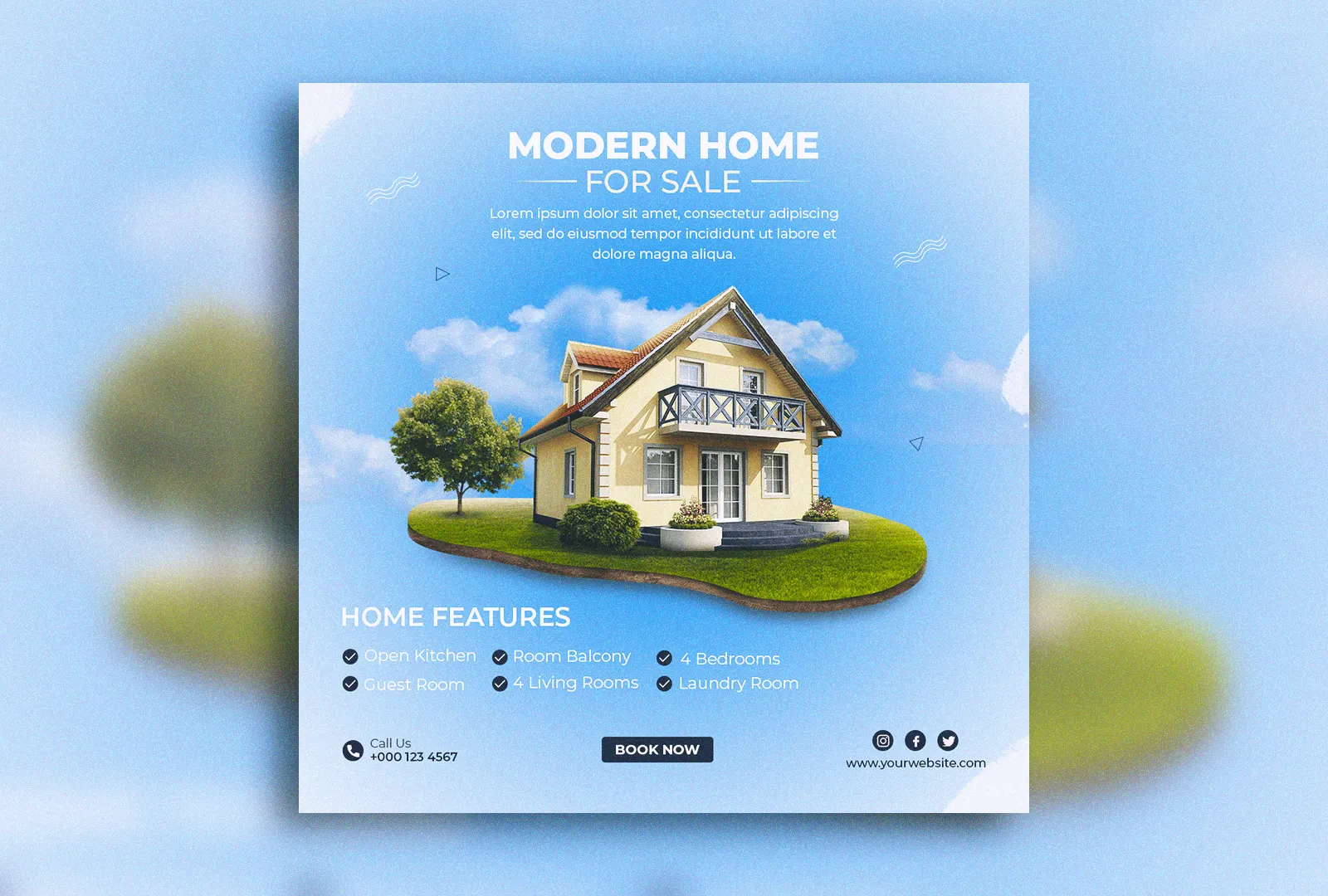
Social media turns passive listings into active opportunities: it widens who sees your properties, reveals which messages actually move prospects, and creates repeatable paths from discovery to contact. Used correctly, it multiplies visibility, sharpens targeting, and gives you measurable signals to improve every campaign.
1. Expanding reach to potential buyers
What most teams do now is post and hope, but social channels let you promote listings to precisely the people most likely to buy. Use platform targeting and lookalike audiences to push listings to ZIP codes, income bands, and life stages that match your ideal buyer, then track which segments drive viewings and leads. When the market slows, this matters even more: targeted campaigns keep buyer pipelines filled while broader tactics waste impressions. After running iterative ad tests over several months, the consistent pattern is clear: targeted social ads generate fewer low-quality clicks and far higher lead relevance than one-size-fits-all posts.
2. How do I learn who my real audience actually is?
Social platforms give you instant behavioral feedback, not just vanity metrics. Post a neighborhood tour one week, and audience analytics will tell you whether renters, first-time buyers, or move-up families watched the whole clip. Use those signals to refine content, display a precise contact method, and match calls to action to intent, so a curious viewer becomes a scheduled tour. The hard truth agents feel every quarter is that lots of likes do not equal transactions, so build posts with a conversion step in mind and test variations until your engagement maps to measurable leads.
3. Showcasing listings with photos, video, and virtual tours
High-quality visuals are nonnegotiable for discovery and conversion; motion sells context the way photos cannot. In 2025, the National Association of Realtors found that 73% of homeowners are more likely to list with a real estate agent who uses video to market their property, indicating that video not only attracts buyers but also helps secure more listings from sellers seeking exposure. Likewise, [Inman, Real estate listings with video receive 403% more inquiries than those without, a signal that short tours and walk-throughs push tangible interest. Make content bite-sized, mobile-optimized, and shareable so each listing can travel beyond your follower base.
Status quo disruption: why the usual workflow fails and what fixes it
Most teams stitch together content with ad hoc tools, phone clips, and last-minute edits because it feels familiar. That works until volume or quality expectations rise, at which point assets scatter, branding breaks, and review cycles stretch into days while launch windows close. Platforms like Crayo centralize clip creation, templates, scheduling, and analytics, so teams maintain consistent presentation, shorten production from days to hours, and keep monthly publishing predictable as listings scale.
4. Building a memorable real estate brand
The truth is, you do not win on listings alone; you win on reputation and consistency. Choose a content personality that matches your buyers, whether helpful and educational for first-time buyers or glossy and aspirational for luxury clients. Keep brand elements consistent across captions, thumbnails, and video intros to increase recognition every time someone scrolls past your content. When you design with repeatable templates, you protect quality and make it easy for junior team members to publish without diluting the message.
5. Engaging with clients and followers to create momentum
It is exhausting when a post racks up likes but no one asks to see it. Engagement should be designed to move people closer to a decision: post-market updates that invite questions, share timely buying tips, and publish short testimonial clips that reduce risk for new prospects. Use Q&A lives and follow-up DMs to convert passive viewers into appointments, and track which formats generate the most website clicks or direct messages so you can reallocate spend and time toward the highest-return content. This pattern appears across busy and quiet markets: interaction plus clear next steps drives the pipeline, not applause alone.
There is more beneath these tactics than tactics themselves, and the next section uncovers the specific post types that actually convert when everything else stalls.
55 Real Estate Social Media Post Ideas

Start with a purposeful mix: use focused listing posts, social proof, neighborhood storytelling, how-to education, and interactive formats so every follower finds a clear path to take action. For posting rhythm, follow the cadence recommended by Aim for 3–5 posts per week to stay consistent, highlight listings, and stay top of mind with buyers and sellers.” — Birdeye, and treat this list as a toolkit you rotate through. This set mirrors established industry inventories, such as 55 Real Estate Social Media Post Ideas, but every item below is rewritten and tuned for immediate use.
1. New Listing Spotlight
Feature flattering photos of a fresh property with a one-line hook, three bullet points of benefits, and a clear viewing CTA.
2. Walkthrough Clip
Post a short, mobile-friendly video that guides viewers from the entry to the backyard, with chaptered captions for skimmers.
3. Sneak Peek Teaser
Share an enticing close-up, like a light fixture or garden gate, and invite followers to guess the neighborhood or price before launch.
4. Single-Feature Focus
Pick one selling point, such as a chef’s kitchen, and explain why it changes daily life for the buyer.
5. Before vs After Visual
Show two images that demonstrate staging, repairs, or upgrades, and list the three changes that most raised perceived value.
6. Sale Celebration
Announce a recent closing with a human caption that names the challenge overcome, like competing offers or a tight timeline.
7. Testimonial Portrait
Post a client photo and a short quote that highlights a specific result, such as faster closing or smooth negotiations.
8. Home Anniversary Post
Congratulate past clients on a year in their home, mention one memory or local event tied to the area, and invite referrals.
9. Micro Case Study
Tell a three-step story: the problem, your intervention, and the measurable result, with a single takeaway for readers.
10. Renovation Reveal
Display staged improvements and include an estimated ROI or buyer reaction to show why the work mattered.
11. Beginner Buyer Checklist
List five concrete first actions for new buyers, such as getting a pre-approval and saving three months of statements.
12. Seller Prep Shortlist
Offer a prioritized list of low-cost fixes that create the most impact in photography and showings.
13. Loan Options Simplified
Break down one financing path in plain language, identify who it best fits, and invite DMs to refer.
14. Jargon Decoder
Explain one real estate term in one sentence and give a one-line example of how it affects transactions.
15. Common Mistakes to Avoid
Name one frequent error, why it costs time or money, and a single corrective step.
16. Local Market Snapshot Image
Post one clear stat and a three-point interpretation that helps readers decide whether to act now.
17. Neighborhood Value Map
Show a small map or carousel with highlights on parks, transit, and schools, along with a one-line buyer profile who would love it.
18. Community Profile
Write a short portrait of a neighborhood’s daily rhythm, naming two businesses and one weekend ritual.
19. Small Business Feature
Interview a nearby shop owner in two questions and one photo to demonstrate local ties and referral networks.
20. Poll About Priorities
Create a one-question poll that reveals which followers want most: commute time, schools, or yard space.
21. Day-in-the-Work Life
Post a morning-to-evening story reel that humanizes your schedule and the types of decisions you make.
22. Listing Prep Backstage
Show a time-lapse or photo series of cleaning, staging, and photographer notes to reveal the work behind the camera.
23. Origin Story
Share why you became an agent, focusing on a single memorable moment that shaped your approach.
24. Team Member Snapshot
Introduce one colleague, their role, and one way they speed transactions or reduce client stress.
25. Personal Outside Moment
Share a short, non-work photo and a line about what recharges you to keep the human connection intact.
26. Design Comparison Poll
Post two design options and ask followers which one feels like home, then save the results for content later.
27. Live Q&A Invite
Promote a scheduled live, list two topics you will cover, and ask followers to submit questions in advance.
28. Small Giveaway
Run a simple contest with tagging to expand reach, requiring entrants to comment why they want to win for higher-quality leads.
29. Price Guess Game
Share photos and ask the audience to guess the list price, then reveal the range later with context about value.
30. Opinion Check
Ask a binary question, like rent or buy, and follow up with data-backed commentary in the next post.
31. Low-Cost Staging Tips
List three staging hacks homeowners can do in an afternoon with minimal spend.
32. Seasonal Decor Trends
Highlight one seasonal styling approach and show how it photographs for listings.
33. Front Yard Upgrade Ideas
Offer three curb upgrades with quick cost estimates and their likely perception effect during viewings.
34. Energy-Efficient Suggestions
Explain one easy green upgrade, its monthly savings, and how it reads to conscious buyers.
35. Lifestyle Vignette
Compose a short captioned image that shows a morning routine or evening gathering in the listed home.
36. Tools I Use
Demonstrate one tool you rely on, such as a virtual tour service, and what outcome it produces for clients.
37. Virtual Open House Announcement
Promote an upcoming online showing with time, access link, and what makes the property worth a live look.
38. Price Comparison Graphic
Create a simple chart showing what each budget buys in nearby neighborhoods.
39. Trend Commentary
Pick one new trend, such as flexible workspaces, and explain how it shifts buyer preferences locally.
40. Smart Home Feature Highlight
Show one smart device, explain its benefit, and suggest how it can be marketed to tech-minded buyers.
41. Volunteer or Charity Coverage
Post a photo from your community event and name the organization and one outcome from the day.
42. Events You Should Know About
Curate two upcoming local events and explain why they matter for people thinking of moving there.
43. Collaboration Spotlight
Announce a collaboration with a designer or lender and explain the specific client benefits.
44. Holiday Theme Post
Use a seasonal creative and a short message that resonates without diluting your professional voice.
45. Local Trivia
Share one curious fact about the neighborhood that sparks pride and conversation.
46. Monthly Wins Reel
Highlight the month’s most important outcomes in three bullets, such as closings, price improvements, or new hires.
47. Milestone Announcement
Celebrate certifications or anniversaries, and thank specific supporters or mentors.
48. Myth Correction
Pick one persistent real estate myth, state the valid counterpoint, and provide one evidentiary example.
49. Service Snapshot
Describe one service you offer, the typical buyer profile who needs it, and the process in three steps.
50. Continuing Education Proof
Post a certificate or course summary and one lesson you applied to a recent deal.
51. Investment Primer
Explain one straightforward investment concept and a basic math example that clarifies returns.
52. Upscale Feature Showcase
Profile one luxury element, such as a bespoke closet, and explain how to market it to affluent buyers.
53. Rent versus Buy Illustration
Give a comparative scenario for a typical local household, including one variable that often flips the decision.
54. Price-Tier Tour
Show three homes at different price points and highlight one trade-off buyers accept at each price point.
55. Light-Hearted Agent Humor
Share a short, tasteful joke or meme that communicates insider experience while staying professional.
Why these specific prompts work together is simple, practical, and strategic: alternate formats keep algorithmic reach steady, while predictable themes let followers learn what to expect and return. That predictability is the silent engine behind audience growth, not a gimmick but a production discipline you can control with a content calendar.
Most teams coordinate short videos and edits with scattered apps because it feels simple at first, and that familiarity makes the approach sticky. Over time, fragmented assets and ad hoc approvals add hours of friction, and brand consistency erodes as volume grows. Platforms like Clip Creator Tool provide centralized templates, batch exporting, and automated captions, so teams can compress production from days to hours while keeping every clip on brand.
Try Crayo’s free clip creator tool today by clicking the Try Now button on our homepage, no account required. Crayo AI is the fastest way to create short videos; create unlimited shorts at once while the platform auto-generates captions, effects, background, and music for you.
That solution helps, but the next section introduces a few counterintuitive rules that change everything you should post next.
Related Reading
- How Much Do Social Media Content Creators Make
- What Is A Social Media Content Calendar
- How Much To Charge For Social Media Content Creation
- Engaging Social Media Content
- What Makes A Good Social Media Post
- Types Of Content For Social Media
- How Often To Post On Social Media
- When Is The Best Time To Post On Facebook
- Curated Content Social Media
- Social Media Post Ideas For Small Business
11 Tips for Real Estate Social Media Posts

Treat social media as a production system, not an occasional task: build repeatable processes for fast video output, consistent visuals, and measurement that turns attention into appointments. Below are eleven concrete practices you can adopt right away, each focused on a different operational gap and written so you can apply them this afternoon.
1. Use Crayo AI for scalable short‑form video production
Make Crayo part of your clip factory, not just a one-off editor. Use it to generate multiple creative variants from a single script, export platform-specific aspect ratios, and embed metadata so each clip lands in the correct campaign folder. Create standard naming rules, A/B test sets (headline A, hook B, music C), and a version map so you can trace which combination drove views and leads.
2. Visual appeal: protect imagery and optimize for mobile
Which images are used, how they are cropped, and who controls their use determine more than aesthetics; they affect trust. This challenge appears across brokerages and photographer relationships: images are often repurposed without agreed-upon usage terms because contracts omit distribution rights, which fractures partnerships and raises legal risk. Solve it by requiring explicit licensing in seller and vendor contracts, keeping a rights registry (date, permitted channels, expiration), delivering mobile-first crops, and setting a color-grading preset. Hence, every listing looks consistent in feeds.
3. Agent-driven content: teach agents to tell three-second stories
What converts is not polish alone, but a human thread you can follow in seconds.
Train agents to follow a tight micro-script:
- One-sentence hook that names the buyer,
- Two concrete benefits,
- One clear next step.
Record short takes, then edit the best into vertical shorts and a 60-second deeper cut—authenticity scales when you standardize the format, not the language.
4. Smart hashtag strategy: build reusable tag sets
Stop guessing every post. Maintain four distinct hashtag sets: brand, neighborhood, property type, and campaign. Save them as labeled groups in your scheduler, rotate sets to avoid repetition, and include local slang or neighborhood nicknames for discoverability. Use a small visible set in the caption and a supplemental set in the first comment if platform behavior favors it.
5. Paid ads: design sequential creative and geo-fence events
Paid channels scale discovery, but most teams run one-shot boosts.
Instead, build sequences.
- Discovery video to cold lookalikes,
- Testimonial or walk-through to viewers who watched 50 percent,
- Lead-form or open-house ad to people who engaged.
Add geo-fencing around open houses and competitor listings to capture nearby intent, and run creative with transparent measurement pixels to attribute view-to-visit lift.
Most teams stitch edits together with ad hoc apps because they feel familiar and require no training. That works until volumes rise and asset versions multiply, then thumbnails mismatch, approvals stall, and publishing slips from hours to days. Teams find that platforms like Crayo centralize templates, batch export, and automated captions, compressing review cycles while keeping every clip traceable.
6. Video formats that convert beyond tours
Break video into micro-moments that match intent: 10-15 second hero clips for discovery, 30-45 second problem/solution clips for consideration, and 60+ second neighborhood narratives for deeper trust. Use natural sound in the hook, then layer music under the explanation, and always include readable captions, since many viewers watch with the sound muted.
7. Contests and interactive hooks that generate quality leads
Design contests as lead magnets, not vanity plays. Require entry via a short lead form or direct message, prize a relevant local service or a free property valuation, and use the entry data to segment follow-up sequences. Make rules transparent, set a small but meaningful prize, and partner with a local business to double reach without ballooning cost.
8. Automation workflows that follow behavior
Map simple automation: new social lead goes to a three-touch drip, high-engagement viewers get a priority score, and a qualified lead triggers a calendar invite from the local agent. Use personalization tokens so messages reference neighborhood or property type. Measure how automation shortens response times and increases appointment rates, then iterate on scoring thresholds.
9. Social calendar that forces batching and reuse
Schedule content in themed blocks — such as Workflow Week, Listing Week, and Community Week —then batch-create assets in two long sessions per month. Build a repurpose matrix so one 3-minute interview becomes two shorts, one blog excerpt, and three quote cards. This reduces daily context switching and makes consistent cadence sustainable.
10. Platform selection with intent mapping
Match content type to platform intent rather than chasing every trend. Discovery-heavy short-form goes where new buyers scroll; professional lists and investor outreach belong on networks with career and financial audiences. Remember, most buyers begin online, so invest in the channels where your local prospects look first, and measure downstream actions—not just views—to decide where to double down. According to the National Association of Realtors, 90% of home buyers start their search online.
11. Balance content pillars by buyer stage and outcome
Allocate posts by funnel function rather than equal time: brand build content for awareness, educational pieces for consideration, and listing-specific CTAs for conversion. Map each pillar to a KPI, for example, awareness to reach and saves, education to website clicks and DMs, and conversion to booked tours. For sellers, remember visual proof matters: Real Estate Video Marketing Statistics, 73% of sellers prefer to list their homes with a real estate agent who uses video.
That momentum helps, but there is one recurring oversight that wipes out months of work in a single campaign.
Related Reading
- Social Media Post Examples
- Fun Social Media Engagement Posts
- Social Media Posts Ideas
- Content Buckets For Social Media
- Social Media Content Audit
- Organic Content Social Media
- Wednesday Social Media Post Ideas
- What Not To Post On Social Media
- Thursday Social Media Post Ideas
- Sunday Social Media Post Ideas
- Social Media Content Guidelines
- 30 Day Social Media Content Calendar
10 Real Estate Marketing Mistakes to Avoid

Real estate marketing mistakes cost time, credibility, and deals, and they are usually avoidable with a small set of deliberate fixes. Below, I list ten common errors, reworded and expanded with practical, operational corrections you can apply today.
1. Poorly built websites that lose visitors before you can talk to them
This problem occurs when agents assemble sites from templates without considering conversion flow or mobile speed. Pages that bury contact methods, use unclear headlines, or load slowly create friction and higher bounce rates. Fix it by auditing pages for a single, visible call to action, measuring mobile load time to keep it under 3 seconds, and documenting one conversion path per landing page so every visit has a next step.
2. Skimping on photography and image strategy
When photos are amateur or inconsistent, listings fail to communicate value quickly. Listings with professional photos sell 32% faster, so prioritize a repeatable photographer brief that includes a consistent shot list, twilight exterior shots, and mobile-cropped variants. Store originals with explicit licensing metadata and a filename convention that provides for neighborhood, date, and shot type, so teams can repurpose without scrambling.
3. Filming long walkthroughs and never turning them into short hooks
A typical pattern is to record long tours and treat them as finished assets. That wastes attention. Break the video into platform-sized units at capture: a five-second hook, a 20-second highlight, and a 60-second neighborhood story. Bake captions and alternative edits into the file deliverables so each recorded minute yields multiple short assets ready for distribution.
4. Treating retargeting like a single ad and expecting long-term recall
The failure point is a one-size-fits-all retargeting creative that causes ad fatigue. Segment audiences by behavior—for example, visitors who viewed a floor plan vs. those who watched 75 percent of a video—and then sequence ads: social proof, detail drill-down, and an appointment CTA. Also, cap frequency and refresh creative every 7 to 10 days so you re-engage rather than annoy.
5. Being too pushy in outreach and alienating potential clients
Blunt, repetitive DMs or comment spam erode trust quickly. Value-first messages convert better: open with a small, valuable insight about the prospect, then send a single follow-up and stop. When outreach feels like an interruption, it triggers skepticism, and that weakens your reputation among both buyers and local referrers.
6. Treating SEO as an afterthought instead of a system's job
SEO mistakes are technical and procedural: duplicate listing pages, missing structured data, and inconsistent NAP on local listings. The pattern is site growth without governance, which multiplies crawl errors and dilutes ranking signals. Create a checklist that includes listing schema, canonical URLs, and a monthly crawl report to catch regressions before they cost visibility.
7. Letting lead data get messy and unusable
When CRMs collect inconsistent fields, duplicate records, and unclear source tags, follow-up degrades rapidly. Implement a mandatory field set for new leads, weekly deduping, and an automated source-tracking token so every contact has origin context. That discipline turns your CRM from a messy archive into an active engine for segmentation and prioritized outreach.
8. Buying lots of niche tools without a usage or ROI test
The crowded martech market tempts teams to subscribe widely and never consolidate. A practical audit fixes this: list every paid tool, the monthly cost, who uses it, and the last date it produced a measurable outcome. For small teams, prefer integrated platforms that reduce context switching; for high-volume shops, standardize on APIs and repeatable export rules so data does not lock you into brittle workflows. If a tool is idle for more than 60 days, pause and reassess.
9. Responding slowly, and assuming leads will wait for you
This is a pressure point for agents because buyers expect immediate contact. The common workaround is manual triage, which fails when you step away. Most teams coordinate creative and approvals through scattered apps, which feels familiar and requires no new tools, but as volume grows, feedback fragments and launch delays appear. Platforms like Crayo centralize clip creation, templated responses, and approval routing, compressing review cycles from days to hours while keeping every version and comment traceable, so teams hit response SLAs without burning extra hours.
10. Trying to be everything to everyone, and then dropping the follow-up
Broad targeting dilutes messaging and kills repeatability. Use a simple niche selection matrix: demand, competition, margin, and delivery capacity. Pick one niche, craft tailored lead flows and landing pages for it, then run a tight nurture program after closing with small, human touches. Personal follow-up, a closing gift, and an anniversary outreach are modest steps that compound into referrals; clients remember the human details more than another price reduction.
When teams face these failures at scale, the real cost is not a single lost lead, but the steady attrition of trust and momentum. That slow burn is what you cannot afford to ignore.
That simple gap in your process is not the end of the story; it is where the next, surprising lever lives.
Create Viral Shorts In Seconds With Crayo
I see this pattern: creators are motivated by the chance to earn from the TikTok Creator Fund. If you want to turn ideas into income, try Crayo to test formats quickly and iterate toward what pays. That matters because Generate viral shorts in seconds — Crayo AI, shows how fast you can produce shorts, and 90% of users reported increased engagement on their videos. It demonstrates the engagement lift creators commonly achieve, so use the Clip Creator Tool to find the formats that convert.
Related Reading
- Content Pillars For Social Media
- How To Repurpose Blog Content For Social Media
- Best Apps To Create Content For Social Media
- Social Media Content Strategies
- Best Social Media Platforms For Content Creators
- What To Post On Each Social Media Platform
- Best AI For Social Media Content Creation
- Best Days And Times To Post On Social Media
- Real Estate Social Media Content Ideas