

Creators often struggle to convert rising engagement into reliable income. The process goes beyond chasing clicks to include ad breaks, branded content, fan subscriptions, affiliate marketing, and Facebook shop sales. How do I monetize my Facebook page? Clear insights and tailored strategies transform occasional views into steady revenue.
Optimizing video content and leveraging platform tools enhances digital presence and audience loyalty. Robust planning and data-driven decisions can turn interactions into profit. Effective workflows boost reach and revenue, as Crayo's clip creator tool streamlines the editing process to repurpose extended videos into engaging clips.
Summary
- Facebook's ad reach spans 2.11 billion people, giving marketers predictable sampling across ages and regions and shortening the time it takes to find a profitable niche.
- Ad ubiquity is high, with 93% of social media marketers using Facebook ads, so teams gain faster benchmark signals but must be sharper on creative and funnel design to win attention.
- Mobile-first behavior dominates, with 80% of Facebook users on mobile, meaning thumb-friendly creative, quick vertical video, and single-action conversion paths are essential to keep acquisition costs from rising.
- Short video drives organic momentum, since video posts have 135% greater organic reach than photo posts, so clips that hook in the first three seconds can reduce paid pressure and earn shares.
- Batch production scales output efficiently; a single 60-minute recording typically produces eight to fifteen publish-ready clips when you prioritize modular moments and metadata.
- Monetization depends on scale and diversification. For example, pages with over 10,000 followers become eligible for ad breaks, while tracking revenue per follower and 30 and 90-day retention reveals whether growth is sustainable.
- This is where Crayo's clip creator tool fits in; it compresses edit and export cycles from days to hours and auto-generates captions and platform-specific formats so teams can scale short-form production and support multiple monetization paths.
Benefits of Facebook Marketing
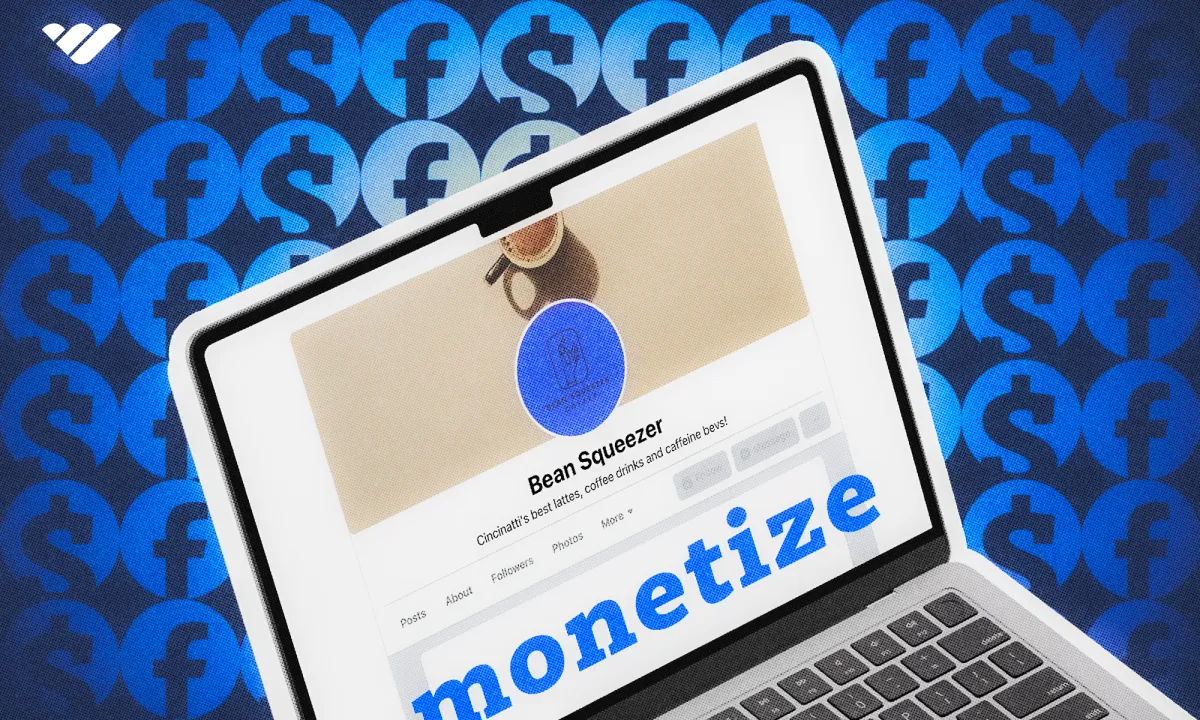
Facebook marketing delivers scale, precise targeting, and measurable returns. This allows businesses to reach the right people at the moment they take action, while also showing whether each dollar spent helps to make money. Brands can use Facebook to build owned audiences, test creative ideas quickly, and connect ad exposure to offline or on-site sales. Our clip creator tool can assist in creating engaging video content that captures audience attention.
Who can you reach, and why does having a lot of options matter?
When a campaign needs choices, Facebook provides them. According to the Hootsuite Blog, "Facebook ads reach 2.11 billion people, making it a powerful tool for marketers."
In 2025, this wide reach offers predictable sampling across different ages, incomes, and regions. Such vast data speeds up the time needed to find a profitable niche. Think of Facebook as a local market with aisles for every interest; the faster you move through those aisles, the sooner you find out what sells.
How does targeting go beyond basic demographics?
The important advantage is in psychographic and behavioural signals, not just age or ZIP code. An audit of campaigns among retail and B2B clients showed a consistent pattern: while targeting by demographics made the field smaller, looking at interests and behaviour revealed what consumers really wanted.This change turned passive views into real clicks. In practice, this means using interests, life events, and guessed brand affinities to create content that connects with motivation, not just identity.
Why do so many marketers keep using Facebook ads?
High adoption creates a competitive market for attention and a strong ecosystem of tactics. As noted by the Hootsuite Blog, "93% of social media marketers use Facebook ads regularly." In 2025, running ads on this platform has become a basic skill rather than just an experiment. This ubiquity leads to two beneficial outcomes: tactually, marketers can learn benchmarks more quickly because there are many similar campaigns; strategically, they must boost their creativity and funnel design to get attention in a busy space.
What breaks if you ignore measurement and audience control?
Most teams build their audiences by hand and think the platform will do the rest. This common way of doing things might work okay at the start, but as campaigns grow, problems like audience overlap, duplicated bids, and wasted impressions can sneak in and raise costs while reducing insights. Tools like Crayo help by bringing segments together, automating lookalike creation, and standardising performance signals across ads. This process shortens manual setup from days to hours while keeping measurement clear and actionable.
How does Facebook support different business models, including B2B?
Pattern-based experience shows that B2B and B2C mainly differ in how long their sales cycles are and the number of times customers are contacted, not in which platforms work better. If your sales cycle is long, use layered retargeting and a careful plan for messaging to stay top-of-mind during decision-making.For direct response, use short videos with clear call-to-action buttons to make it easier for customers. The platform’s different ad formats let you work on both finding new customers and making sales at the same time, so you can test both creating demand and capturing it without having to change channels.
What role does mobile behavior play in performance?
This is non-negotiable, as user attention is mobile-first. When creative and landing pages are not built for thumb navigation and fast loading, engagement drops, and acquisition costs climb.
A simple analogy is that a great desktop creative on mobile reads like a folded map written in small type; one has to refold and squint to find the route.It's essential to optimise for thumb taps, quick vertical video, and single-action forms to ensure that the path from ad to action feels natural.
What is a quick tactical note about formats and control?
Using a mix of formats is essential to match funnel intent. For example, short Reels can effectively create awareness, while lead forms and in-app checkout work well for conversion.It's important to connect measurement to first-party signals and server-side events; this ensures that value can be assigned as privacy rules change. Such discipline turns reach and clicks into repeatable revenue instead of just noisy metrics.
What is the gap between audience access and turning it into money?
It’s one thing to have audience access and another to turn it into money. The gap is where most teams lose momentum.
How To Monetize Facebook Page in 7 Ways
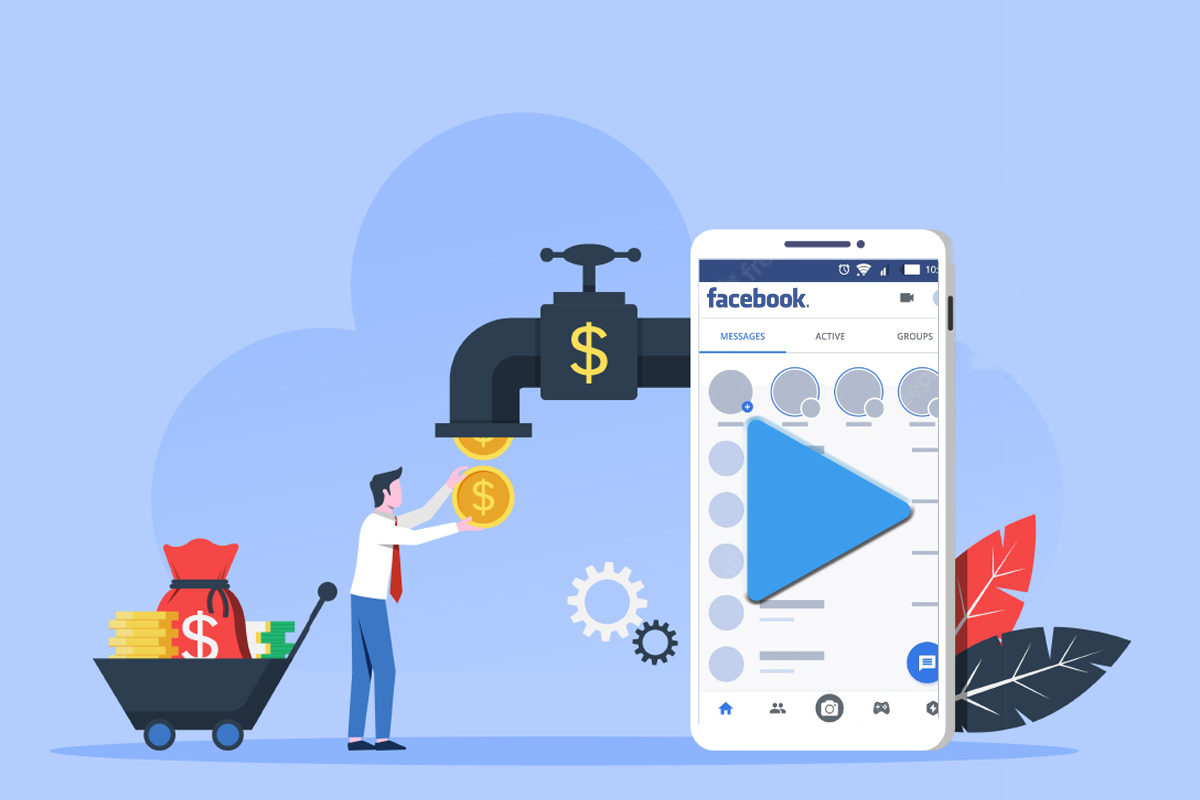
Monetizing a Facebook page involves a mix of recurring revenue (like memberships, courses, and subscriptions), direct sales (that include products, services, and affiliate links), and platform-native payouts such as in-stream ads and bonuses. The key is to create funnels that turn engaged followers into repeat buyers.By automating delivery and measurement, growth can build rather than level off.
1. Turning followers into paying members
Starts with an easy entry point, like a freebie that solves a specific problem. After that, a well-planned sequence can change interest into a paid tier within 7 to 14 days. Think about using gated micro-courses, exclusive groups, or members-only newsletters to move users away from their newsfeed and into channels that you control.Once the funnel is ready, test two price points for 30 days and pick the better option, since even small rises in conversion can lead to a reliable monthly revenue stream. Additionally, our clip creator tool can enhance your content creation process and drive more engagement from your audience.
2. What content actually converts people to buy?
Start with content that shows immediate value through quick wins, case studies, and step-by-step guides that clearly outline the next steps. Videos and short tutorials work well because they quickly show results; written posts and downloadable checklists can be great tools to attract attention.Organise each post around one clear outcome, include a short proof line, and end with a call to action that leads people to a landing page or Messenger flow for conversion.
3. Which Facebook payout options should you prioritize?
Native monetization is appealing if you meet the eligibility rules, and it should be part of your strategy.Pages with over 10,000 followers can make money through ad breaks in videos. If you can reach that number of followers, focus on improving your watch time and finding natural chances for mid-roll ads.
Until you reach that level, focus on subscriptions, digital products, and affiliate funnels that work well even with much fewer followers.
4. How can you automate content without sounding robotic?
After using automated content generation with templates, AI writing, and scheduling tools, some pages still earned $500 to $900 per month with very little hands-on time. This happens because consistency is better than random moments of brilliance.To work efficiently, create content pillars in batches, use modular templates for captions and visuals, and make sure a human reviews every published post to keep an authentic tone. Automation should cut down busywork, not get rid of the human touch that builds trust.
5. How do you protect revenue against platform shifts?
Don’t rely on a single source. Spread your income by using memberships, selling products, getting sponsorships, and running ads. This way, if one program changes, your income won’t fall apart. Also, remember that the platform is significant and still valuable, because Facebook, with over 2.8 billion users every month, provides a vast audience for monetization. Use email lists and community platforms as your owned channels, and treat Facebook as the quickest way to reach new potential customers.
6. What metrics do you track to know if monetization is working?
Measure the conversion rate from engaged follower to lead, from lead to buyer, and from buyer to repeat purchaser. Track revenue per follower and membership retention after 30 and 90 days. Also, check the video watch-through rate if you are using in-stream ads.If the customer acquisition cost (CAC) goes up faster than the lifetime value (LTV), stop scaling and focus on improving the funnel conversion first. Small improvements at each step can add up to sustainable profit.
How can you create short videos quickly?
Crayo AI is the fastest way to make short videos and speed up your content-to-cash loop. Try Crayo's free clip creator tool today by clicking the ‘Try Now’ button on our homepage, with no account needed. You can turn a prompt into viral short videos in minutes with Crayo.
7. What is the importance of consistent content ideas?
That momentum feels like progress until it becomes clear that the following content ideas will either limit growth or open it up in unexpected ways.
Related Reading
- Does Snapchat Pay You For Views
- How Much Does Snapchat Pay Per 1,000 Views
- Do You Get Paid For Likes On YouTube
- Is Twitter Premium Worth It
- Does Pinterest Pay Creators
- How Do TikTok Live Gifts Work
- How Much Does Facebook Reels Pay Per 1,000 Views
- Can You Make Money On Twitch
- How To Join YouTube Partner Program
- TikTok Creator Program Requirements
15+ Content Ideas for Facebook
Repurposing is not just about recycling the same asset; it is about turning each piece of content into different, purpose-built items that match how people really act on Facebook. Start by matching outcomes to formats, then make short, testable pieces from larger material. This way, every publisher knows exactly what to do.
How should you cut long content into attention-sized clips?
Think of long recordings as a treasure of moments instead of one long piece. Create a timestamp index while watching, marking 15 to 90-second moments that capture a single clear idea, and save those as labeled clips. The pattern is simple: find a hook, define the outcome or lesson, and add a one-line call to action.Trim heavily so the first three seconds do most of the work. Since Facebook rewards repeated watching, choosing clips that encourage a second look or a comment is more valuable than making a detailed summary.
Which Facebook formats earn the most organic momentum right now?
Be strategic about where each clip should go. Short vertical clips work best in Reels and Stories. Threaded explainer posts fit in the feed, while conversational snippets can be Live prompts or Group starters. Keep in mind that Facebook Stories have over 500 million daily active users.Use that audience for posts that create a sense of urgency. Place slightly longer, value-first clips where people expect to spend time, because Facebook users watch over 100 million hours of video every day. Match the length of your clips to the viewers' intent, not your own ego.
How do you keep repurposed content from feeling stale?
Change the frame, not the core content. When you take a clip from an older webinar, add a current-context opener, a viewer question in the caption, or a customer micro-story in the first comment. This approach transforms the same information into a new conversation, rather than just a rerun.A common mistake is leaving the context unchanged, which makes the content feel repetitive. Reframing is cost-effective and helps bring back relevance.
What workflow scales without killing creativity?
Adopt a three-step batch rhythm: harvest, edit, and distribute. Start by recording one focused session that covers three outcomes. Then, export raw takes with timestamps. For editing, use templates for the intro, lower-thirds, and captions.This ensures that each clip is on-brand. Distribute the clips using scheduled windows that match audience habits. A useful rule of thumb is that a single 60-minute session usually produces eight to fifteen publish-ready clips when you focus on modular moments instead of perfect long-form edits. This workflow is similar to a restaurant kitchen, where mise en place helps service be quicker and more creative even under pressure.
What Small, Non-Technical Habits Multiply Reuse?
Add metadata as you create. Tag clips by topic, funnel stage, emotional tone, and ideal CTA. Set up a simple naming system so you can easily find a 30-second demo clip in under 60 seconds.This change helps solve the problem of too much content and not enough findability. The emotional benefit is quick: less rushing around, more confident posting, and a feed that feels deliberate.
You’ve learned how to change long content into precise, platform-ready pieces that grab attention. But the hardest part is changing these pieces into a reach that you can count on without causing burnout.
Related Reading
- Requirements For the YouTube Partner Program
- Instagram Reels Bonus Eligibility
- How Much Does Facebook Pay For Views
- How Much Is X Premium
- Facebook Reels Monetization Requirements
- How Much Money Do You Get From TikTok Live Gifts
- How To Superchat On YouTube
- Facebook Live Monetization
- Twitch Affiliate Vs Partner
- Twitch Monetization Requirements
- Requirements For Twitch Affiliate
11 Tips for Facebook Marketing

You should treat Facebook marketing like a lab. Run short, repeatable experiments that link a single creative change to one measurable customer action on mobile, and then scale the winners quickly. Focus your energy on mobile-first creative, tight micro-conversions, fast creative cycles, and community signals that really predict purchase intent. For those interested in enhancing their efficiency, our clip creator tool offers great options for quickly producing engaging content.
How do you test creativity faster without draining the budget?
Testing creativity quickly and cost-effectively starts with a small hypothesis matrix instead of a long list of A/B tests. Choose three hooks, three visual styles, and two CTAs; this will create nine combinations to test. Run these tests only long enough to notice a clear action signal, like the comment-to-message rate or micro-conversion rate.A common mistake is testing too many variables at once and then deciding based on impressions that look good, instead of real changes in buyer behaviour. It’s important to keep a small holdout group to see if any lift you observe is real or just a random timing issue.
How should you design the mobile conversion path?
How should you design the mobile conversion path? Design for the thumb.According to WordStream, 80% of Facebook users access the platform via mobile devices (2022), and having a landing page that asks for three fields can really hurt conversions. Use single-column pages, one-tap payments, Messenger flows, prefilled forms, and instant-loading embeds. Our clip creator tool can help streamline your mobile strategy. Treat each step as a micro-conversion, and identify where users drop off so you can quickly reduce friction.
What community tactics actually generate buyers without a giant following?
Community tactics can effectively generate buyers without needing a large following. Using comment-first CTAs that lead into direct follow-up funnels is important.Pinning an FAQ that invites direct messages, running short live Q&A sessions that lead to a limited-offer micro-conversion, and saving popular questions as post templates for ads are all effective strategies. One common pattern is that engagement only turns into revenue when there is an automated path from comment to qualified lead, not just by gathering likes.
How do you improve the editing and approval process?
Most teams do editing and approvals the usual way, which seems familiar and cheap. However, this method spreads feedback across different inboxes, slows down creative work, and makes each new experiment take days instead of minutes.Platforms like Crayo offer automated batch clip creation, captions, and exports for specific platforms. This greatly reduces editing and exporting time from days to hours, while keeping creative decisions with you.
How do you scale winning creative without increasing CPMs?
Scaling winning creative without increasing CPMs can be done by widening audiences for the creative, instead of just raising budgets. Duplicate a winning ad set, slowly broaden lookalike thresholds, and use a creative rotation rule to refresh ads every 7 to 10 days. It is important to focus on formats that get organic boosts from shares and replays, since this lessens paid pressure. For example, WordStream mentions that video posts on Facebook have 135% greater organic reach than photo posts (2022).Once a clip effectively grabs attention, it should be used in short-form placements first.
Which metrics cut through vanity and show real momentum?
Identifying which metrics cut through vanity to show real momentum is crucial.Track the conversion chain from initial engagement, whether it’s a comment or a watch, to a qualified lead, and then to the first purchase within 7 to 30 days.
Monitor cohort retention after the initial buy. A high first-purchase rate with no repeat buyers signals a leak instead of a win. Use small, frequent cohorts to find creative drift within two to four weeks, rather than waiting for two to four months.
What bottlenecks can affect short-term wins?
Achieving a short-term win can feel like reaching the finish line. However, a hidden problem often comes up, changing everything.
Create Viral Shorts In Seconds With Crayo
To make money from short-form content on your Facebook page or other social channels, speed is critical. Crayo turns ideas into unlimited shorts in seconds by automatically creating captions, effects, background video, and music. This lets you focus on what earns you money.Just write a quick outline or prompt, pick a background video, choose a narrator voice, and select music from Crayo’s free templates. Finish your work, export it, and try Crayo’s free clip creator tool today by clicking the Try Now button on the homepage; no account needed. You can start turning clips into viral shorts and paid opportunities in just minutes.
Related Reading
- How To Get Paid On Twitter
- How To Sell Products On TikTok Live
- How Are Instagram Story Views Sorted
- Requirements To Get Paid On TikTok
- How To Become A Twitch Partner
- How To Get More Story Views On Instagram
- How To Join TikTok Creator Program
- Best Social Media Platform To Make Money
- How To Monetize Facebook Page
- LinkedIn Creator Accelerator Program